


The Council of Agriculture yesterday issued a warning against smuggling birds infected with avian flu into the country from China, and urged the public to report any suspected violations.
The alert came after media reports that some Taiwanese professors have planned to sneak in diseased birds from China in order to help develop a flu vaccine.
"Such specimens could spread the bird flu virus and pose a high risk to the health of birds, other animals and humans in Taiwan," said Yeh Ying (
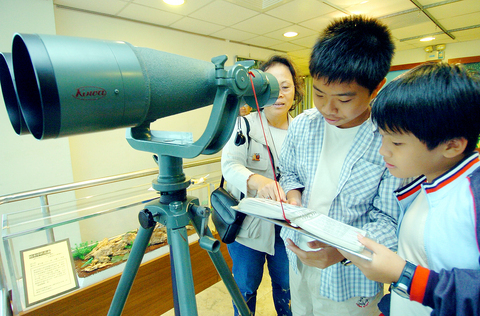
PHOTO: LO PEI-DER, TAIPEI TIMES
According to Chinese-language media reports, professors in veterinary departments at some universities have collected specimens of the avian flu virus in China and plan to bring them into Taiwan for testing.
The bureau cautioned that people should not bring any plants, animals or specimens into the country without permission.
Such smugglers may be pro-secuted for violating the Statute for Prevention and Control of Infectious Animal Diseases (
Yeh said the council hasn't received any report of suspected violations, but will keep in close contacts with universities, and include academics who often traveled to China on its watch list.
The council also set up a special direct phone line for people to report suspected violations at 0800-039131.
Officials of Taiwan's Center for Disease Control also announced that Chen Hsi (
He was first detained on Oct. 14.
The man shows no sign of having the bird flu himself, but is being given the drug Tamiflu as a precaution, officials from the center said.
Meanwhile, birdwatching societies in Taipei City yesterday called on the public not to fear birdwatching activities, stressing that the activity is safe.
No contact
"Birdwatching doesn't mean being close to wild birds or touching them," said Liu Hsin-bai (劉新白), general director of Wild Bird Society of Taipei (WBST).
"Birdwatchers actually keep dozens of meters away from birds, and they usually serve as front-line monitors for signs of any suspicious sickness of birds," Liu said.
According to Liu, birdwatching societies in several counties have been working with the council since 1997 to monitor the activities of migratory birds and take samples of droppings. There hasn't been any bird flu virus found in wild birds so far.
Lin Hsian-wen (
The human deaths from bird flu that have occured in Southeast Asia were a result of people coming into close daily contact with infected poultry within the confines of poultry farms. The risk to human health from wild birds carrying avian influenza is very low, Lin said.
Festival to go ahead
Neither the council nor the Taipei City Government have thus far discouraged outdoor birdwatching activities.
According to the Taipei City Department of Information, the city government will still hold the "2005 Guandu International Birdwatching Festival" beginning Nov. 12 and it is encouraging people to join the event.
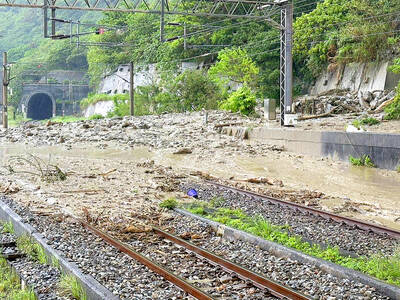
ROLLER-COASTER RIDE: More than five earthquakes ranging from magnitude 4.4 to 5.5 on the Richter scale shook eastern Taiwan in rapid succession yesterday afternoon Back-to-back weather fronts are forecast to hit Taiwan this week, resulting in rain across the nation in the coming days, the Central Weather Administration said yesterday, as it also warned residents in mountainous regions to be wary of landslides and rockfalls. As the first front approached, sporadic rainfall began in central and northern parts of Taiwan yesterday, the agency said, adding that rain is forecast to intensify in those regions today, while brief showers would also affect other parts of the nation. A second weather system is forecast to arrive on Thursday, bringing additional rain to the whole nation until Sunday, it

LANDSLIDES POSSIBLE: The agency advised the public to avoid visiting mountainous regions due to more expected aftershocks and rainfall from a series of weather fronts A series of earthquakes over the past few days were likely aftershocks of the April 3 earthquake in Hualien County, with further aftershocks to be expected for up to a year, the Central Weather Administration (CWA) said yesterday. Based on the nation’s experience after the quake on Sept. 21, 1999, more aftershocks are possible over the next six months to a year, the agency said. A total of 103 earthquakes of magnitude 4 on the local magnitude scale or higher hit Hualien County from 5:08pm on Monday to 10:27am yesterday, with 27 of them exceeding magnitude 5. They included two, of magnitude

CONDITIONAL: The PRC imposes secret requirements that the funding it provides cannot be spent in states with diplomatic relations with Taiwan, Emma Reilly said China has been bribing UN officials to obtain “special benefits” and to block funding from countries that have diplomatic ties with Taiwan, a former UN employee told the British House of Commons on Tuesday. At a House of Commons Foreign Affairs Committee hearing into “international relations within the multilateral system,” former Office of the UN High Commissioner for Human Rights (OHCHR) employee Emma Reilly said in a written statement that “Beijing paid bribes to the two successive Presidents of the [UN] General Assembly” during the two-year negotiation of the Sustainable Development Goals. Another way China exercises influence within the UN Secretariat is

Taiwan’s first drag queen to compete on the internationally acclaimed RuPaul’s Drag Race, Nymphia Wind (妮妃雅), was on Friday crowned the “Next Drag Superstar.” Dressed in a sparkling banana dress, Nymphia Wind swept onto the stage for the final, and stole the show. “Taiwan this is for you,” she said right after show host RuPaul announced her as the winner. “To those who feel like they don’t belong, just remember to live fearlessly and to live their truth,” she said on stage. One of the frontrunners for the past 15 episodes, the 28-year-old breezed through to the final after weeks of showcasing her unique


 RSS
RSS