


Democratic Progressive Party (DPP) Legislator Chang Chun-hsiung (張俊雄) was appointed chairman of the Straits Exchange Foundation (SEF) yesterday, with the DPP stalwart promising to work for a "permanent peace" in the Taiwan Strait.
"Chang has been premier, Presidential Office secretary-general, DPP secretary-general and is now a lawmaker. Because of this background, he knows the government better than anybody else and this experience will be a boost for the foundation. This is why Chang was picked," Premier Frank Hsieh (謝長廷) said.
Hsieh was speaking at a press conference at the Executive Yuan to announce Chang's appointment. He succeeds the late former SEF chairman Koo Chen-fu (
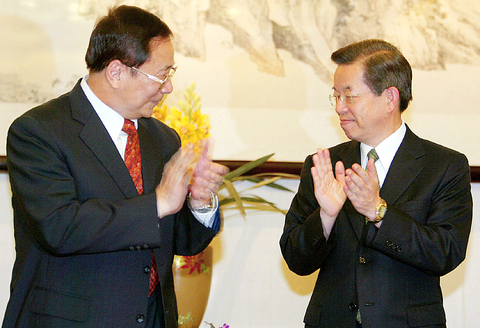
PHOTO: CNA
Chang said that his goal as SEF chairman would be to assist the president, the premier and the Mainland Affairs Council in negotiating with China and seeking a permanent peace between the two nations.
"Beijing and Taipei have not talked since 1995. With a bottom line of co-existence, I will see what I can do to help the government resume peace talks with Beijing as soon as possible," Chang said.
The SEF chairmanship is an unpaid position, and because it is defined as a non-profit organization, Chang is not required to resign his seat in the legislature.
The Cabinet yesterday also announced new ministers for the Environmental Protection Administration (EPA) minister and the Council of Hakka Affairs.
They are, respectively, former vice minister of examinations Chang Kow-lung (張國龍) and acting Council of Hakka Affairs Chairman Lee Yung-te (李永得).
Cabinet Spokesman Cho Jung-tai (卓榮泰) said that appointments for a number of deputy Cabinet posts will be announced next week. However, according to a reliable source, former Taichung mayor Chang Wen-ying (張溫鷹) will take up the vice interior minister's post.
Chang Kow-lung has a doctorate in physics from Yale University and began teaching at National Taiwan University in 1976. He began his career in public service as a senior secretary at the Taipei County Government in 1990. He was vice minister of examinations from 2000.
Lee Yung-te began his career as a print journalist in 1979. His first government job was a consultant at the Ministry of the Interior in 1998. In the same year, Lee became acting deputy manager of the Public Television Service, then became general manager in 1999. He left the TV station last year and became the vice chairman of the Council of Hakka Affairs.
Chang Wen-ying is a political independent, but retains good connections with the DPP.
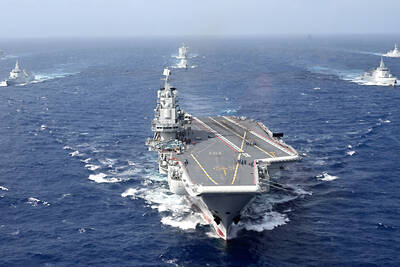
PROVOCATIVE: Chinese Deputy Ambassador to the UN Sun Lei accused Japan of sending military vessels to deliberately provoke tensions in the Taiwan Strait China denounced remarks by Japan and the EU about the South China Sea at a UN Security Council meeting on Monday, and accused Tokyo of provocative behavior in the Taiwan Strait and planning military expansion. Ayano Kunimitsu, a Japanese vice foreign minister, told the Council meeting on maritime security that Tokyo was seriously concerned about the situation in the East China and South China seas, and reiterated Japan’s opposition to any attempt to change the “status quo” by force, and obstruction of freedom of navigation and overflight. Stavros Lambrinidis, head of the EU delegation to the UN, also highlighted South China Sea
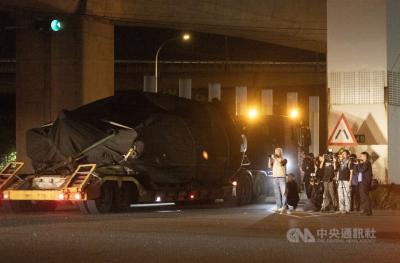
The final batch of 28 M1A2T Abrams tanks purchased from the US arrived at Taipei Port last night and were transported to the Armor Training Command in Hsinchu County’s Hukou Township (湖口), completing the military’s multi-year procurement of 108 of the tanks. Starting at 12:10am today, reporters observed more than a dozen civilian flatbed trailers departing from Taipei Port, each carrying an M1A2T tank covered with black waterproof tarps. Escorted by military vehicles, the convoy traveled via the West Coast Expressway to the Armor Training Command, with police implementing traffic control. The army operates about 1,000 tanks, including CM-11 Brave Tiger
Taiwan Semiconductor Manufacturing Co (TSMC, 台積電), the world’s largest contract chipmaker, said it expects its 2-nanometer (2nm) chip capacity to grow at a compound annual rate of 70 percent from this year to 2028. The projection comes as five fabs begin volume production of 2-nanometer chips this year — two in Hsinchu and three in Kaohsiung — TSMC senior vice president and deputy cochief operating officer Cliff Hou (侯永清) said at the company’s annual technology symposium in Silicon Valley, California, last week. Output in the first year of 2-nanometer production, which began in the fourth quarter of last year, is expected to
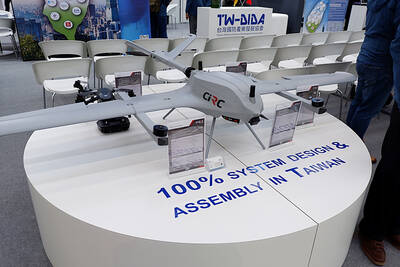
Taiwan’s drone exports surged past US$100 million in the first quarter, exceeding last year’s full-year total, with the Czech Republic emerging as the largest buyer, the Ministry of Economic Affairs said. Exports of complete drones reached US$115.85 million in the period, about 1.2 times the total recorded for all of last year, the ministry said in a report. Exports to the Czech Republic accounted for about US$100 million, far outpacing other markets. Poland, last year’s top destination, recorded about US$11.75 million in the first quarter. Taiwan’s drone exports have expanded rapidly in the past few years, with last year’s total


 RSS
RSS