


If Taiwan experiences an outbreak of disease that might seriously affect public health, the World Health Organization (WHO) will, if necessary, send experts here to give assistance, according to the contents of a memorandum of understanding it signed on May 14 with China.
The memorandum, which is designed to specify a stable mechanism for Taiwan to take part in WHO activities at the technical level, has already been put into effect.
Chang Jung-kung (張榮恭), spokesman and director of the department of mainland China affairs of the Chinese Nationalist Party (KMT), said yesterday that he has just obtained the contents of the memorandum through China's institutions in charge of Taiwan affairs.
According to Chang, the important contents of the memorandum say that the aim of the memorandum is to help Taiwan's medical and public-health experts attend the technical exchange activities held by the WHO Secretariat, while adhering to the UN Charter and the WHO's goals and organization rules.
Additionally, the exchanges will mainly touch on three kinds of issues:
First, the WHO Secretariat can invite Taiwan's medical and public health experts to individually attend its technical activities. If necessary, Taiwan's experts can say they come from "Taiwan, China."
Second, the WHO Secretariat can send its staff and experts to Taiwan to examine the public health and contagious disease situation, as well as discuss health issues with Taiwan's medical and public health experts and provide medical and public health technical assistance.
Third, if Taiwan faces a serious outbreak, the WHO Secretariat will, if necessary, send experts to Taiwan as soon as possible and give technical assistance, or invite Taiwan's medical and public health experts to join technical activities initiated by the secretariat.
According to Chang, the memorandum also says that this is a special arrangement in the absence of an agreement between the two sides of the Taiwan Strait on relevant matters. The two sides are encouraged to hold talks and jointly find an appropriate means for Taiwan to join the WHO as soon as possible.
The government has previously voiced opposition to the memorandum.
Hou Sheng-mou (
The Ministry of Foreign Affairs has also said that Beijing has no right to unilaterally hold consultations and make arrangements with the WHO for Taiwan's participation in the global health body's activities, and has said that the government cannot accept any arrangement that might downgrade the nation's status.
Sha Zukang (
"Therefore, China will first sign a memorandum of understanding with the WHO as a special arrangement prior to an agreement between Taipei and Beijing," he said.
also see story:
MAC official blasts KMT over health memorandum
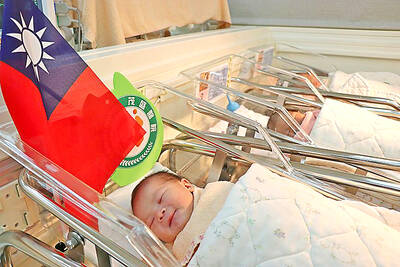
AGING: As of last month, people aged 65 or older accounted for 20.06 percent of the total population and the number of couples who got married fell by 18,685 from 2024 Taiwan has surpassed South Korea as the country least willing to have children, with an annual crude birthrate of 4.62 per 1,000 people, Ministry of the Interior data showed yesterday. The nation was previously ranked the second-lowest country in terms of total fertility rate, or the average number of children a woman has in her lifetime. However, South Korea’s fertility rate began to recover from 2023, with total fertility rate rising from 0.72 and estimated to reach 0.82 to 0.85 by last year, and the crude birthrate projected at 6.7 per 1,000 people. Japan’s crude birthrate was projected to fall below six,
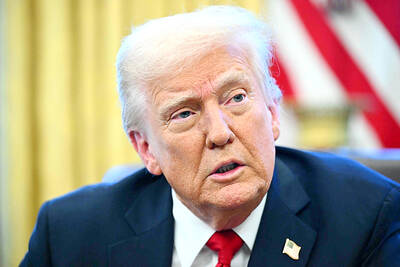
US President Donald Trump in an interview with the New York Times published on Thursday said that “it’s up to” Chinese President Xi Jinping (習近平) what China does on Taiwan, but that he would be “very unhappy” with a change in the “status quo.” “He [Xi] considers it to be a part of China, and that’s up to him what he’s going to be doing, but I’ve expressed to him that I would be very unhappy if he did that, and I don’t think he’ll do that. I hope he doesn’t do that,” Trump said. Trump made the comments in the context
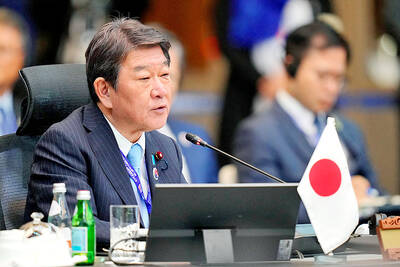
SELF-DEFENSE: Tokyo has accelerated its spending goal and its defense minister said the nation needs to discuss whether it should develop nuclear-powered submarines China is ramping up objections to what it sees as Japan’s desire to acquire nuclear weapons, despite Tokyo’s longstanding renunciation of such arms, deepening another fissure in the two neighbors’ increasingly tense ties. In what appears to be a concerted effort, China’s foreign and defense ministries issued statements on Thursday condemning alleged remilitarism efforts by Tokyo. The remarks came as two of the country’s top think tanks jointly issued a 29-page report framing actions by “right-wing forces” in Japan as posing a “serious threat” to world peace. While that report did not define “right-wing forces,” the Chinese Ministry of Foreign Affairs was

PREPAREDNESS: Given the difficulty of importing ammunition during wartime, the Ministry of National Defense said it would prioritize ‘coproduction’ partnerships A newly formed unit of the Marine Corps tasked with land-based security operations has recently replaced its aging, domestically produced rifles with more advanced, US-made M4A1 rifles, a source said yesterday. The unnamed source familiar with the matter said the First Security Battalion of the Marine Corps’ Air Defense and Base Guard Group has replaced its older T65K2 rifles, which have been in service since the late 1980s, with the newly received M4A1s. The source did not say exactly when the upgrade took place or how many M4A1s were issued to the battalion. The confirmation came after Chinese-language media reported


 RSS
RSS