


A Jordanian who disappeared in Iraq two weeks ago and was believed to have been kidnapped has been freed and is in the custody of Iraqi police, Foreign Ministry spokesman Ali al-Ayed told reporters yesterday.
Samer Tamaallah Hussein Ta-maallah "is now in the custody of Iraqi police in Karbala," a city southwest of Baghdad, al-Ayed said. He said Iraqi police helped free Tamaallah from his kidnappers in that city but asserted that details on the abduction and release were sketchy.
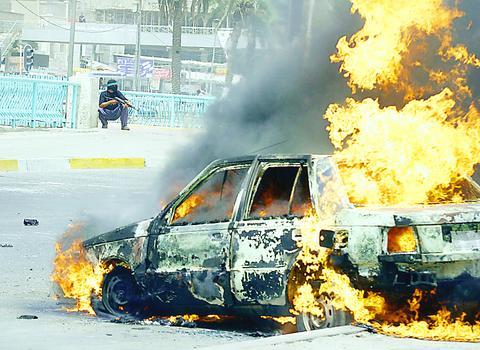
PHOTO: AFP
A militant Iraqi group has kidnapped a Lebanese man and demanded that his company end its activities in Iraq, according to a new video released to Lebanese media, and the hostage's father pleaded yesterday for his son's release.
Mohammed Raad, 27, missing in Iraq for 15 days, was seen on a video broadcast on Monday night by Lebanese Broadcasting Corporation television station, reading the kidnappers' demands.
Meanwhile a truncated delegation of Iraqis prepared to head by helicopter to Najaf yesterday in an effort to end a violent insurgency in the holy city led by radical Shiite cleric Muqtada al-Sadr.
The peace proposal, cobbled together by delegates at Iraq's National Conference, demanded that al-Sadr's militia put down its arms and join Iraq's political process in exchange for amnesty.
"This delegation is not negotiating, it is conveying the proposal," said delegation head Hussein al-Sadr, a distant relative of the cleric. "I hope this delegation will be able to solve one of the big problems that hit our country."
Earlier yesterday, a much larger delegation of 60 conference mem-bers had planned to take a convoy on the 160km journey to Najaf. That trip was delayed and eventually called off because of security concerns.
After that delegation waited for more than seven hours to arrange a security escort, Hussein al-Sadr suddenly announced he was taking a helicopter from Baghdad to Najaf. US Embassy spokesman Bob Callahan said the US was providing the delegation with two helicopters.
As the delegates waited, a mortar round hit a busy street several kilometers away, killing six people and injuring 35, officials said.
The blast on al-Rasheed Street set one building on fire and damaged seven cars, said Colonel Adnan Abdul-Rahman of the Interior Ministry.
It smashed the front of a barbershop, and blood mixed with shards of glass littered the street. Firefighters were hosing charred cars, their windshields smashed.
The conference itself was considered a major target for militants waging a 16-month-old insurgency in the country, and an explosion, reportedly from a mortar, shook the area near the building yesterday.
Al-Sadr aide Ali al-Yassiry, who said he came to the conference to talk to UN officials about the Najaf violence, said he was slightly injured in the blast.
Al-Sadr's followers have said they were boycotting the gathering, though several members of his movement have been seen there in recent days.
Meanwhile, explosions and gunfire shook the streets of Najaf yesterday as the clashes escalated. US troops entered the flashpoint Old City neighborhood, where al-Sadr's Mehdi Army militia was based, and US tanks encircled the Old City.
The militants have battling US troops from Najaf's vast cemetery and revered Imam Ali Shrine since Aug. 5, when a two-month old cease-fire broke down.
The conference delegation to Najaf was bringing a peace plan that demanded al-Sadr pull his men out of the shrine, where they have taken refuge, disband his militia and join in the country's political process in exchange for an amnesty for his fighters.
Al-Sadr aides said they welcomed the mission, but not the peace proposal.
"The demands of the [National Conference] committee are impossible. The shrine compound must be in the hands of the religious authorities. They are asking us to leave Najaf while we are the sons of Najaf," said al-Sadr aide Sheik Ali Smeisim.
Also see stories:
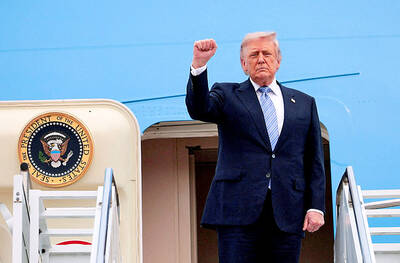
US-CHINA SUMMIT: MOFA welcomed US reassurance of no change in its Taiwan policy; Trump said he did not comment when Xi talked of opposing independence US President Donald Trump yesterday said he has not made a decision on whether to move forward with a major arms package for Taiwan after hearing concerns about it from Chinese President Xi Jinping (習近平). Trump’s comments on Taiwan came as he flew back to Washington after wrapping up critical talks in which both leaders said important progress was made in stabilizing US-China relations even as deep differences persist between the world’s two biggest powers on Iran and Taiwan. “I will make a determination,” Trump said, adding: “I’ll be making decisions. But, you know, I think the last thing we need right
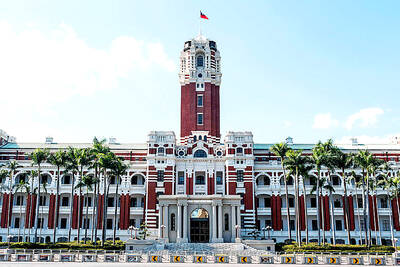
SECURITY: Taipei presses the US for arms supplies, saying the arms sales are not only a reflection of the US security commitment to Taiwan but also serve as a mutual deterrent against regional threats Taiwan is committed to preserving the cross-strait “status quo” and contributing to regional peace and stability, the Presidential Office said yesterday. “It is an undeniable fact that the Republic of China is a sovereign and independent democratic nation,” Presidential Office spokeswoman Karen Kuo (郭雅慧) reiterated, adding that Beijing has no right to claim sovereignty over Taiwan. The statements came after US President Donald Trump warned against Taiwanese independence. Trump wrapped up a state visit to Beijing on Friday, during which Chinese President Xi Jinping (習近平) had pressed him not to support Taiwan. Taiwan depends heavily on US security backing to deter China from carrying
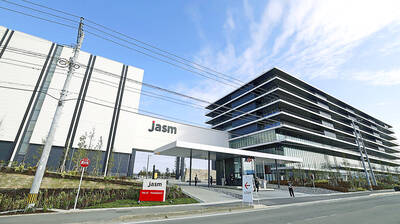
The subsidiary of Taiwan Semiconductor Manufacturing Co (TSMC, 台積電) in Kumamoto, Japan, turned a profit in the first quarter of this year, marking the first time the first fab of the unit has become profitable since mass production started at the end of 2024. According to the contract chipmaker’s financial statement released on Friday, Japan Advanced Semiconductor Manufacturing Inc (JASM), a joint venture running the fab in Kumamoto, posted NT$951 million (US$30.19 million) in profit in the January-to-March period, compared with a loss of NT$1.39 billion in the previous quarter, and a loss of NT$3.25 billion in the first quarter of
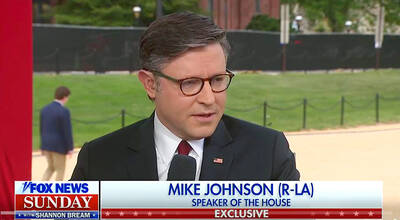
RESOLUTE BACKING: Two Republican senators are planning to introduce legislation that would impose immediate sanctions on China if it attempts to invade Taiwan US House of Representatives Speaker Mike Johnson on Sunday reaffirmed US congressional support for Taiwan, saying the US and “all freedom-loving people” have a stake in preventing China from seizing Taiwan by force. Johnson made the remarks in an interview with Fox News Sunday on US President Donald Trump’s summit with Chinese President Xi Jinping (習近平) last week. In an interview that aired on Friday on Fox News, just as Trump wrapped up a high-stakes visit to China, he said he has yet to green-light a new US$14 billion arms package to Taiwan and that it “depends on China.” “It’s a very good


 RSS
RSS