


The Chinese Nationalist Party's (KMT) Central Standing Committee stressed party unity yesterday, a day after Chairman Lien Chan (連戰) said his top aides will remain in their posts until the dispute over the presidential election has been settled.
The issue of resignations didn't come up at the meeting, at which committee members passed a resolution to form a group to guide party reforms.
The group, chaired by Lien, will consist of four sub-groups, including one in charge of the campaign for the year-end legislative election. The election sub-group will be headed by KMT vice chairmen Chiang Pin-kung (
Another sub-group, headed by Vice Chairman Wu Poh-hsiung (吳伯雄), will be responsible for party reform, and a sub-group in charge of policy and strategy will be headed by vice chairman Vincent Siew (蕭萬長). Taipei Mayor Ma Ying-jeou (馬英九), also a vice chairman, will head the sub-group in charge of "finding the truth" about the election-eve assassination attempt on President Chen Shui-bian (陳水扁) and Vice President Annette Lu (呂秀蓮).
"The purpose of the committee is to gather thoughts, ideas and suggestions from all party members and to turn them all into actions," said KMT deputy spokeswoman Kuo Su-chun (
Kuo added that Lien had asked the sub-group leaders to put forward substantial measures within one month's time.
Stressing the need for the party to stay united, Lien ordered KMT Secretary-General Lin Fong-cheng (
Amid calls by party members for them to resign to take responsibility for the KMT's poor election showing, the three had tendered their resignation last month.
While asking Lin, who started a leave-of-absence on Tuesday, to get back to work, Lien at the meeting yesterday promised committee members that he would take action to reform the party's staff and structure.
Committee member Chen Ding-yun (
"The election is not over yet. It is therefore pointless to now talk about reshuffling our leadership," Chen said.
The KMT-People First Party alliance has refused to concede defeat in the election. It has appealed to the Taiwan High Court to invalidate President Chen Shui-bian's (
Also See Story:
I'm still relevant, says Ma

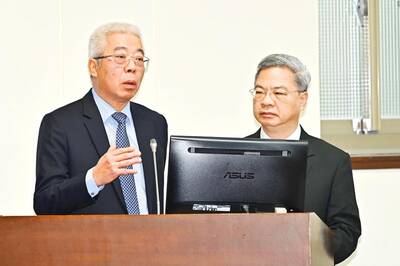
Taiwan has arranged for about 8 million barrels of crude oil, or about one-third of its monthly needs, to be shipped from the Red Sea this month to bypass the Strait of Hormuz and ease domestic supply pressures, CPC Corp, Taiwan (CPC, 台灣中油) said yesterday. The state-run oil company has worked with Middle Eastern suppliers to secure routes other than the Strait of Hormuz, through which about 20 percent of the world’s oil and liquefied natural gas typically passes, CPC chairman Fang Jeng-zen (方振仁) said at a meeting of the legislature’s Economics Committee in Taipei. Suppliers in Saudi Arabia have indicated they

South Korea has adjusted its electronic arrival card system to no longer list Taiwan as a part of China, a move that the Ministry of Foreign Affairs said would help facilitate exchanges between the two sides. South Korea previously listed “Taiwan” as “Taiwan (China)” in the drop-down menus of its online arrival card system, where people had to fill out where they came from and their next destination. The ministry had requested South Korea make a revision and said it would change South Korea’s name on Taiwan’s online immigration system from “Republic of Korea” to “Korea (South),” should the issue not be

Tainan, Taipei and New Taipei City recorded the highest fines nationwide for illegal accommodations in the first quarter of this year, with fines issued in the three cities each exceeding NT$7 million (US$220,639), Tourism Administration data showed. Among them, Taipei had the highest number of illegal short-term rental units, with 410. There were 3,280 legally registered hotels nationwide in the first quarter, down by 14 properties, or 0.43 percent, from a year earlier, likely indicating operators exiting the market, the agency said. However, the number of unregistered properties rose to 1,174, including 314 illegal hotels and 860 illegal short-term rental
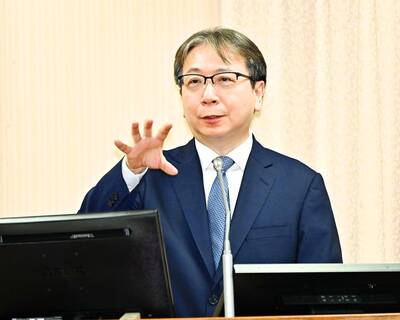
AIR ALERT: China’s reservation of airspace over the Yellow Sea and East China Sea could be an attempt to test the US’ response ahead of a Trump-Xi meeting, the NSB head said China’s attempts to infiltrate Taiwan are systematic, planned and targeted, with activity shifting from recruiting mid-level military officers to rank-and-file enlisted personnel, National Security Bureau (NSB) Director-General Tsai Ming-yen (蔡明彥) said yesterday. The Chinese Communist Party’s (CCP) integrates national security, intelligence operations and “united front” efforts into a dense network to conduct intelligence gathering and espionage in Taiwan, Tsai said at a meeting of the legislature’s Foreign Affairs and National Defense Committee. It uses specific networks to screen targets through exchange activities and recruiting local collaborators to establish intelligence-gathering organizations, he said. China is also shifting who it targets to lower-ranking military personnel,


 RSS
RSS