


US President George W. Bush's Aug. 6, 2001, daily intelligence briefing included information from three months beforehand that al-Qaeda members were trying to enter the US for an attack with explosives, sources familiar with the document said on Friday.
The document gave neither a time nor a suspected target for such an attack, the sources said. They said the information was based on a May 2001 intelligence report that suggested followers of Osama bin Laden wanted to cross from Canada into the US.
National security adviser Condoleezza Rice has described the President's Daily Brief of Aug. 6, 2001, as mostly a historical document. The sources said the report did include historical information citing al-Qaeda's desire to attack domestic US targets dating to 1997.
Democratic members of the bipartisan commission investigating the Sept. 11, 2001, attacks demanded on Thursday that the Aug. 6, 2001, document be released to help them with their probe. They questioned whether Bush could have done more to stop the attacks based on the memo.
The White House is working with the CIA and other agencies to declassify the intelligence memo, a highly unusual if not unprecedented public release of secret presidential intelligence briefing documents.
White House officials refused to discuss the sensitive, page-and-a-half document in any way because it was still classified. It could be released as early as today in Washington, and will likely intensify the debate over whether the Sept. 11 attacks could have been prevented.
Parts of the document were disclosed during Rice's testimony to the commission on Thursday. It is entitled "Bin Laden Determined to Strike Inside the United States."
Commissioner Bob Kerrey, a former Democratic senator, said it appeared the classified memo hinted at a possible hijacking.
"This is what the Aug. 6 memo said to the president -- that the FBI indicates patterns of suspicious activity, and I'd say it's consistent with preparations for hijacking," Kerrey said.
The sources familiar with the document said it advised Bush that at least 70 terrorism-related investigations were under way by the FBI in 2001.
Democratic commissioners demanded to know why the document was not seen as a warning of the attacks little more than a month later when al-Qaeda hijackers crashed two airplanes into the World Trade Center in New York, one into the Pentagon and seized another that appeared headed toward Washington but crashed in Pennsylvania.
Rice said the memo referred to uncorroborated reporting from 1998 that a terrorist might try to hijack a US aircraft and blackmail the government.

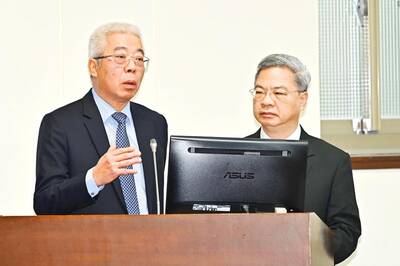
Taiwan has arranged for about 8 million barrels of crude oil, or about one-third of its monthly needs, to be shipped from the Red Sea this month to bypass the Strait of Hormuz and ease domestic supply pressures, CPC Corp, Taiwan (CPC, 台灣中油) said yesterday. The state-run oil company has worked with Middle Eastern suppliers to secure routes other than the Strait of Hormuz, through which about 20 percent of the world’s oil and liquefied natural gas typically passes, CPC chairman Fang Jeng-zen (方振仁) said at a meeting of the legislature’s Economics Committee in Taipei. Suppliers in Saudi Arabia have indicated they
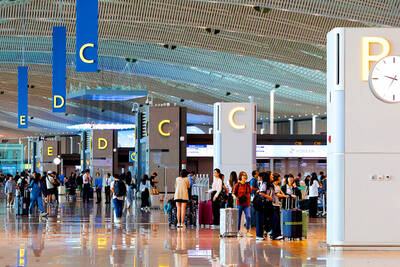
South Korea has adjusted its electronic arrival card system to no longer list Taiwan as a part of China, a move that the Ministry of Foreign Affairs said would help facilitate exchanges between the two sides. South Korea previously listed “Taiwan” as “Taiwan (China)” in the drop-down menus of its online arrival card system, where people had to fill out where they came from and their next destination. The ministry had requested South Korea make a revision and said it would change South Korea’s name on Taiwan’s online immigration system from “Republic of Korea” to “Korea (South),” should the issue not be

Tainan, Taipei and New Taipei City recorded the highest fines nationwide for illegal accommodations in the first quarter of this year, with fines issued in the three cities each exceeding NT$7 million (US$220,639), Tourism Administration data showed. Among them, Taipei had the highest number of illegal short-term rental units, with 410. There were 3,280 legally registered hotels nationwide in the first quarter, down by 14 properties, or 0.43 percent, from a year earlier, likely indicating operators exiting the market, the agency said. However, the number of unregistered properties rose to 1,174, including 314 illegal hotels and 860 illegal short-term rental

AIR ALERT: China’s reservation of airspace over the Yellow Sea and East China Sea could be an attempt to test the US’ response ahead of a Trump-Xi meeting, the NSB head said China’s attempts to infiltrate Taiwan are systematic, planned and targeted, with activity shifting from recruiting mid-level military officers to rank-and-file enlisted personnel, National Security Bureau (NSB) Director-General Tsai Ming-yen (蔡明彥) said yesterday. The Chinese Communist Party’s (CCP) integrates national security, intelligence operations and “united front” efforts into a dense network to conduct intelligence gathering and espionage in Taiwan, Tsai said at a meeting of the legislature’s Foreign Affairs and National Defense Committee. It uses specific networks to screen targets through exchange activities and recruiting local collaborators to establish intelligence-gathering organizations, he said. China is also shifting who it targets to lower-ranking military personnel,


 RSS
RSS