


An oil pipeline exploded and caught fire west of Baghdad yesterday, the US military said, and flames were seen reaching into the sky.
The cause of the explosion near the town of Hit, about 150km west of Baghdad, was being investigated, US military spokeswoman First Lieutenant Mary Pervez said. There were no US casualties, she said.
No other details were immediately available.
The explosion occurred on the same day Iraq was set to restart its first postwar oil exports.
Tankers in recent days have been loading crude for export at storage facilities in the Turkish oil terminal Ceyhan.
Iraq's oil pipeline from the northern fields of Kirkuk to Turkey's Ceyhan had been expected to start pumping yesterday once the tankers start taking on crude.
However, Iraqi oil officials in Kirkuk, 240km north of Baghdad, said yesterday that the Kirkuk-Ceyhan pipeline is still not ready to begin carrying crude.
Two explosions damaged the pipeline earlier this month in what Turkey's foreign minister called sabotage.
The pipeline damaged yesterday was in a different part of the country and was not expected to affect plans for the Kirkuk-Ceyhan operations. However, sabotage on Iraq's oil and electricity infrastructure has hurt reconstruction efforts overall.
Walid Jawad, director of projects for the Kirkuk-Ceyhan pipeline, said that most of the sabotage has been repaired but a lack of good communication with Turkey and the looting of control mechanisms have delayed a resumption of pumping.
He said Iraq still needs to import some materials to get the controls up and running.
The pipeline stopped pumping during the US-led war on Iraq, when shipping was stopped and the Ceyhan storage tanks filled to their capacity of 8 million barrels.
"Hopefully on Sunday when exports begin we will start pumping oil again," al-Jibouri said in an interview last week.
Full restart of Iraq's oil exports, around 2 million barrels a day before the war, have been delayed due to damage caused by saboteurs.
Meanwhile, US soldiers, acting on a tip, seized piles of top secret cryptography equipment and Iraqi intelligence documents in a raid Saturday on a community center.
The find, which includes references to the country's nuclear program, is being handed over to senior intelligence analysts to look for information on Iraq's banned weapons programs.
"It's potentially significant," said Captain Ryan McWilliams, an intelligence officer with the Army's 1st Armored Division, who examined the documents. He said there were "potentially some pretty strong documents regarding the intelligence service."
The intelligence haul came on the sixth day of a nationwide sweep to seize weapons and insurgents dubbed Operation Desert Scorpion.
Saturday's raid in Baghdad's Azamiyah district nabbed dozens of military radios, cryptography equipment and mapmaking plotters. Most of the equipment appeared to be old. It included equipment made by prominent US and European companies such as Motorola and Thompson.
McWilliams said informants told him Iraqi intelligence officials stashed the goods there in the last days of Saddam Hussein's regime. He added that the stash would be handed over to intelligence analysts at the division's headquarters at Baghdad International Airport to see if they relate to banned weapons programs.
Soldiers with flashlights examined documents strewn across the floor of two rooms above a funeral parlor. An Arabic interpreter pointed out the Top Secret and Personal markings.
One document, dated Feb. 7, 1998, appeared to be a manifest for secure communications equipment. The memo, sent from the National Security Council of Iraq, was addressed to the Iraqi Nuclear Organization, with a carbon to the Mukhabarat, the secret intelligence service.
Since the start of the invasion in March, US forces have been combing Iraq for clues to the country's banned nuclear, chemical and biological weapons programs. The searches have thus far failed to prove that Iraq harbored the unconventional weapons that US President George W. Bush cited as the main justification for war.
In his weekly radio address Saturday, Bush defended initial administration claims about the existence of the weapons but did not promise they will be found, as he had on other occasions until recently.
"We are determined to discover the true extent of Saddam Hussein's weapons programs, no matter how long it takes," Bush said.
On Saturday, the searching job -- usually handled by US intelligence operatives -- fell to the Gunners, a field artillery regiment, used to firing cannons in conventional battles.
Since June 15, the Gunners have been one of the busiest US units in Baghdad, seizing more than 60 suspects along with weapons, propaganda leaflets and cash.
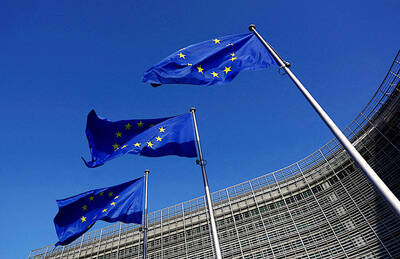
LEVERAGE: China did not ‘need to fire a shot’ to deny Taiwan airspace over Africa when it owns ‘half the continent’s debt,’ a US official said, calling it economic warfare The EU has raised concerns about overflight rights following the delay of President William Lai’s (賴清德) planned state visit to the Kingdom of Eswatini after three African nations denied overflight clearance for his charter at the last minute. Taiwanese allies Paraguay and Saint Kitts and Nevis, as well as several US lawmakers and the Inter-Parliamentary Alliance on China (IPAC) condemned China for allegedly pressuring the countries. Lai was scheduled to fly directly to Taiwan’s only African ally from yesterday to Sunday to celebrate the 40th anniversary of King Mswati III’s accession and his 58th birthday, but Seychelles, Mauritius and Madagascar suddenly revoked
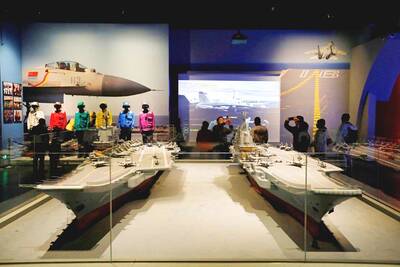
China on Wednesday teased in a video an aircraft carrier that could be its fourth, and the first using nuclear power, while making an allusion to Taiwan and vowing to further build up its islands, as it looks to boost maritime power, secure resources and bolster territorial claims. The video, issued on the eve of the 77th founding anniversary of the Chinese People’s Liberation Army Navy, featured fictional officers with names that are homophones of three commissioned aircraft carriers, the Liaoning (遼寧), Shandong (山東) and Fujian (福建). Titled Into the Deep, it showed a 19-year-old named “Hejian” (何劍) joining the group, sparking

BIG YEAR: The company said it would also release its A12 chip the same year to keep a ‘reliable stream of new silicon technologies’ flowing to its customers Taiwan Semiconductor Manufacturing Co (TSMC, 台積電) yesterday said its newest A13 chip is to enter volume production in 2029 as the chipmaker seeks to hold onto its tech leadership and demand for next-generation chips used in artificial intelligence (AI), high-performance-computing (HPC) and mobile applications. TSMC, the world’s biggest contract chipmaker, also unveiled its A12 chip at its annual technology symposium in Santa Clara, California. The A12 chip, which features TSMC’s super-power-rail technology to provide backside power delivery for AI and HPC applications, is also to enter volume production in 2029, a year after the scheduled release of the A14 chip. The technology moves
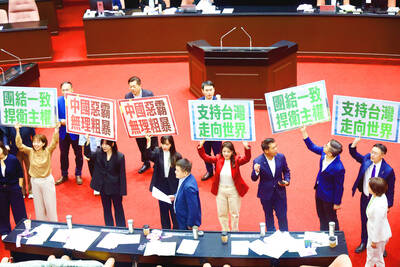
ESWATINI TRIP: The ‘irresponsible actions’ of three African nations set a dangerous precedent and they should be held accountable, a US representative said The US Senate Foreign Relations Committee on Thursday urged Washington not to normalize Chinese pressure, while a US lawmaker called on the US government to hold countries accountable for yielding to Beijing’s pressure to block President William Lai’s (賴清德) planned trip to Eswatini. Lai had been scheduled to visit Eswatini to attend birthday events for King Mswati III of Eswatini this week, but on Tuesday, the eve of his planned departure on Wednesday, the Presidential Office said the trip was “suspended” after the Seychelles, Mauritius and Madagascar unexpectedly withdrew overflight permission. “China reportedly pressured Mauritius, Seychelles, and Madagascar to deny airspace access


 RSS
RSS