


President Chen Shui-bian (
Chen made the announcement after meeting with senior executives from six major local industry and commercial associations and three economic think tanks to discuss the possible impact of SARS on the economy.
"We must consider the losses and threats presented by the spread of SARS on the entire industrial and business sector and study short, medium and long-term measures to cope with it," Chen said at the start of the meeting.
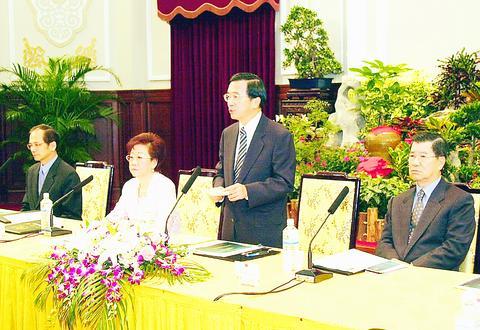
PHOTO COURTESY OF THE PRESIDENTIAL OFFICE
With world economic activity slowing and Taiwan's economy straining under the effects of the SARS outbreak, Chen said he decided to create the "Presidential Economic Advisory Panel" and accepted the recommendation of the business leaders that Siew should be its convener.
Chen said that Siew would invite academics, industrial advisors and other professionals to join the team during the next two weeks.
"I completely support President Chen's attempts to revive the economy and it is my honor and pleasure to serve as his personal advisor," Siew said.
The panel will advise the Executive Yuan on various public construction projects, such as a mass transit system for CKS International Airport, and on how to handle the shortage of government funds available to help revive the economy.
Siew, in his role as the chairman of the Chung Hua Institution for Economic Research, was invited to address the meeting on "New Policies for the Recreation of Taiwan's Economy."
Chen said Siew had many good ideas.
"I agreed with Chairman Siew's proposal to hold a world `high-tech fair' in 2008 and after the fair, the location will become an R&D park for international high-tech companies," Chen said.
He also promised to study and implement the "Asia-Pacific Operation Center Plan" proposed by Siew when he was a premier.
Chen asked government agencies including the Mainland Affairs Council to study a plan to allow direct cross-strait freight transportation.
Siew said in his report that the government had worked hard to boost the economy but that there was a gap between the effectiveness of the administration and expectations of the public.
He said the government should look to the New Deal of US president Franklin Roosevelt as a model of what should be done to revive the economy.
Siew was the vice presidential candidate when KMT Chairman Lien Chan (
In response to rumors he was a possible running mate for Chen in next year's presidential election, Siew said it was a ridiculous and impossible suggestion.
"I am retired. It is impossible for me to serve as a government official. I will no longer run for any elections," he said.
The KMT said that it hoped the DPP government would respect Siew's experience and suggestions and not just use him for political gains.
"As the leader of a civil research institute, [Siew] is responsible enough to make proposals," Lien said.
Leaders of the commercial and industrial communities hailed the formation of the panel and expressed confidence that it will be useful in boosting the economy.
Day Sheng-tong (
"The panel should give impetus and provide different mechanisms to help the country ride over the current difficulties and build a post-SARS economy," he said.
ROC General Chamber of Commerce chairman Gary Wang (
Also see story:

The National Chungshan Institute of Science and Technology yesterday showcased its locally developed variants of the Vision 60 robotic patrol dog, which it plans to deploy on the nation’s outlying territories in the South China Sea. The variants were produced under the Joint Lab project — created by the institute and domestic companies — and assembled with domestically produced motors, lenses and artificial intelligence (AI) systems alongside licensed tech from the US, Missile and Rocket Systems Research Division deputy director Jen Kuo-kang (任國光) told the media event at a military base in Taipei’s Dazhi (大直) area. Taiwan has built up its strengths
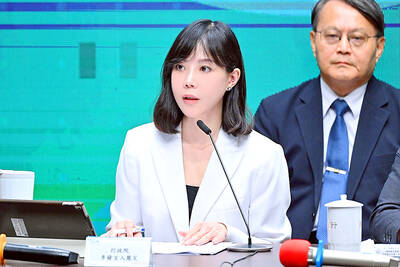
RIGHT DIRECTION: Taiwan’s efforts to prevent forced labor include a proposal to ‘fully prohibit’ employers from withholding workers’ documents, an official said Taiwan is to establish a mechanism to restrict imports of goods linked to forced labor, the Executive Yuan said yesterday, after the US proposed imposing additional tariffs on Taiwanese goods over labor concerns. “The Ministry of Labor and the Ministry of Economic Affairs are to establish an interministerial review procedure,” Executive Yuan spokesperson Michelle Lee (李慧芝) said at a news briefing in Taipei. “The government is to use the Foreign Trade Act [貿易法] as the legal basis to restrict imports of goods produced with forced labor” and bring its supply chain governance more in line with international standards on human rights, resilience
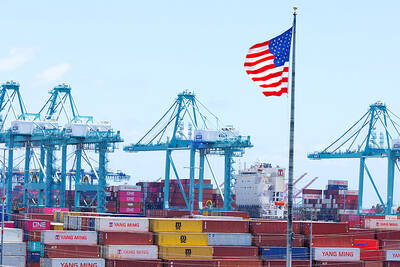
NOT IMMEDIATE: Taiwan has a chance to appeal the proposed 10 percent tariff before it starts, while other countries face a 12.5 percent tariff from the trade office Taiwan is among 60 economies determined by the US to have failed to impose or enforce a ban on the importation of goods produced with forced labor, according to a notice released on Tuesday by the Office of the US Trade Representative (USTR), which proposed imposing an additional 10 percent or more tariff on them. The USTR in a statement said that following an investigation, it had determined under Section 301 of the Trade Act of 1974 that the failure of the 60 economies to impose and effectively enforce a prohibition on the importation of goods produced with forced labor is
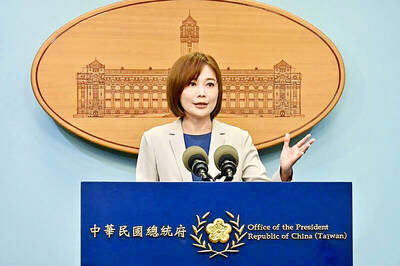
TIT-FOR-TAT: The US allegedly revoked the visa of a Chinese national working at Xinhua News Agency in the US in response to Beijing’s expulsion of Vivian Wang The Presidential Office yesterday condemned China for expelling a New York Times correspondent from Beijing following the newspaper’s interview with President William Lai (賴清德), saying the move highlighted Beijing’s suppression of press freedom and its threat to international news media. Taiwan has noted a series of recent incidents in which Beijing used similar tactics to “threaten and pressure international media outlets and journalists,” Presidential Office spokeswoman Karen Kuo (郭雅慧) said in a statement. “This concerns not only press freedom and freedom of expression, but also the safety of journalists, and Taiwan and relevant partners are paying close attention to the situation,” she


 RSS
RSS