


A Palestinian militant detonated explosives at a busy intersection yesterday as he was approached by police -- killing himself, but causing no other injuries in the second suicide bombing in northern Israel in two days.
On Sunday, three Israelis and a bomber were killed in a blast in an outdoor market in the coastal city of Netanya. The Popular Front for the Liberation of Palestine, or PFLP, a radical PLO faction, claimed responsibility for Sunday's attack.
The PFLP is headed by Ahmed Saadat, who is detained in a Palestinian jail in the West Bank town of Jericho under British and US supervision, along with a Palestinian Authority official suspected of weapons smuggling and four PFLP members convicted of killing an Israeli Cabinet minister.
An Israeli government spokesman, Danny Shek, said Israel has information that Saadat "might have been instrumental in commanding and masterminding the bombing." Shek said the circumstances of Saadat's detention should be looked at.
However, Deputy Defense Minister Dalia Rabin Pelossof said yesterday there was no conclusive proof that Saadat ordered the Netanya attack.
Saadat has given a phone interview from detention, and Israeli media reports said he had access to phones and has received visits from PFLP activists.
Mena Rawlings, a spokesman for the British Embassy in Tel Aviv, said British officials have asked Israel to substantiate the allegations that Saadat had a role in the bombing. "We recognize that it's a pressing matter for the detaining body which is the Palestinian Authority," Rawlings said, adding that US and British officials would raise the matter with the Palestinians.
There was no immediate claim of responsibility for yesterday's attack at the Taanakhim Junction, a few kilometers west of the West Bank.
Police said a local driver notified authorities when a man waiting at the junction's bus stop aroused his suspicion. When the patrol asked the man for identification, he exploded himself, said police spokesman Gil Kleiman.
In Sunday's attack in Netanya, three Israelis were killed and about 50 wounded. Among those killed was Arkady Wieselman, 39, a hotel chef who had narrowly escaped the March 27 bombing at the Park Hotel in Netanya, in which 29 diners were killed -- the deadliest bombing since such attacks began several years ago.
Israeli tanks briefly entered the West Bank towns of Tulkarem and Ramallah late Sunday, but there was no major retaliation for the Netanya bombing.

PROVOCATIVE: Chinese Deputy Ambassador to the UN Sun Lei accused Japan of sending military vessels to deliberately provoke tensions in the Taiwan Strait China denounced remarks by Japan and the EU about the South China Sea at a UN Security Council meeting on Monday, and accused Tokyo of provocative behavior in the Taiwan Strait and planning military expansion. Ayano Kunimitsu, a Japanese vice foreign minister, told the Council meeting on maritime security that Tokyo was seriously concerned about the situation in the East China and South China seas, and reiterated Japan’s opposition to any attempt to change the “status quo” by force, and obstruction of freedom of navigation and overflight. Stavros Lambrinidis, head of the EU delegation to the UN, also highlighted South China Sea

SILENCING CRITICS: In addition to blocking Taiwan, China aimed to prevent rights activists from speaking out against authoritarian states, a Cabinet department said The Ministry of Foreign Affairs (MOFA) yesterday condemned transnational repression by Beijing after RightsCon, a major digital human rights conference scheduled to be held in Zambia this week, was abruptly canceled due to Chinese pressure over Taiwanese participation. This year’s RightsCon, the world’s largest conference discussing issues “at the intersection of human rights and technology,” was scheduled to take place from tomorrow to Friday in Lusaka, and expected to draw 2,600 in-person attendees from 150 countries, along with 1,100 online participants. However, organizers were forced to cancel the event due to behind-the-scenes pressure from China, the ministry said, expressing its “strongest condemnation”
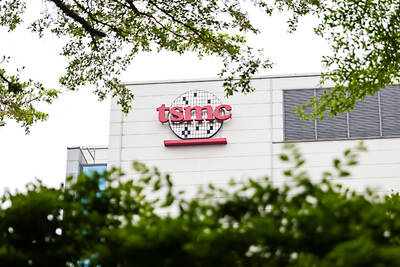
Taiwan Semiconductor Manufacturing Co (TSMC, 台積電), the world’s largest contract chipmaker, said it expects its 2-nanometer (2nm) chip capacity to grow at a compound annual rate of 70 percent from this year to 2028. The projection comes as five fabs begin volume production of 2-nanometer chips this year — two in Hsinchu and three in Kaohsiung — TSMC senior vice president and deputy cochief operating officer Cliff Hou (侯永清) said at the company’s annual technology symposium in Silicon Valley, California, last week. Output in the first year of 2-nanometer production, which began in the fourth quarter of last year, is expected to
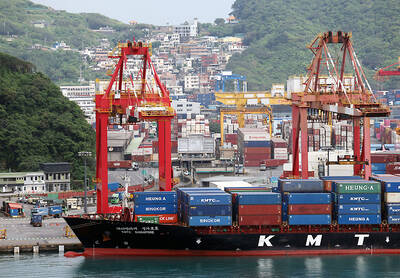
Taiwan’s economy grew far faster than expected in the first quarter, as booming demand for artificial intelligence (AI) applications drove a surge in exports, spilling over into investment and consumption, the Directorate-General of Budget, Accounting and Statistics (DGBAS) said yesterday. GDP growth was 13.69 percent year-on-year during the January-to-March period, beating the DGBAS’ February forecast by 2.23 percentage points and marking the most robust growth in nearly four decades, DGBAS senior official Chiang Hsin-yi (江心怡) told a news conference in Taipei. The result was powered by exports, which remain the backbone of Taiwan’s economy, Chiang said. Outbound shipments jumped 51.12 percent year-on-year to


 RSS
RSS