


Forget the supermarket pint and the NT$18 soft serve. Taipei’s independent ice cream parlors are churning out small-batch creations using seasonal, local ingredients — think regional produce, teas and native liquors. There’s something for everyone, whether you’re a vegan, a toddler, an office-worker, a creature of comfort or an adventurous eater.
SNOW KING ICE CREAM
Snow King Ice Cream has been around since 1947 and remains one of the foremost representatives of Taiwanese-style ice cream, which has an icier and even slightly chewy mouthfeel. The shop’s wide repertoire includes unlikely flavors like pork floss (NT$125), Thai basil (NT$100) and sesame oil chicken (NT$135).
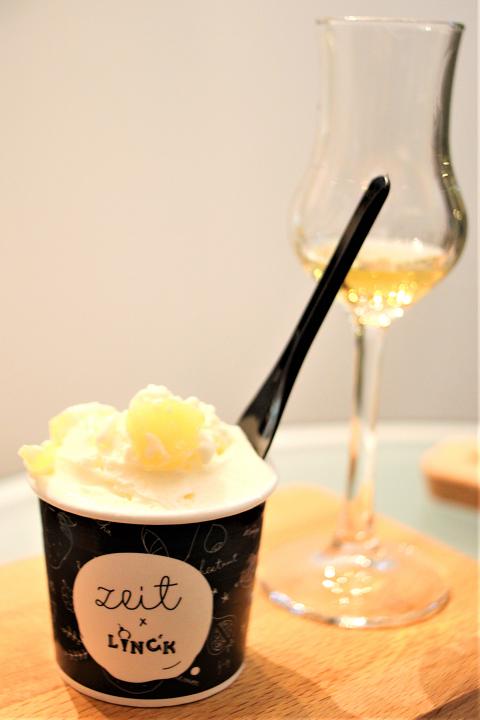
Photo: Davina Tham, Taipei Times
When I order a scoop of 58-percent Kinmen Kaoliang (NT$150) in broad daylight, the female proprietor shows a look of concern. The ice cream is sweetened just enough to cool the burn of the liquor, although a warming tingle remains. While the kaoliang’s natural fragrance is alluring, it might be difficult to finish the scoop because of the alcohol’s intensity. As the proprietor clears my half-full glass, she says kindly, “Kaoliang is not so suitable for young ladies,” and advises me to hold the staircase railing tightly on my way out.
Taiwanese beer (NT$120) also gets the ice cream treatment here. Not all flavors are unconventional — the shop’s bestseller is kidney bean (NT$95), a common topping on sweet beancurd, and in the summer, lychee (NT$110), mango (NT$100) and watermelon (NT$95) ice creams are made with real fruit.
SNOW KING ICE CREAM (雪王冰淇淋)
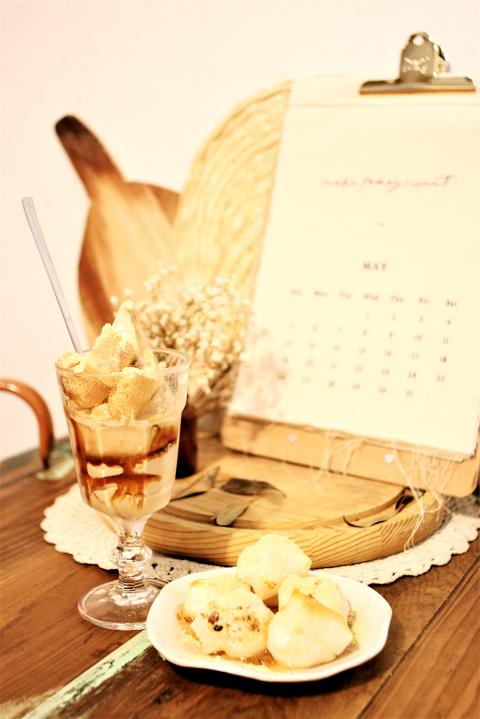
Photo: Davina Tham, Taipei Times
Address: 2F, 65, Wuchang St Sec 1, Taipei City
(台北市武昌街一段65號2樓)
Telephone: (02) 2331-8415
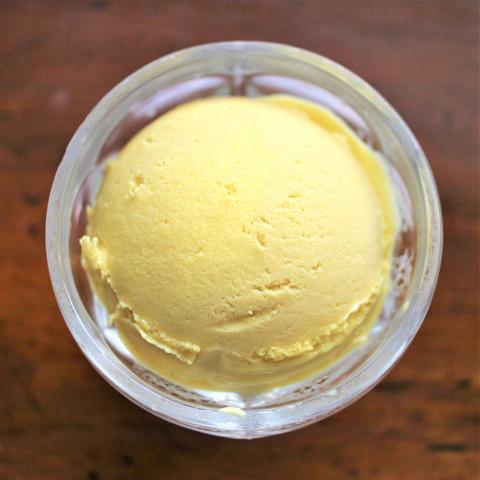
Photo: Davina Tham, Taipei Times
Open: Daily, noon to 8pm
Average meal: NT$100
Details: Cash only; English and Chinese menu
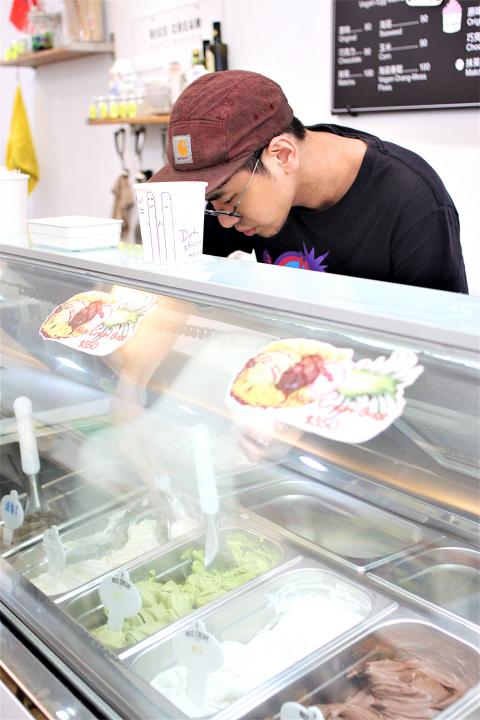
Photo: Davina Tham, Taipei Times
On the Net: www.facebook.com/snowkingicecream
ZEIT X LINCK
Located down a chic side street near Zhongshan MRT Station, this is a tiny offshoot of Linck Gelateria in Taoyuan. The gelato here is dense, smooth and fantastically flavored, featuring ingredients like the herb Chinese mesona (仙草), which is used to make grass jelly, peanuts from Kinmen, amaretti or Italian almond cookies, Sicilian pistachios and a mean Madagascan vanilla.
Zeit X Linck specializes in dessert alcohol pairings (NT$160 or NT$180) unique to each flavor of gelato. Apple cheesecake gelato, studded with chunks of the fruit, goes with honey-infused whisky. Chili-inflected chocolate is served with Kahlua, and peanut with a chocolate cream-based liquor. The suggested method is to eat up to a quarter of the gelato first and then pour the alcohol over bit by bit, adding more dimensions to an already stunning dessert.
If this all sounds a little too wild, the gelato can also be eaten neat (NT$110 or NT$140) or in a more conventional affogato (NT$160). The friendly proprietors, who seemed to be having a party of their own when I visited, also serve wine and cocktails, meeting the needs of the most world-weary adults.
ZEIT X LINCK (采 時代)
Address: 35, Chifeng St, Taipei City (台北市赤峰街35號)
Telephone: (02) 2558-9700
Open: Monday to Friday, 4pm to 10pm; Saturday and Sunday, 1pm to 10pm
Average meal: NT$160
Details: Chinese menu; reservations recommended for larger groups
On the Net: www.linckgelato.com
SMALL COURTYARD
Small Courtyard serves only one flavor of soft serve at a time, usually changing it up halfway through the week. This exclusivity works because the seasonal flavors and their accompaniments make for compelling duos, such as lychee with rose port jam, guava with roselle honey, red-skinned mango with moscato and tiramisu with chestnut paste.
It’s almost a relief not to have to choose, but if you want to plan your visit to catch a certain flavor, check the parlor’s Facebook page for updates in Chinese.
When I visit, the flavor of the day is Cuban rum and brown sugar (NT$150), which comes topped with morsels of homemade mochi. The price is a little steep for soft serve, which is airier and less rich than regular ice cream. But it’s worth the occasional summertime treat, especially in an exquisitely picturesque shop.
Small Courtyard also serves cooling aiyu jelly (愛玉, NT$80), grass jelly (NT$60), toasted mochi (NT$50 or NT$90) drizzled with a homemade sauce of your choice, cinnamon rolls (NT$60) and an array of teas.
SMALL COURTYARD (小涼院霜淇淋專門店)
Address: 34, Lane 148, Fuxing S Rd Sec 2, Taipei City (台北市復興南路二段148巷34號)
Telephone: (02) 2706-7623
Open: Tuesday to Sunday, 1pm to 9pm
Average meal: NT$150
Details: Cash only; English and Chinese menu
On the Net: www.facebook.com/jung.yard.softee
NICE CREAM
Nice Cream makes all-vegan ice creams with fresh soymilk, which start at NT$100 for a single scoop. The absence of dairy can barely be felt here, as the ice creams remain rich, velvety and satisfying. Robust flavors like chocolate and tieguanyin (鐵觀音) tea stand up well to the taste of the bean, which becomes a virtue in its own right in the signature soymilk flavor.
Sorbets made with fresh fruit hold their own against the soymilk-based flavors. Lemon sorbet may taste like sunbeam in a cup, but it’s also one of the most effective ways to stave off the heat.
NICE CREAM
Address: 6, Alley 40, Lane 181, Zhongxiao E Rd Sec 4, Taipei City
(台北市忠孝東路四段181巷40弄6號)
Telephone: (02) 8771-7150
Open: Wednesday to Monday, 12 noon to 10pm
Average meal: NT$100
Details: Cash only; English and Chinese menu
On the Net: www.facebook.com/nicecreamtaipei

The government released figures for October showing that, year on year, exports increased 49 percent to a record US$61.8 billion for the month. The dramatic increases were partly due to fall being the high season, but largely due to the AI boom driving demand for exports, which many investors fear is rapidly turning into a massive bubble. An editorial in this newspaper last month warned that the government should be ready in case the boom turns to bust. In previous boom-bust cycles, from shoes and textiles, through computer parts and accessories, to tools, bicycles and sporting goods, Taiwan has survived in
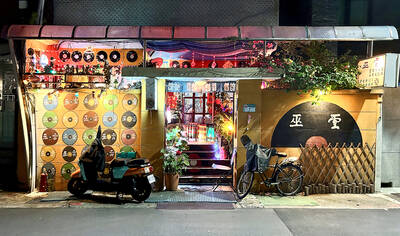
The Lee (李) family migrated to Taiwan in trickles many decades ago. Born in Myanmar, they are ethnically Chinese and their first language is Yunnanese, from China’s Yunnan Province. Today, they run a cozy little restaurant in Taipei’s student stomping ground, near National Taiwan University (NTU), serving up a daily pre-selected menu that pays homage to their blended Yunnan-Burmese heritage, where lemongrass and curry leaves sit beside century egg and pickled woodear mushrooms. Wu Yun (巫雲) is more akin to a family home that has set up tables and chairs and welcomed strangers to cozy up and share a meal

The second floor of an unassuming office building in central Bangkok is a strange place to encounter the world’s largest rodent. Yet here, inside a small enclosure with a shallow pool, three capybaras are at the disposal of dozens of paying customers, all clamoring for a selfie. As people eagerly thrust leafy snacks toward the nonchalant-looking animals, few seem to consider the underlying peculiarity: how did this South American rodent end up over 10,000 miles from home, in a bustling Asian metropolis? Capybara cafes have been cropping up across the continent in recent years, driven by the animal’s growing internet fame.

President William Lai (賴清德) has proposed a NT$1.25 trillion (US$40 billion) special eight-year budget that intends to bolster Taiwan’s national defense, with a “T-Dome” plan to create “an unassailable Taiwan, safeguarded by innovation and technology” as its centerpiece. This is an interesting test for the Chinese Nationalist Party (KMT), and how they handle it will likely provide some answers as to where the party currently stands. Naturally, the Lai administration and his Democratic Progressive Party (DPP) are for it, as are the Americans. The Chinese Communist Party (CCP) is not. The interests and agendas of those three are clear, but


 RSS
RSS