


Wang Tzer-shing (王澤馨) has built an enviable reputation over the course of the 11 ballet galas that her company, Art Wave, has produced in Taipei, as well as shows in Singapore and one last year in Taichung. It is a reputation for quality that not only attracts audiences from around Taiwan and abroad for the annual shows, but one that has some of the most famous dancers in the ballet world leaping at the opportunity to be on her call list.
FIRST-RATE CHOREOGRAPHERS
The program for the 12th Ballet Star Gala (2018 第十二屆國際芭蕾舞星GALA) is filled with works by some of the hottest choreographers working in ballet today: David Dawson, Wayne McGregor, Benjamin Millepied, Hans van Manen, Mauro Bigonzetti, Nikolas Arz and Angelin Preljocaj, as well as pas de duex from beloved classics such as Giselle, Swan Lake and John Cranko’s Romeo and Juliet.
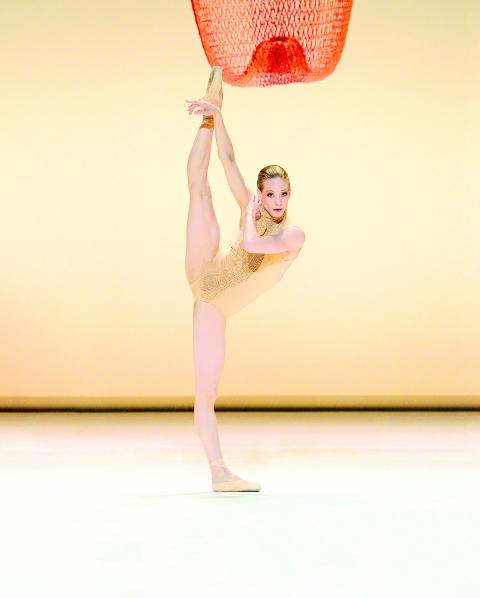
Photo Courtesy of Stuttgart Ballett
There is a world premiere, Arz’s Made of Stone, and three Asian premieres: Dawson’s At the End of the Day, an excerpt from McGregor’s Kairos and Millepied’s Closer. There will also be a Taiwan premiere, Trois Gnossiennes, by Dutch choreographer van Manen.
“Every year we want to include pieces that have never been seen before in Taiwan. The dancers also look forward to performing here. They want to show their best,” Wang said.
This year Wang decided to try something different, doing a show in Taipei and Taichung the same weekend, first on Friday at the National Theater and then on Sunday afternoon at the National Taichung Theater.
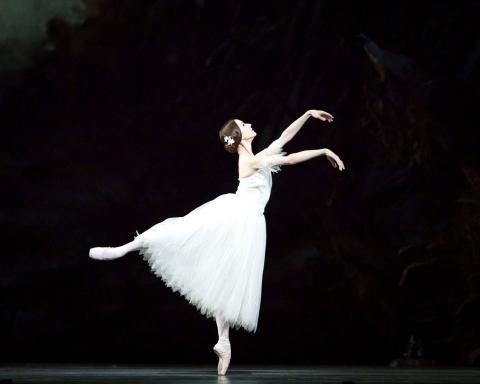
Photo courtesy of Helen Maybanks
The Taipei show also attracted sponsorship of BNP Paribas SA, which Art Wave worked with in 2015 to bring Sylvie Guillem’s Life in Progress show to Taipei as part of her farewell world tour.
However, for many ballet fans, who is dancing is perhaps even more important that what they are dancing.
The first to arrive flew in on Tuesday morning: Maria Kochetkova, who just retired from the San Francisco Ballet last month after 11 years, and Sebastian Kloborg, formerly of the Royal Danish Ballet and Gauthier Dance/Theaterhaus Stuttgart, who is now freelance guest artist and choreographer. Kochetkova has appeared in three previous galas, while this is Kloborg’s first visit to Taiwan.
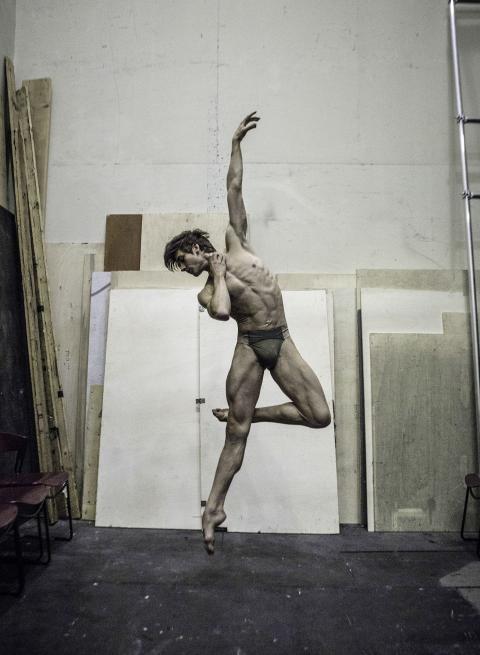
Photo courtesy of Kim Youn-sik
From the Stuttgart Ballet come Friedemann Vogel, almost a gala regular, and Spanish-born Alicia Amatriain, who will be making her third appearance.
The Royal Ballet is being represented by Marianela Nunez, who danced in Taipei with the company in 2014, and Vadim Muntagirov, who was seen Taipei with the English National Ballet in 2011.
Igor Kolb of the Mariinsky Theatre is making his 10th trip to Taiwan, but his partner this weekend is a new face for local audiences, Oksana Bondareva, formerly of the Mariinsky and now a guest artist with Mikhailovsky Theatre St Petersburg.
Paris Opera Ballet principals Ludmila Pagliero and Karl Paquette are also newcomers, while from the Bayerische Staatsoper come Laurretta Summerscales and Yonah Acosta, who both moved from the English National Ballet to the Munich-based company last fall.
STELLAR PROGRAM
Kolb and Bondareva are scheduled to open the show with a pas de deux from The Nutcracker and then perform Made of Stone in the second half.
Kochetkova and Kloborg are dancing At the End of the Day, which they just premiered on June 5 in Moscow, as well as Closer, while Pagliero and Paquette will perform Trois Gnossiennes and an excerpt from Preljocaj’s Le Parc, and Amatrian and Vogel will partner in Bigonzetti’s Kazimir’s Colors and the Romeo and Juliet Balcony Pas de Deux.
Summerscales and Acosta will dance a 20th century classic, Diana and Actaeon as well as the Kairos excerpt, while Nunez and Muntagirov are sticking to the classics: a pas de deux from Giselle and the Black Swan Pas de Deux from Swan Lake.
Wang laughed when asked what her favorite pieces were.
“I am really, really looking forward to David Dawson’s piece. I admire him so much; also McGregor’s and Millepied’s,” she said. “It is hard to say which is a favorite, as each is unique, and they have different styles.”
“I am also looking forward to classic pas de deux like the balcony scene from Romeo and Juliet. I saw Alicia and Friedemann perform last year in Singapore and their chemistry was so touching,” Wang said.
“The Royal partnership is strong,” she said. “Classic pas de deux are difficult to do, but they chose the two pieces they will perform.”
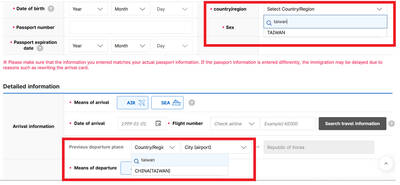
Jason Han says that the e-arrival card spat between South Korea and Taiwan shows that Seoul is signaling adherence to its “one-China” policy, while Taiwan’s response reflects a reciprocal approach. “Attempts to alter the diplomatic status quo often lead to tit-for-tat responses,” the analyst on international affairs tells the Taipei Times, adding that Taiwan may become more cautious in its dealings with South Korea going forward. Taipei has called on Seoul to correct its electronic entry system, which currently lists Taiwan as “China (Taiwan),” warning that reciprocal measures may follow if the wording is not changed before March 31. As of yesterday,

The Portuguese never established a presence on Taiwan, but they must have traded with the indigenous people because later traders reported that the locals referred to parts of deer using Portuguese words. What goods might the Portuguese have offered their indigenous trade partners? Among them must have been slaves, for the Portuguese dealt slaves across Asia. Though we often speak of “Portuguese” ships, imagining them as picturesque vessels manned by pointy-bearded Iberians, in Asia Portuguese shipping between local destinations was crewed by Asian seamen, with a handful of white or Eurasian officers. “Even the great carracks of 1,000-2,000 tons which plied
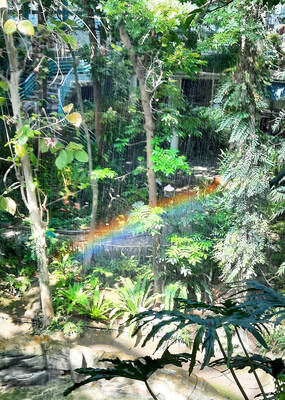
It’s only half the size of its more famous counterpart in Taipei, but the Botanical Garden of the National Museum of Nature Science (NMNS, 國立自然科學博物館植物園) is surely one of urban Taiwan’s most inviting green spaces. Covering 4.5 hectares immediately northeast of the government-run museum in Taichung’s North District (北區), the garden features more than 700 plant species, many of which are labeled in Chinese but not in English. Since its establishment in 1999, the site’s managers have done their best to replicate a number of native ecosystems, dividing the site into eight areas. The name of the Coral Atoll Zone might
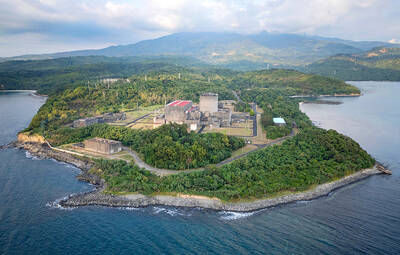
Nuclear power is getting a second look in Southeast Asia as countries prepare to meet surging energy demand as they vie for artificial intelligence-focused data centers. Several Southeast Asian nations are reviving mothballed nuclear plans and setting ambitious targets and nearly half of the region could, if they pursue those goals, have nuclear energy in the 2030s. Even countries without current plans have signaled their interest. Southeast Asia has never produced a single watt of nuclear energy, despite long-held atomic ambitions. But that may soon change as pressure mounts to reduce emissions that contribute to climate change, while meeting growing power needs. The


 RSS
RSS