


Spring is a time for bamboo shoots, an ingredient for which the Taiwanese have a particular fondness. There are a wide variety of bamboo shoots available, the most celebrated at the moment being the sword bamboo shoots (劍筍), which is a specialty of southern Hualien County. I wrote about these last year at about this time, and the short season for this delicacy is currently in full swing.
While sword bamboo is prized as a fresh product, makino bamboo shoots (桂竹筍), which also have a relatively short season and are particularly associated with the months following the Tomb Sweeping Festival, are widely used as a preserved product, so it is easy to forget that they can be eaten fresh, with only a little additional preparation.
Makino bamboo shoots up with the plum rains, growing up to 20cm in a single day. In their fresh state they do not keep well and so they are usually processed immediately after harvest. At its simplest, this involves steaming or cooking in salted water before sealing in tins, jars or vacuum packs. Inevitably, there have been rumors that unscrupulous merchants use chemicals to produce better color and extend shelf life, issues that surround all preserved foods, so if you are able to, buy the shoots fresh and process them yourself.
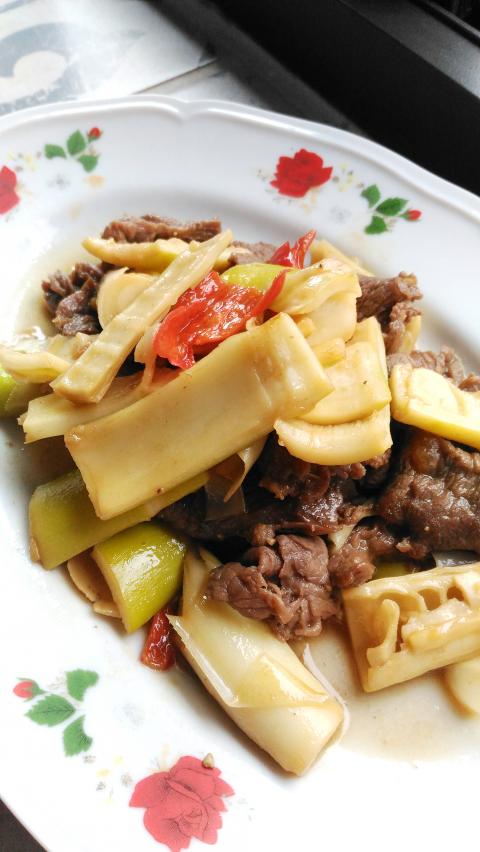
Photo: Ian Bartholomew
PROCESSING THE SHOOTS
The bamboo shoots should be processed as soon after purchase as possible. The downside of these excellent bamboo shoots is that they rapidly turn sour if kept unprocessed after harvesting, and as they dry out with storage, become too fibrous to be eaten with pleasure.
Some form of boiling or steaming is essential in the preparation of all bamboo as they contain taxiphyllin, a cyanogenic glycoside, which is toxic for humans.
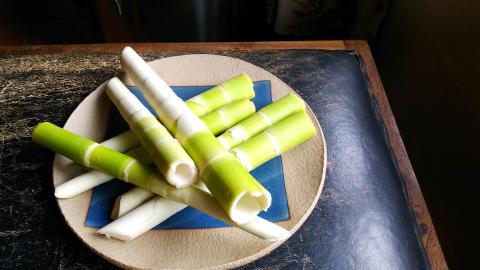
Photo: Ian Bartholomew
To process, remove as much of the base as you think might be too hard or fibrous and cut away any stiff outer layers if they have not already been removed. Put in cold water with a generous pinch of salt, bring to a boil, cover and simmer over medium heat for about 30 minutes (some sources recommend as much as two to three hours, particularly if you intend to use them as a cold side dish without further cooking).
This process also helps remove any bitterness in the flavor.
Drain the shoots and once they are cool, place in an air tight container and refrigerate. They can be kept this way without any loss of flavor for up to a month. Freezing them in the cooled cooking water is suggested for much longer preservation, but I have yet to test this method myself.
As with the monkey head mushrooms that I talked about last month, this is a veg that requires a little investment of time up front, but when that is done, it can be easily put aside in the fridge or freezer and is ideal for preparation of a quick meal.
VERSATILE SHOOTS
Makino bamboo shoots, with their delicate flavor and pleasant crunch, are extremely versatile in the kitchen, fitting in perfectly with anything from soups to braises. The classic presentation is in the Hakka dishes of Makino bamboo braised with Fucai (福菜), a type of preserved mustard green, or with belly pork. It is also very pleasant in the Taiwan standard of pork rib soup, where its flavor comes to the fore. But perhaps its most ubiquitous presence is as a stir fry, needing little more than a bit of garlic and some soy sauce to make a perfectly presentable dish that goes brilliantly with rice.
From a health perspective, Makino shoots are hugely rich in fiber. In fact, such is its strength and durability, this type of bamboo is highly regarded as a building material, particularly for indoor furnishings, in which its delicate fragrance is also a factor in its popularity, and as scaffolding.
The high fiber content is the reason for the longer preparatory cooking time, which helps break down the fibers. This fiber content is good for alleviating constipation and reducing levels of bad cholesterol, and there are suggestions that it helps protect the digestive organs from toxic compounds in food, reducing the risk of colon-rectal cancer.
Bamboo shoots generally are low in calories, so they are excellent for weight loss, and Makino shoots are rich in Vitamin B complex, helping to improve metabolic function, as well as being rich in a wide variety of minerals.
Makino bamboo is usually foraged from forests where it grows naturally, so in general fresh Makino shoots are free of any pesticide and herbicide residues, adding to their appeal as a food.
Stir Fried Makino Shoots with Beef
Recipe
(serves two)
This is a stir fry that does not require high temperatures and as such is a bit of a cheat, but as nice as a good night market fry up can be, the oily smoke that this kind of cooking generates at home is not very nice. I find myself doing things at much lower heat these days, and while textures and flavors are different, this is not altogether a bad thing. The tenderloin in this recipe actually tastes better without having to hit a wall of heat when it goes into the pan, and after boiling, the bamboo is already cooked, and only needs the heat to absorb flavor. If you have already prepared the bamboo shoots in advance, the whole thing takes less than 15 minutes to put together and is splendid served with white rice.
Ingredients
200g beef tenderloin
300g Makino bamboo shoots
1 tbsp light soy
1 clove garlic
1 large chili, seeded
half tsp white pepper
half tsp sugar
2 tbsp olive oil
1 tsp chili oil (optional)
1 tsp white sesame seeds
Directions
1. If you have fresh bamboo shoots, prepare as stated above. Once you have the cooled bamboo shoots, pull them apart lengthwise then cut into sections.
2. Thinly slice the beef. If your knife is not butcher-shop sharp, the best way to ensure nice thin slices is to cut the beef while it is still semi-frozen and firm.
3. Mix the beef slices with a mixture of soy, white pepper and sugar until well coated.
4. Heat a frying pan with the olive oil over medium heat. Add the bamboo shoots, garlic and chili then gently fry for two minutes.
5. Add the beef and fry over medium heat until it is evenly colored. Do not over cook.
6. Dress the dish with chili oil (if using) and white sesame seeds. Serve with rice.
Ian Bartholomew runs Ian’s Table, a small guesthouse in Hualien. He has lived in Taiwan for many years writing about the food scene and has decided that until you look at farming, you know nothing about the food you eat.
He can be contacted at Hualien202@gmail.com.

What was the population of Taiwan when the first Negritos arrived? In 500BC? The 1st century? The 18th? These questions are important, because they can contextualize the number of babies born last month, 6,523, to all the people on Taiwan, indigenous and colonial alike. That figure represents a year on year drop of 3,884 babies, prefiguring total births under 90,000 for the year. It also represents the 26th straight month of deaths exceeding births. Why isn’t this a bigger crisis? Because we don’t experience it. Instead, what we experience is a growing and more diverse population. POPULATION What is Taiwan’s actual population?

For the past five years, Sammy Jou (周祥敏) has climbed Kinmen’s highest peak, Taiwu Mountain (太武山) at 6am before heading to work. In the winter, it’s dark when he sets out but even at this hour, other climbers are already coming down the mountain. All of this is a big change from Jou’s childhood during the Martial Law period, when the military requisitioned the mountain for strategic purposes and most of it was off-limits. Back then, only two mountain trails were open, and they were open only during special occasions, such as for prayers to one’s ancestors during Lunar New Year.

You would never believe Yancheng District (鹽埕) used to be a salt field. Today, it is a bustling, artsy, Kowloon-ish “old town” of Kaohsiung — full of neon lights, small shops, scooters and street food. Two hundred years ago, before Japanese occupiers developed a shipping powerhouse around it, Yancheng was a flat triangle where seawater was captured and dried to collect salt. This is what local art galleries are revealing during the first edition of the Yancheng Arts Festival. Shen Yu-rung (沈裕融), the main curator, says: “We chose the connection with salt as a theme. The ocean is still very near, just a
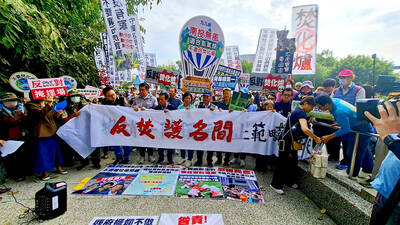
A key feature of Taiwan’s environmental impact assessments (EIA) is that they seldom stop projects, especially once the project has passed its second stage EIA review (the original Suhua Highway proposal, killed after passing the second stage review, seems to be the lone exception). Mingjian Township (名間鄉) in Nantou County has been the site of rising public anger over the proposed construction of a waste incinerator in an important agricultural area. The township is a key producer of tea (over 40 percent of the island’s production), ginger and turmeric. The incinerator project is currently in its second stage EIA. The incinerator


 RSS
RSS