


The Five Years On exhibit marks the end of Chinese President Xi Jinping’s (習近平) first term in power but some wonder whether he will ever relinquish his leadership.
When Soviet architect Sergei Andreyev designed the Beijing Exhibition Center more than six decades ago, it symbolized the awkward alliance between former Chinese Communist Party (CCP) chairman Mao Zedong’s (毛澤東) China and the USSR.
In the autumn of this year it has become a monument to just one man.
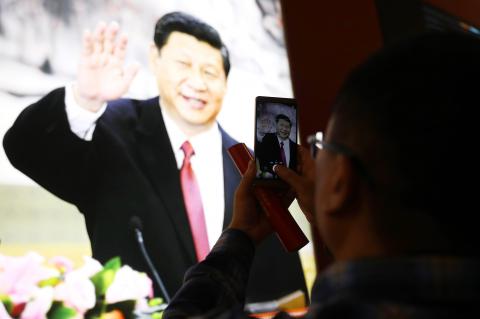
PHOTO: EPA ,Wu Hong
“Maybe he’s our idol,” says Huang Xingchen, a 28-year-old policeman and one of thousands of Xi Jinping fans to stream into the 1950s expo hall since a show trumpeting the feats of China’s current leader opened there last week.
Officially, the Five Years On exhibit — timed to mark the end of Xi’s first term in power — is a celebration of the advances China as a whole has made in that time.
But Xi, whose supremacy will take center stage when the CCP’s 19th National Congress kicks off in Beijing on Oct. 18, is the undoubted star of the show.
THE TALENTED MR XI
Scores of photographs of the 64-year-old strongman adorn the walls of the retrospective, split by CCP curators into 10 thematic “zones” touting Xi’s purported triumphs in areas such as foreign policy, the environment and the war on corruption.
Exhibition guides in burgundy flight attendant uniforms proffer anecdotes about the travails of a leader party officials now hail as their “core.”
“I bet Theresa May would like to have an exhibition like that in five years time,” says Roderick MacFarquhar, a Harvard University professor and former British MP who specializes in the nebulous world of elite Chinese politics.
The Xi on show in the Beijing exhibition is a man of many friends and many talents.
In one room, visitors find an image of Xi the international statesman rubbing shoulders with the Queen Elizabeth II and Prince Philip on Horse Guards Parade. In another, field commander Xi brandishes a Chinese assault rifle while touring a People’s Liberation Army garrison in Macau.
Visitors also encounter Xi the conservationist: he caresses a baby elephant at a Zimbabwean wildlife sanctuary; he is applauded by environmental officials on the Tibetan plateau; he appears at the 2015 Paris climate conference, quoting Victor Hugo as he commits to fighting global warming: “Les ressources supremes sortent des resolutions extremes,” China’s green supremo declares.
BRINGER OF BLUE SKIES
Xi’s conquests are also remembered in cross-stitch form. An embroidery entitled “The One Who Cares the Most” hangs from one wall, memorializing the day Xi dropped in on villagers in Hunan province to advance his crusade against poverty.
Xi the wordsmith is also honored. A towering bookshelf is stacked with copies of his tome on governance in Russian, Portuguese and Hungarian.
“We all support him,” says Xu Fangchao, 29, a HR worker who was admiring the collection with friends.
Where there are no images of Xi, glass cabinets contain tributes to his reign. One features a bright yellow jersey sent to him by Pele, Brazil’s footballing king. Another holds a football shirt gifted by high schoolers during a US tour: the number “1” is written on its back next to Xi’s name in mustard lettering.
Visitors to the exhibit — many bureaucrats attending at the behest of their CCP work units — voiced support for their ruler.
“He’s the best [ambassador for China] in history,” declared family planning official Hu Tongyu, 37, as he studied a portrait of Xi with Russian President Vladimir Putin. Lu Chunyan, 40, gave Xi’s war on pollution the thumbs-up.
“The number of blue-sky days has been going up... [he] must be playing a leading role.”
XI-ISM?
Chinese officials bristle at the suggestion Beijing is seeking to build a Mao-style cult of personality around Xi. But the exhibition’s relentless focus on the president only reinforces that impression.
In the military section no fewer than 24 photographs of Xi are on display, as well as two large screens on which his image repeatedly appears. Xi’s words of wisdom also enjoy pride of place.
“The party must ... unswervingly push forward the great project of Party building, making it stronger and more powerful — Xi Jinping,” reads one installation.
MacFarquhar, the author of a seminal work on Mao Zedong, said the Xi showcase highlighted his determination to establish himself as a similarly transformative figure.
“There can never be another Mao, but there could never be another Lenin. That doesn’t mean to say there can’t be another Stalin or a Xi. I’m not suggesting Xi will be a brutal murderer like Stalin. But that there can be a second great leader after the founding father, we have seen proof of that ... No leader in China since Mao has had the kind of treatment that Xi Jinping has,” he added.
Such is the buzz now surrounding Xi that there is growing speculation he will seek to stay in power after his second, and supposedly last term, ends in 2022. No obvious successor has emerged while Xi is expected to use this month’s conclave to write his omnipotence into the party’s charter, adding a body of Xi-related ideology that puts him in the same political league as Mao and Deng Xiaoping (鄧小平).
“Maybe history... will give him much more time, for example maybe a third term; maybe a fourth ... Who knows?” says Wang Wen (王文), a pro-party scholar from People’s University in Beijing mused suggestively.
“I think most of the Chinese hope ... he can stay in the position [for] much more time.”
That prospect will alarm liberals who accuse Xi of waging the most severe crackdown on free speech in decades. MacFarquhar said he was convinced it was Xi’s plan.
“My view has long been that he does not intend to retire, ever — not until God does it for him. So what they are doing at the moment with this enormous propaganda campaign is to say: ‘This man has got the secrets for a modern China: standing up for itself in the South China Sea and elsewhere, dominating the world, eventually. And in order to do that he needs to stick around. Not just for a quick five years or 10 years — he needs to be there forever, guarding it.’”
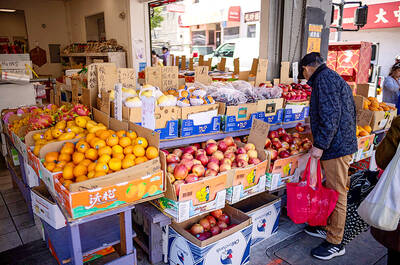
Ajay Verma, a consultant gastroenterologist at Kettering general hospital in Northamptonshire, says our gut is a “complex machine.” “It is constantly providing us with the nutrition we need, initially to grow and develop, and then for us to survive, thrive and repair from injury and illness.” How can we keep it functioning well? Put simply: “Make sure what you put into it is balanced, and that you clear out its waste products adequately,” Verma says. “In a general gastroenterology clinic, the most common conditions we see are irritable bowel syndrome (IBS), gastroesophageal reflux disease, inflammatory bowel disease and constipation,” says Nisha
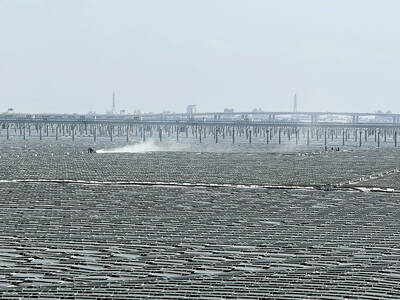
The arithmetic is straightforward and uncomfortable. By the end of 2025, Taiwan had committed itself to a 50-30-20 electricity mix — half natural gas, 30 per cent coal, 20 per cent renewables. The Ministry of Economic Affairs’s (MOEA) own monthly energy reports tell a different story. Natural gas reached 47.8 per cent of generation last year. Coal stood at 35.4 per cent, comfortably above its target ceiling. Renewables came in at 13.1 per cent, well short of the 20 per cent Taipei had pledged a decade earlier. Installed renewable capacity reached roughly half of the 12 gigawatts (GW) the government
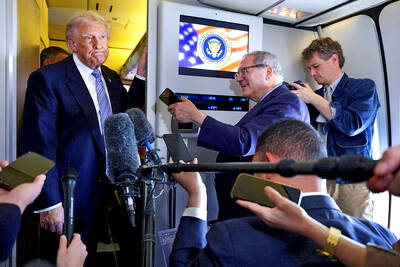
Last week US President Donald Trump was asked by a reporter whether he would speak on the phone to the President of Taiwan. “l’ll speak to him. I speak to everybody. We have that situation very well in hand,” Trump said. This marked the second time in a couple of weeks he had said he would talk to the President of Taiwan. In 2016 he famously took a call from then-president Tsai Ing-wen (蔡英文), when he was president-elect. Despite warnings that the apocalypse was nigh because of a phone call, the world quickly forgot about the conversation between two democratically-elected presidents.

May 25 to May 31 Few believed that apples could be cultivated on a commercial scale in Taiwan’s high mountains. When horticulturalist Cheng Chao-hsiung (程兆熊) first proposed the idea in 1955, both American and Taiwanese colleagues dismissed it as implausible, arguing that temperate fruit could not be reliably grown on a subtropical island, especially on rugged terrain. However, it was this terrain in the Central Mountain Range where many Chinese Civil War veterans were resettled in the late 1950s. With limited job prospects and no family in Taiwan, they were placed on cooperative farms aimed toward self-sufficiency. Some say the conditions


 RSS
RSS