


Rounding out what has been a very good year for dance, three shows will be presented this weekend by three very different companies.
Yao Shu-fen’s (姚淑芬) Century Contemporary Dance Company (CCDC, 世紀當代舞團) is hosting a three-nation, three-work program, Dance in Asia (驅動城市), at the Wellspring Theater in Taipei’s Gongguan District (公館).
Wu Chien-wei’s (吳建緯) Tussock Dance Theater (野草舞蹈聚落) will perform at his alma mater — Taipei National University of the Arts (TNUA, 國立臺北藝術大學) — while fellow TNUA alumni and siblings the Chang brothers will be presenting their latest collaboration at the Wenshan Theater in Taipei’s Jingmei District (景美).
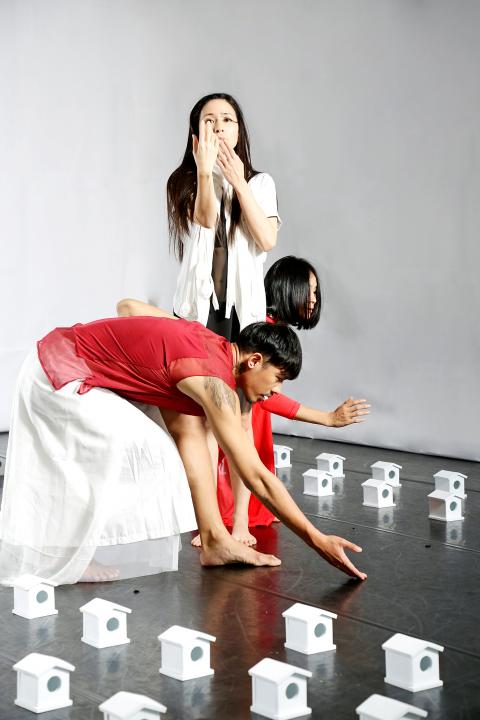
Photo Courtesy of Century Contemporary Dance Company
Yao, like Ping Heng (平珩) of Dance Forum Taipei (舞蹈空間), has over the years aggressively pursued international collaborations, inviting foreign artists to create works for her dancers, and participating in regional and European dance platforms.
Dance in Asia is a follow-up to programs held in 2014 and last year in collaboration with the 11-year-old Japanese troupe off-Nibroll — founded by Mikuni Yanaihara and visual director Keisuke Takahashi — that featured works by Yanaihara, Taiwanese choreographers and troupes from Seoul and Hong Kong, although last year there was also a Sydney-based company.
This year’s program features Yao’s Timeless (吉光片語), Yanaihara’s The World has Shrunk, and Only a Certain Fact Remains and South Korean freelance choreographer Megan Ha Youngmi’s A Torn Window (河永美).
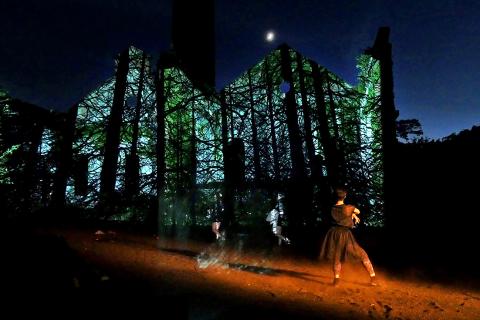
Photo Courtesy of Century Contemporary Dance Company
Timeless explores how the unfinished things in life tend to pile up and overwhelm our memory, until they almost drown out our voices.
The World has Shrunk, and Only a Certain Fact Remains, which premiered in August as part of Setouchi Triennale / Art Setouchi 2016 in Okayama, Japan, focuses on how life changes in the blink of an eye and how we interpret such memories.
Ha, a graduate of the Hong Kong Performing Arts Academy, has contributed a solo that explores a woman’s silent anger to discover how she lost her voice. She is filling in for compatriot Yang Gilho, who had originally been scheduled to take part in the program.
Out in Guandu, Wu has taken over the Dance Theater for his new piece, Fuyuchiyi (浮域誌異).
Since founding his company in March 2014, Wu, an exquisite and deceptively powerful dancer, has created three duets — in collaboration with his respective partners — that have reflected his quietly intense personality.
This time he has pushed his boundaries — and his comfort level — by being more expansive, creating a work for himself and four other dancers that explores the memories of our souls.
TNUA dance department chairman Zhang Xiaoxiong (張曉雄) has called Fuyuchiyi a “profound, sensual and disturbing” work.
The 60-minute-long show comes with an advisory that latecomers will not be admitted.
The four Chang brothers, the youngest of whom is still a student in TNUA’s dance department, are slowing building a reputation for innovation in their works for their family business, the Chang Dance Theater (長弓舞蹈劇場).
The troupe’s latest work String (弦), was choreographed by founder and eldest brother Chang Chien-hao (張堅豪) on three dancers: brother Chang Chien-kuei (張堅貴), Cheng I-han (鄭伊涵) and Li Yan-Hsui (李燕琇).
String explores the touches that connect bodies and the ripples that they create.
Performance notes:
WHAT: Century Contemporary Dance Company — Dance in Asia
WHEN: Tomorrow and Saturday at 7:30pm and Saturday at 2:30pm
WHERE: Wellspring Theater (水源劇場), 92 Roosevelt Rd Sec 4, Taipei City (台北市羅斯福路四段92號)
ADMISSION: NT$800. Available at NTCH and Eslite box offices, online at www.artsticket.com.tw, at convenience chain store ticketing kiosks and at the door
WHAT: Tussock Dance Theater — Fuyuchiyi (浮域誌異)
WHEN: Tomorrow and Saturday at 7:30pm and Saturday at 2:30pm
WHERE: Taipei National University of the Arts Theater (國立臺北藝術大學展演藝術中心戲劇廳), 1 Xueyuan Rd, Taipei City (台北市學園路1號)
ADMISSION: NT$400, NT$600 and NT$2,000; available at NTCH and Eslite box offices, online at www.artsticket.com.tw, at convenience chain store ticketing kiosks and at the door
WHAT: Chang Dance Theater — String (弦)
WHEN: Tonight and tomorrow at 7:30pm and Saturday at 2:30pm
WHERE: Wenshan Theater (文山劇場), 32 Jingwen St, Taipei City (台北市景文街32號), right behind exit 1 of the Jingmei MRT station on the Xindian line
ADMISSION: NT$500; available at NTCH and Eslite box offices, online at www.artsticket.com.tw, at convenience chain store ticketing kiosks and at the door
Feb. 9 to Feb.15 Growing up in the 1980s, Pan Wen-li (潘文立) was repeatedly told in elementary school that his family could not have originated in Taipei. At the time, there was a lack of understanding of Pingpu (plains Indigenous) peoples, who had mostly assimilated to Han-Taiwanese society and had no official recognition. Students were required to list their ancestral homes then, and when Pan wrote “Taipei,” his teacher rejected it as impossible. His father, an elder of the Ketagalan-founded Independence Presbyterian Church in Xinbeitou (自立長老會新北投教會), insisted that their family had always lived in the area. But under postwar
In 2012, the US Department of Justice (DOJ) heroically seized residences belonging to the family of former president Chen Shui-bian (陳水扁), “purchased with the proceeds of alleged bribes,” the DOJ announcement said. “Alleged” was enough. Strangely, the DOJ remains unmoved by the any of the extensive illegality of the two Leninist authoritarian parties that held power in the People’s Republic of China (PRC) and Taiwan. If only Chen had run a one-party state that imprisoned, tortured and murdered its opponents, his property would have been completely safe from DOJ action. I must also note two things in the interests of completeness.
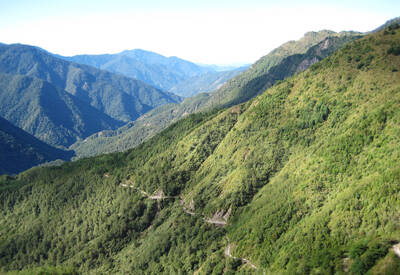
Taiwan is especially vulnerable to climate change. The surrounding seas are rising at twice the global rate, extreme heat is becoming a serious problem in the country’s cities, and typhoons are growing less frequent (resulting in droughts) but more destructive. Yet young Taiwanese, according to interviewees who often discuss such issues with this demographic, seldom show signs of climate anxiety, despite their teachers being convinced that humanity has a great deal to worry about. Climate anxiety or eco-anxiety isn’t a psychological disorder recognized by diagnostic manuals, but that doesn’t make it any less real to those who have a chronic and
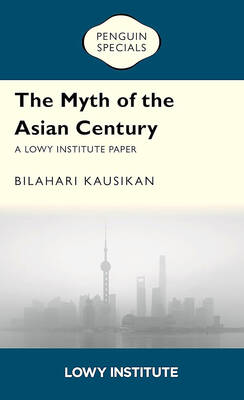
When Bilahari Kausikan defines Singapore as a small country “whose ability to influence events outside its borders is always limited but never completely non-existent,” we wish we could say the same about Taiwan. In a little book called The Myth of the Asian Century, he demolishes a number of preconceived ideas that shackle Taiwan’s self-confidence in its own agency. Kausikan worked for almost 40 years at Singapore’s Ministry of Foreign Affairs, reaching the position of permanent secretary: saying that he knows what he is talking about is an understatement. He was in charge of foreign affairs in a pivotal place in


 RSS
RSS