


Since 2003, Taipei Story House has curated some intriguing stories, like the Story of Carrier Bags, the Story of Sweets and the Story of Greeting Cards. But visitors to the museum have mainly been domestic — until now, with the Story of Fortunetelling.
“We originally planned to close up the story on June 29, but there’s been a great response with domestic visitors and overseas tourists, particularly from Hong Kong,” said Chen Chi-yun (陳祺蕓) from Taipei Story House’s marketing department.
The Story of Fortunetelling, which opened in January, is an interactive retrospective about Taiwan’s fortunetelling culture that’s now extended to Aug. 31.
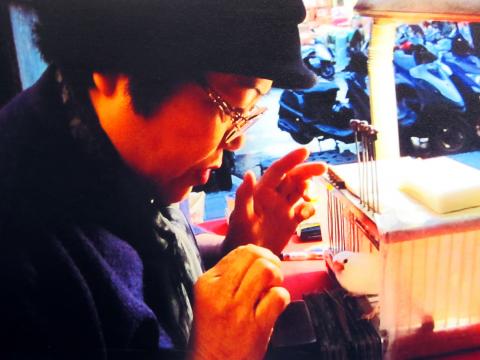
Photo: Enru Lin, Taipei Times
“A lot of people come up and talk to us about this experience. For Hong Kong tourists, it is probably special because, as far as I know, Hong Kong has only one street for fortunetelling and that street offers the only choices,” she said.
Taipei alone has three major fortunetelling streets. In 2009, the market for fortunetelling services across Taiwan was about NT$5 billion, according to the Taipei Story House.
“Fortunetelling has quite some traction in Taiwan. Over the years we have developed colorful styles,” she said.
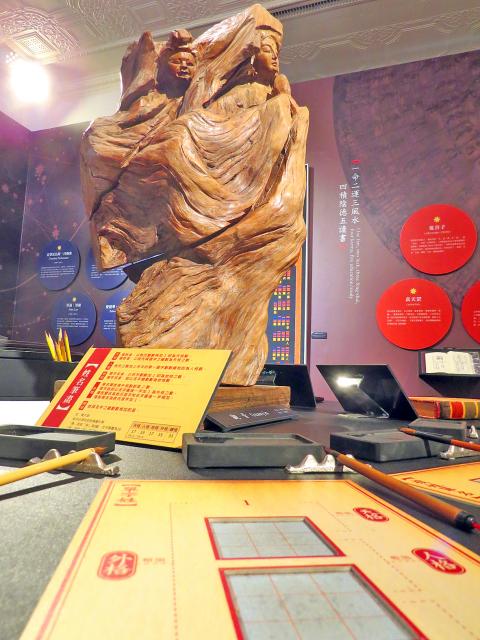
Photo: Enru Lin, Taipei Times
The Story of Fortunetelling occupies the upstairs and downstairs of Taipei Story House, a historic Tudor-style building with Grecian columns.
The upstairs has photographs, cards and other fortunetelling apparatus that illustrate Taiwan’s fortunetelling culture.
Along a wall, there are photographs of soothsayers at work. Another wall is images of Taiwan’s most bustling fortunetelling streets: Songjiang Road (松江路) near Xingtian Temple and Longshan Temple Underground Mall (龍山寺地下街), which offer old-school divination, and a newer street in East District with tarot and crystal ball readings.
There is a showcase of vintage Tarot cards, along with ephemera and notes about older, fading forms of Taiwanese divination.
In rice divination, you pluck rice from a bowl with precisely 1,080 whole rice grains, and a fortuneteller develops a reading after counting the grains. Bird divination, still used on some streets, requires a trained bird who hops out from a cage and selects your fortune from a deck of cards.
DIY DIVINATION
Down the flight of stairs, visitors enter an atrium stocked with tools for telling their own fortunes.
Calligraphy brushes are laid out on a circular platform for use in character divination (姓名筆畫), fortunetelling based on the number of strokes in a name.
There’s a table for calculating Astrological moon signs, and a set of rotating discs for determining “weight” based on the Eight Characters of Birth Time (生辰八字). It’s slightly arcane and tour guides wander, ready to help in Mandarin Chinese, English or Japanese.
“I explain this one to overseas visitors and many people think it is laughable. Heavy, I say — your life is heavy. Your life is light. You are born with a set life weight, just as you are born with a set physical weight,” said Robert Hong (洪啟恭), an accredited English-language tour guide.
Each Sunday, live soothsayers set up in the garden outside Taipei Story House from 2am to 5pm. Most are tarot card readers, but on July 6, a teacher divines with tea leaves, and on Aug. 3, another uses angel cards. Western-style numerology (生命靈數) is on July 13 and Aug. 17.
Numerology is adding the dates of a birth date and achieving readings about the owner’s personality and future. It’s a quick method that also allows deeper readings upon further study, said Taipei Story House numerologist Ho Kuan-ying (何冠瑩).
“Most people don’t understand fortunetelling,” she said. “There’s no clear answer. It’s more like counseling.”
Fortunetelling is staking out a point in the future, and doing so allows the person to make adjustments and create a better future, she said.
“I will say, if you choose another way, this future could change. I prefer to use words to lead people in a positive direction.”
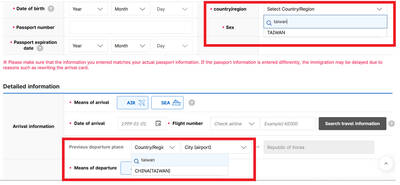
Jason Han says that the e-arrival card spat between South Korea and Taiwan shows that Seoul is signaling adherence to its “one-China” policy, while Taiwan’s response reflects a reciprocal approach. “Attempts to alter the diplomatic status quo often lead to tit-for-tat responses,” the analyst on international affairs tells the Taipei Times, adding that Taiwan may become more cautious in its dealings with South Korea going forward. Taipei has called on Seoul to correct its electronic entry system, which currently lists Taiwan as “China (Taiwan),” warning that reciprocal measures may follow if the wording is not changed before March 31. As of yesterday,
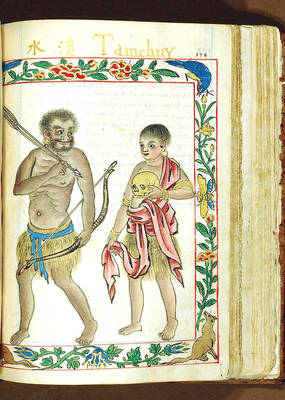
The Portuguese never established a presence on Taiwan, but they must have traded with the indigenous people because later traders reported that the locals referred to parts of deer using Portuguese words. What goods might the Portuguese have offered their indigenous trade partners? Among them must have been slaves, for the Portuguese dealt slaves across Asia. Though we often speak of “Portuguese” ships, imagining them as picturesque vessels manned by pointy-bearded Iberians, in Asia Portuguese shipping between local destinations was crewed by Asian seamen, with a handful of white or Eurasian officers. “Even the great carracks of 1,000-2,000 tons which plied
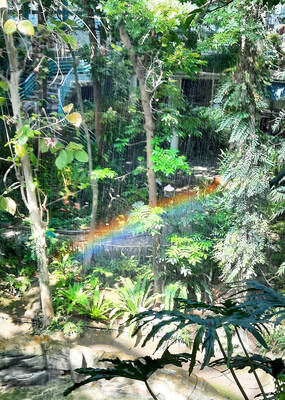
It’s only half the size of its more famous counterpart in Taipei, but the Botanical Garden of the National Museum of Nature Science (NMNS, 國立自然科學博物館植物園) is surely one of urban Taiwan’s most inviting green spaces. Covering 4.5 hectares immediately northeast of the government-run museum in Taichung’s North District (北區), the garden features more than 700 plant species, many of which are labeled in Chinese but not in English. Since its establishment in 1999, the site’s managers have done their best to replicate a number of native ecosystems, dividing the site into eight areas. The name of the Coral Atoll Zone might
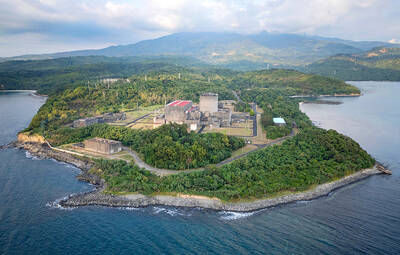
Nuclear power is getting a second look in Southeast Asia as countries prepare to meet surging energy demand as they vie for artificial intelligence-focused data centers. Several Southeast Asian nations are reviving mothballed nuclear plans and setting ambitious targets and nearly half of the region could, if they pursue those goals, have nuclear energy in the 2030s. Even countries without current plans have signaled their interest. Southeast Asia has never produced a single watt of nuclear energy, despite long-held atomic ambitions. But that may soon change as pressure mounts to reduce emissions that contribute to climate change, while meeting growing power needs. The


 RSS
RSS