


This week Pop Stop fulfills its duties by reporting the latest installment of the ongoing marital debacle starring Cecilia Cheung (張柏芝) and Nicholas Tse (謝霆鋒), who — in the wake of the so-called “airplane incident” (機上事件) in which Cheung was photographed with her ex-lover Edison Chen (陳冠希) — are reportedly heading toward a split-up.
According to gossip media in Taiwan and Hong Kong, Tse, who is currently shooting an action flick in Kuala Lumpur, has made up his mind to terminate his marriage with Cheung and denied his wife’s request to communicate in person after she said she might call a divorce lawyer and made suicide threats last month.
Both the Apple Daily and the Liberty Times (the Taipei Times’ sister paper) reported that the actor’s mother Deborah Lee (狄波拉) and sister Jennifer Tse (謝婷婷) have flown to Kuala Lumpur to strategize on how to tackle any possible actions on Cheung’s part. Nicholas Tse’s lawyer has reportedly been summoned to prepare a divorce agreement after Cheung took her two children from the couple’s household about two weeks ago.
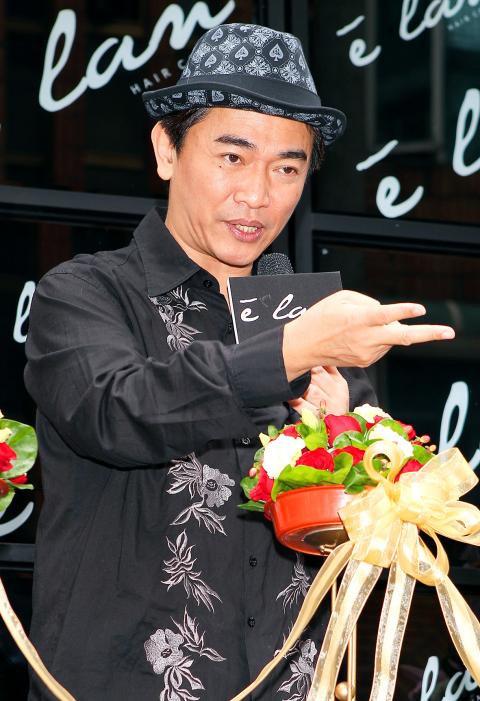
Photo: Taipei Times
On the film set in the capital of Malaysia, Nicholas Tse, who is closely protected by a large entourage, has turned a deaf ear to the inquiries of gossip reporters.
As for the whereabouts of Cheung, some claim she is hiding in Four Seasons Hotel in Hong Kong with her kids. Other reports say the actress is in Kuala Lumpur waiting for a chance to beg her husband’s forgiveness, and on Tuesday, the Liberty Times cited an unnamed source as saying she has been stricken ill and is convalescing in her Hong Kong home.
The 30-year-old actress is not an opponent to be underestimated. A widely circulated rumor has it Cheung has gone to war against her mother-in-law, with the actress warning Lee that she will never see her grandsons again if she continues to meddle in the affair.
On the financial front, Cheung has much to gain as Hong Kong entertainment mogul Peter Lam (林建岳) has reportedly promised the actress a three-year contract worth NT$368 million — not to mention that Hong Kong law could entitle Cheung to half of Nicholas Tse’s NT$2.2 billion personal fortune.
Meanwhile, Chen has been acting as if he has nothing to do with the ruckus. “I’m Edison Chen, not them,” the lothario told gossip hounds in Shanghai on Friday last week.
On home turf, television host Jacky Wu (吳宗憲) took local media by surprise by calling officials at the Government Information Office (GIO) “bastards” and “scumbags” days before tomorrow’s Golden Melody Awards (金曲獎), which he is scheduled to co-host with Patty Hou (侯佩岑).
The controversy started last week in a casual interview with Wu regarding the GIO-funded award ceremony. The blabber-mouthed entertainer suddenly began to bash GIO subsidies for individual musicians and music groups. In order to avoid personal preferences and favors, Wu opined, the government should not provide funding to individuals but instead support the music industry as a whole. The veteran entertainer also said the government’s annual subsidies of NT$70 million don’t amount to jack.
“My tax money alone is more than the GIO’s subsidies ... It is bullshit to say there is no political interest involved. The GIO is the Chinese Nationalist Party’s (KMT). TVBS is blue, and SET TV (三立電視) is green,” Wu was quoted as saying.
Wu later denied his criticism of GIO officials and insisted that he was upset not by the subsidy policy, but by the government’s decision to open local media industry up to Hong Kong’s gossip media such as the Apple Daily.
It appears that Wu needs to work on damage control, with TVBS threatening to file a lawsuit against the entertainer if he does not make a public apology for calling the network politically biased.
Ajay Verma, a consultant gastroenterologist at Kettering general hospital in Northamptonshire, says our gut is a “complex machine.” “It is constantly providing us with the nutrition we need, initially to grow and develop, and then for us to survive, thrive and repair from injury and illness.” How can we keep it functioning well? Put simply: “Make sure what you put into it is balanced, and that you clear out its waste products adequately,” Verma says. “In a general gastroenterology clinic, the most common conditions we see are irritable bowel syndrome (IBS), gastroesophageal reflux disease, inflammatory bowel disease and constipation,” says Nisha

And so, in the wake of US President Donald Trump’s trip to the People’s Republic of China (PRC), all the experts on the Strait of Hormuz suddenly became experts on US-China-Taiwan relations. The Internet has certainly expanded human knowledge. Lots of these sudden experts made noise this week about Trump’s words after the meeting with PRC dictator Xi Jin-ping (習近平). Trump is going to sell out Taiwan! Longtime Taiwan commentator J. Michael Cole summed the situation up neatly in the Guardian: “We need to keep in mind that he has a tendency to say many things — sometimes contradicting himself within

Last week US President Donald Trump was asked by a reporter whether he would speak on the phone to the President of Taiwan. “l’ll speak to him. I speak to everybody. We have that situation very well in hand,” Trump said. This marked the second time in a couple of weeks he had said he would talk to the President of Taiwan. In 2016 he famously took a call from then-president Tsai Ing-wen (蔡英文), when he was president-elect. Despite warnings that the apocalypse was nigh because of a phone call, the world quickly forgot about the conversation between two democratically-elected presidents.
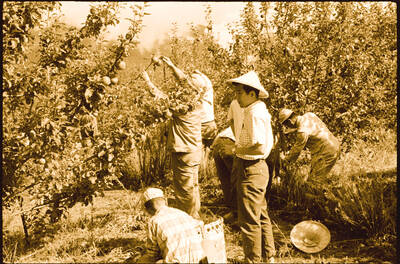
May 25 to May 31 Few believed that apples could be cultivated on a commercial scale in Taiwan’s high mountains. When horticulturalist Cheng Chao-hsiung (程兆熊) first proposed the idea in 1955, both American and Taiwanese colleagues dismissed it as implausible, arguing that temperate fruit could not be reliably grown on a subtropical island, especially on rugged terrain. However, it was this terrain in the Central Mountain Range where many Chinese Civil War veterans were resettled in the late 1950s. With limited job prospects and no family in Taiwan, they were placed on cooperative farms aimed toward self-sufficiency. Some say the conditions


 RSS
RSS