

Miss Stocking (絲襪小姐)
Ain’t Enough (就等故事都經過)
AsiaMuse/HeyWatchOut Ltd
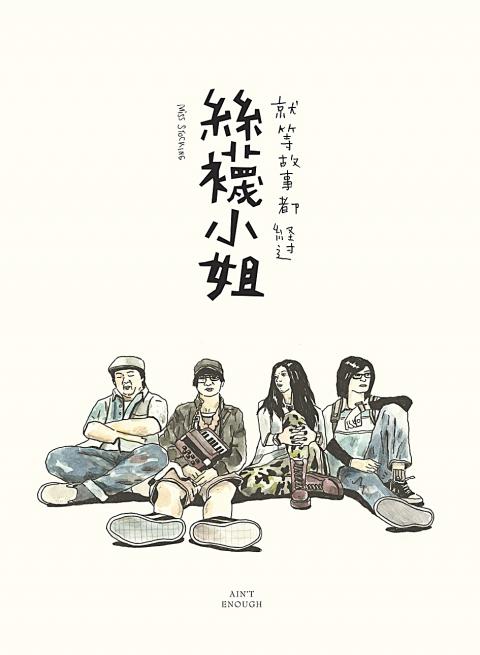
Miss Stocking (絲襪小姐) is an indie-pop band with a clean, immaculate sound that centers on the whispery sweet vocals of female singer-songwriter Chan Cheng-yun (詹正筠).
The band’s first full-length album, Ain’t Enough (就等故事都經過), leans toward the mainstream with tight pop arrangements, but also holds escapist appeal with song structures that embrace indie rock melodrama. Fans of Taiwanese post-rock might recognize the chiming guitar work by Huang Chien-hsun (黃建勳), aka Hsiao Bai (小白), also a member of Sugar Plum Ferry (甜梅號).
But it’s Chan’s enchanting voice that draws listeners into Miss Stocking’s world, which is also portrayed in a comic included with the CD. The 40 pages of manga-style illustrations, drawn by Chan, follow the band members as they search for Kaduoli (卡多里), a mythical amusement park in a “magic forest” on the outskirts of the city.
As it dwells on the characters’ (the band members’) personality quirks, the comic, while nicely illustrated, comes across as self-absorbed. But there are a few poignant moments in the story, such as when Chan’s character, Hsiao Gui (小龜), reveals her reasons for searching for Kaduoli: her grandfather told her about the amusement park when she was a child, but she always thought the story to be make-believe. Years later, while sick in the hospital, he promised to take the adult Hsiao Gui there if he recovered. That didn’t happen, and thus she yearned to find Kaduoli.
Scenes like this, along with the comic’s surreal conclusion, make the story seem less insular, and also lend weight to the music. With dreamy acoustic tracks like In the End, the slow-burning rocker Solitude and the joyful, carnival-like The King’s Playground (國王操場), it’s obvious that the songs are intended to have a symbiotic relationship with the story.
The album displays solid songwriting and pristine production values, and fans of Taiwanese indie pop will likely warm up to it right away. Casual listeners, though, may have to make an extra effort to appreciate the band’s inward gaze.
— DAVID CHEN
88 Balaz (88顆芭樂籽)
Man Is Worse Than an Animal When He Is an Animal (比獸還壞)
Himalaya Records
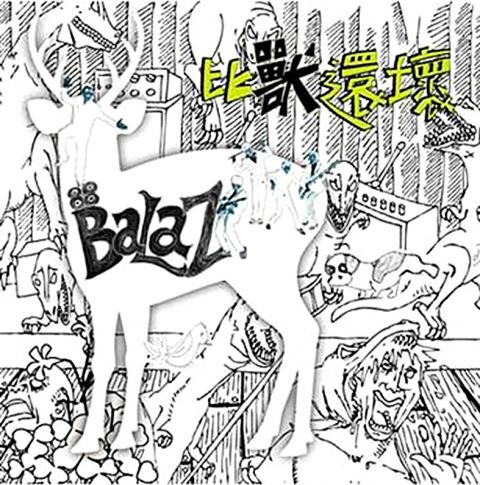
88 Balaz (88顆芭樂籽), a favorite in Taiwan’s indie rock scene, returns with a solid follow-up to its 2008 release The 44 Stone Lions (肆十肆隻石獅子).
The barrage of electric guitars and screeching hoots and howls from lead vocalist Ah-Chang (阿強) live up to the album’s mouthful of an English title, Man Is Worse Than an Animal When He Is an Animal (比獸還壞).
One reason that 88 Balaz enjoys a loyal following is the group’s onstage verve, and this album is a decent snapshot of that energy.
The first track, 21st Century Rock ’n’ Roll Style, offers a modern tribute to AC/DC by quoting the main lyric from the Australian band’s classic tune It’s a Long Way to the Top (If You Wanna Rock ’n’ Roll), and is followed by another rollicking anthem, Adrenaline Song (腎上腺素之歌).
The declarations of “rock ’n’ roll” start to feel a little repetitive by the time Man Is Worse Than an Animal gets to Give You a Flying Kick Before I Die (我要在死之前給你一個飛踢), but the album’s saving grace is its catchy blues-rock grooves and Ah-Chang’s screamo vocals.
The band brings in a horn section for the ska-infused Let’s Dance (一起來跳舞) — a reflection of the growing popularity of reggae and its related genres among Taiwanese music fans. One of the CD’s better tracks, 29 Years Old (29歲) gets the brass treatment too, with the sound referencing The Clash circa London Calling.
While the album is full of punk sneering and “let’s party” attitude, Ah-Chang shows nuance in his songwriting, particularly in the slower, low-key closing tracks. The surreal lyrics, breezy chords and spacey grooves make Bad Temper Fish (脾氣不好的魚) equally as fun and compelling as the fast songs, and Taipei, Taipei (台北台北) is an honest and thoughtful ode to the band’s home base.
— DAVID CHEN
Nicky Lee (李玖哲)
Long Time (好玖)
Asia Muse
South Korea-born American
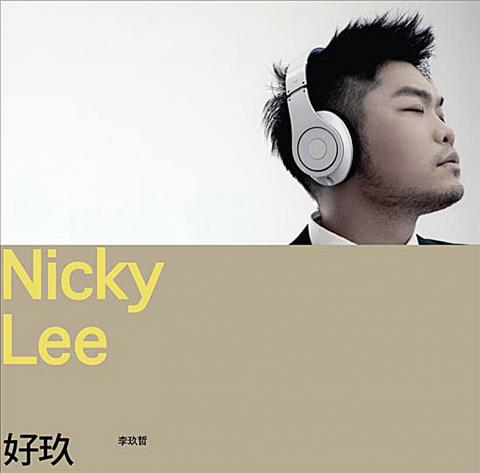
R ’n’ B crooner Nicky Lee (李玖哲) is that rare performer who is capable of maintaining a music career in a language he isn’t well versed in. A Best Mandarin Male Singer Golden Melody Award-winner for his second album, Baby It’s Me (Baby是我), Lee proves that a soulful voice can cross the language barrier.
But in Lee’s newest outing, Long Time (好玖), mediocre material prevents him from doing his emotive voice justice.
The album’s most glaring blooper is opening track Right Here Waiting. Meant as a homage to Richard Marx, this cover sees Lee performing a note-by-note imitation of Marx’s original with little improvisation.
Faring much better is Lee’s cover of Air Supply’s hit Making Love Out of Nothing at All. On this track, which formed part of the sound track to gangster flick Monga (艋舺), Lee deploys his idiosyncratic brand of R ’n’ B phrasing to update what could easily have turned out to be a pedestrian cover of a hackneyed
love song.
Best known as an R ’n’ B singer, Lee flourishes on the album’s two up-tempo tracks. In Summer (夏天), written by Mando-pop king Jay Chou (周杰倫), Lee successfully gets his mouth round some rapid-fire rapping.
Elsewhere, Lee’s soulful voice flounders on turgid tracks, such as The Last Day (最後的那一天), and the banal No More Love (不愛了).
Although Lee whittled the album’s six self-penned songs down from a purported 38, his original material doesn’t stand out. With merely nine tracks and clocking in at just under 40 minutes long, the album is short but not sweet.
— ANDREW C.C. HUANG
Elva Hsiao (蕭亞軒)
Miss Elva (瀟灑小姐)
Golden Typhoon Music
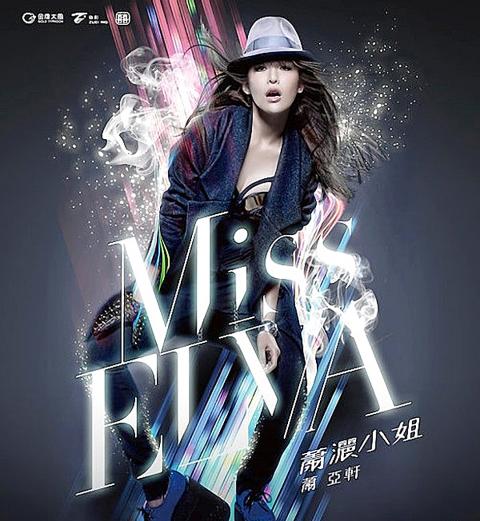
Not long ago, Mando-pop diva Elva Hsiao (蕭亞軒) rejuvenated her career with the pop confection Diamond Candy (鑽石糖). Now she returns with another electronica-driven album, Miss Elva (瀟灑小姐).
With her proud declarations of female empowerment and synthesized dance music sound, Hsiao could have called this album “Feminist on the Dance Floor.”
Although previously acclaimed for her entrancing delivery of R ’n’ B ballads, Hsaio has grasped dance music with both hands. With Miss Elva, her most dance-heavy album to date, she successfully establishes herself as a rival to dancing queen Jolin Tsai (蔡依林).
To infectious beats, Hsiao sings “Oh, I like you/Oh, don’t repress it” on the title track Miss Elva, and then encourages her lover to join her in a flight of romance in Let Love Fly (讓愛飛起來).
The album’s opening optimism turns sour on Big Liar (大說謊家), with Hsiao condemning a deceptive lover. And then come the ballads. She moans about misspent love in The Wrong One (錯的人), and rails at someone who takes romance frivolously in Joke (玩笑).
Though the lukewarm romantic tracks do not pack the same poignancy Hsiao achieved in her earlier work, such as I Love So Much (我愛你那麼多) or Interlude (插曲), what is lost here is more than made up for by the kinetic energy of the album’s feel-good electronica.
Perhaps on her next album, Hsiao will juggle her newfound passion for dance music and her powerful vocals with a finer balance.
— ANDREW C.C. HUANG

A decade ago, Taiwanese television had an image problem. When representatives of Taiwan’s Public Television Service (PTS) traveled to Singapore to meet Netflix, they brought two dramas: A Touch of Green (一把青, 2015), a sweeping story of war, displacement and military families, and Wake Up (麻醉風暴, 2015), a tightly constructed medical thriller. They were not simply trying to sell programs. They were trying to change an idea of Taiwan. International perceptions of Taiwanese television, PTS executives recalled in interviews conducted for my joint research with Chairman Hu Yuan-hui (胡元輝), were still strongly associated with the idol dramas that had enjoyed enormous regional popularity
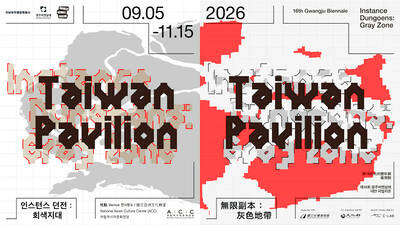
The name “Taiwan” is to appear at South Korea’s Gwangju Biennale when it opens on Saturday, after months of objections from Taiwanese artists and government agencies over an attempted name change. China Pavilion personnel halted installation and left the venue on Friday, after China’s Ambassador to South Korea Dai Bing (戴兵) objected to the restoration of the “Taiwan Pavilion” name. As of Monday, the Chinese side was reportedly preparing to withdraw, although its formal withdrawal had not been completed. The pavilion dispute began on June 10, when the ministry and participating artists said organizers had changed “Taiwan Pavilion” to “NTMoFA Pavilion,” referring

No matter where one sits on the political spectrum and who one blames for the ongoing struggles between the executive and legislative branches or the latest food scandal, there has been noticeable frustration with the way democratic institutions are functioning. Attempts to circumvent political opposition and institutional checks can begin a slide toward authoritarianism, even when presented as short-term solutions to gridlock. While that might solve problems in the short term, it inevitably evolves into a system that serves the rulers and the powerfully connected at the expense of the rights of regular folks. One interesting lens to examine the

The Chinese Nationalist Party (KMT)-controlled legislature in February 2006 established the National Communications Commission (NCC). One of the purposes of the NCC was to circumvent the control of the Government Information Office (GIO), long the KMT’s tool for overseeing the local media, by the administration of Democratic Progressive Party (DPP) president Chen Shui-bian (陳水扁). The NCC’s commissioners were originally apportioned according to the ratio of party control of the legislature. However, the Council of Grand Justices later ruled that agencies required greater coordination with the Executive Yuan, which then began sending a list of expert nominees for approval by the


 RSS
RSS