

Since nine is the highest single digit, in Chinese culture it connotes good fortune, longevity and happiness. With partly clear skies forecast for tomorrow night, Cube Productions, the promotion group that is putting on Summer Aquarian for the ninth year, is feeling lucky.
For DJs like Minijay (邱永杰) who have never played at Summer Aquarian, the excitement is building. “Summer Aquarian is a world-class event,” he said. “It is a rare opportunity to enjoy the sun, beer, the sea and music, with thousands of people.”
Overall 26 DJs are on the bill at Summer Aquarian, which features three stages: hip-hop, house and rave. Organizers expect the party at Jhongjiao Beach (中角沙灘) in Jinshan Township (金山) to draw 7,000 revelers.
Simon Pereira, AKA DJ Al Burro, knows what to expect because he’s dipped his toes in the Summer Aquarian waters before. “Last time I was there I loved the atmosphere because so many people in one place were all trying to get away from the pressures and cares of everyday life. I always go for the music. I love good music, and the DJ lineup says to me that this is going to be a great night.”
Another experienced Summer Aquarianite is Yoshinori Nagano, who has recently changed his DJ moniker to The Sonic Kid. He has attended since 2003 and said, “I look forward for it every year. It represents total freedom and the best combination of summer, music and all that is pure and fun! I can’t wait!”
“The thing that makes Summer Aquarian so great,” said Henry Wade Jr, aka DJ Fyah B of Black Reign Sound System, “is the energy of the people and the great location.”
He added: “I’m ready to mash up the damn place.”
Braggadocio is always served in overabundance from the hip-hop stage, and this year will be no exception. Chinese Rapper DOM (帥老外) does double duty as he DJs for an hour early and emcees a live hip-hop show later. “I’m bringin’ the heat with this one,” he said. “Big show, big stage, so I’m gonna do it big. Other rappers are going to need to rethink how to do a show after this one. I’m combining lots of elements of hip-hop culture into one big performance that is sure to leave people talking.”
Admission to Summer Aquarian at Jhongjiao Beach is NT$800 at the door (customers receive two empty garbage bags and can get a NT$200 refund by filling them with garbage and returning them). Presale tickets are NT$500, available at 7-Eleven ibon and FamilyMart FamiPort kiosks or online at www.ticket.com.tw/points/ticket_points.asp. For more information (in Chinese and English), including how to get to Jhongjiao Beach by bus or taxi, go to summer-aquarian.blogspot.com.


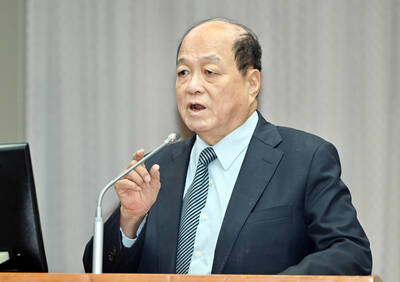
The Nuclear Safety Commission (NSC, 核安會) on Sept. 24 approved the re-operation plan that Taiwan Power Co (Taipower, 台電) filed in March for the Ma-anshan Nuclear Power Plant in Pingtung County, after three rounds of review and 589 comments. Taipower now has to carry out the work in the plan and its own inspections on ageing, radiation and seismic resistance, then report back to the commission for review and on-site checks. Minister of Economic Affairs Kung Ming-hsin (龔明鑫) has named 2028 as the earliest restart. The NSC has given no date. THE DEBATE No challenge has been identified as to whether Ma-anshan

In pandemic preparedness work, scientists like to focus on the technical challenges: identifying pathogens, diagnosing infections, understanding their effects and developing vaccines and treatments. Each step promises progress through human innovation, investment and planning. The WHO, for example, brings experts together to identify and prioritize emerging disease threats and collect the evidence needed to prepare for them. But preparedness depends on more than scientific innovation. As the past week has shown, politics is the elephant in the room in all of this. No one could have predicted we would be talking about pneumonic plague, and that the death of a single
The South China Morning Post (SCMP) article from earlier this month on how Beijing would govern a post-annexation Taiwan (Amber Wang, “Beijing’s policy advisers map out how post-reunification Taiwan could be governed,” Oct. 6, 2026) is a reminder that even “peaceful” (coerced) occupation by the People’s Republic of China (PRC) will beggar Taiwan. The “scholars” cited in the SCMP piece argued that Taiwan would be governed in a manner similar to Hong Kong. As I observed in my piece for Monday (“Beijing’s intimidation tactics in Taiwan and beyond,” Oct. 12, 2026), that claim is simply a form of cognitive warfare. One

Since Russia invaded more than four years ago, Ukraine has become a global leader in military drone innovation, enabling its forces to grind a much larger enemy to a stalemate. But this technological force multiplier has come with an unsettling vulnerability: Ukrainian drone makers are highly dependent on electronics made by China, a key Russian ally. Ukraine’s greatest fear is that the Chinese government could severely restrict its access to these critical parts. It also worries that Russian defense companies that need these same supplies could be given preferential treatment by Chinese factories. Over the past two years, Ukraine has sought to break


 RSS
RSS