


Pho is a French word? Who knew?
One of the most popular dishes from Vietnam to make it to restaurant tables around the world, from New York to London, is pho. There’s pho bo and pho ga and pho tai and more.
And while the jury’s still out, it is widely believed by linguists and word sleuths that the word pho is not a Vietnamese word, but in fact comes from the French term pot au feu (pronounced ‘‘poh oh fuh’’). The word was likely introduced to Vietnam by French colonialists more than 100 years ago, according to longtime Vietnam resident Didier Corlou, a top French chef in Hanoi. Corlou told a food seminar in Hanoi in 2003 that pho most likely was a transliteration of the French term for hot pot.
The list of French “loans words” still used in Vietnam today is gaining recognition as young Vietnamese become more curious about their nation’s past, 23-year-old Abby Nguyen of Ho Chi Minh City told the Taipei Times in a recent e-mail exchange.
Before the Americans got involved in a long and protracted war in Vietnam in the 1960s and 1970s, the French had been heavily involved in the country for more than 300 years, she said. From 1853 to 1954, Vietnam was a French colony. As a result, Vietnam’s colonial past has left an indelible mark on the country’s language.
The Vietnamese word for cheese, for example, pho mat, comes from the French word fromage — say it out loud slowly — and cake is called ga to, from the French word gateau.
The word for butter — bo — comes from the French word buerre.
During a recent research expedition via keyboard and the Internet, this reporter came across more than two-dozen “loan words” from French still used in Vietnam today, in addition to pho mat and ga to and bo.
To understand all this, it helps to know a little French, but even if you never studied French in high school or college and you don’t know bonjour from bonsoir, “amusez-vous bien.” That means: “Enjoy!”
Liver pate is called pa in Vietnam today. Pate chaud, according to Californian foodie Andrea Nguyen of the Viet World Kitchen blog, is called pa so.
There’s more, according to sources in Vietnam and overseas. Ba — father in Vietnamese — comes from the French word papa, many linguists believe.
Va li comes from the French word for suitcase — valise.
Bia comes from the French word for beer, biere.
A doll is called a bup-be in Vietnam, from the French word poupee.
What to call the necktie on that senior civil servant giving a press conference on Hanoi television? It’s a ca vat — from the French word cravate.
Doc to comes from the French word docteur, which is not far from the English word doctor.
Phac to comes from facteur, the French word for mailman.
Phim means “movie” and comes from the French word film.
A pha is a headlight on a car or motorscooter, from the French word phare.
Motorscooters and motorcycles are themselves are called moto — from the French term motocyclette.
If you make a mistake in France, it is called a faute. In Vietnam today, people often say phot for mistake.
Bit-tet is from the French term biftek — beefsteak, or just plain steak.
Coffee is called ca phe, from the French word cafe.
Wine is called vang (vin).
Soap is called xa bong (savon).
A circus is called xiec (from the French word cirque).
Ben Zimmer, a noted US-based word maven who writes the weekly “On Language” column for the New York Times, pointed this reporter to the work of Milton Barber, whose 1963 paper, The Phonological Adaptation of French Loan Words in Vietnamese, was eye-opening, to say the least.
MaryJo Pham, a senior at Tufts University in Boston who was born in Vietnam and came to the US as a young girl, said she has been informally collecting French loan words used in Vietnam over the years.
“Piscine is still in use for ‘swimming pool,’” she said in an e-mail.
“And cyclo, or ‘xich lo’ in Vietnamese, is what we call a bicycle-drawn rickshaw.”
“Yogurt — yaourt in French — is called da ua in Vietnamese. Ice cream is called ca rem from the French word creme.”
A clothes zipper is called a phec mo tua in Vietnamese, from the French word fermeture, Pham said. A woman’s bra is called su chien from the French word soutien, she added.
“You can see how some French loan words influenced the actual transliteration of words — for motorscooters, women’s bras, coffee, frozen yogurt, baguette sandwiches — things that were and are indispensable to daily life in Vietnam,” Pham said. “‘Bo for butter, from the French buerre, is still definitely in use in Vietnam. And phim for movies, film, cinema, yes.”



Taiwan’s English education system is being pulled apart by three opposing forces. Bilingual Nation 2030 pulls students toward English and global communication. Artificial Intelligence (AI) readiness pulls them toward digital judgment, verification and AI-mediated work. But Taiwan’s old exam culture pulls them back toward memorization, grammar drills, timed reading and correct answers. If the education system keeps using old exams to define success, it risks producing graduates who are neither genuinely bilingual nor genuinely AI-ready, but trained for tasks machines can already perform. The first force is Bilingual Nation 2030. Launched in 2018, the policy aimed to “help Taiwan’s workforce connect
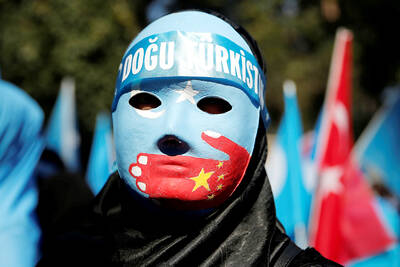
It seems every few days one bumps into one of those “real man” comments in which Taiwan is urged to “face reality” or similar, and “make a deal,” with the speaker implying that soon it will be too late. “Deal” advocates always present themselves as having a superior grip on reality, and the manly ability to make the “hard choice.” Their testosterone-laden language often echoes that of Taiwan sellout advocates. Note that such commentary always specifies a process (“make a deal, work with, make progress”), never the end state of what occupation by a violent authoritarian colonialist state will entail. In

“Taiwan’s Opposition Leader Comes to US With a Message Straight Out of Beijing” read a May 31 headline in the Wall Street Journal. Top US administration officials and members of Congress almost certainly read the WSJ, and if there was a bullet point takeaway that people in Washington should absorb ahead of Chinese Nationalist Party (KMT) Chair Cheng Li-wun’s (鄭麗文) arrival in DC on June 9, that headline is it. The last few columns have discussed this very topic, and the timing is not coincidental. While those top officials likely do not read the Taipei Times, judging by the number
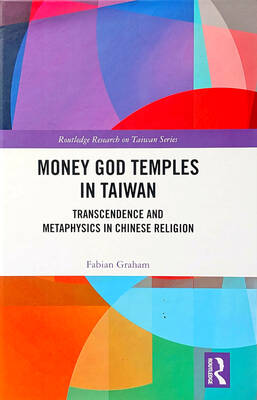
As someone who normally steers clear of books with “transcendence” or “metaphysics” in their subtitles, this reviewer — a casual observer of local belief systems since the 1990s — found Fabian Graham’s Money God Temples in Taiwan a challenging read. Those who’ve only dipped their toes into temple culture will likely need to parse several sections with special care if they’re to keep up with the author, a British ethnographic researcher whose previous books have investigated religious practices among ethnic Chinese in Southeast Asia. This scholarly volume examines a facet of Taiwan’s religious landscape that didn’t exist a century ago, and


 RSS
RSS