


As dull as it may sound, marriage is the keyword in this week’s gossip rags, as a bevy of female stars are rumored to be either getting engaged or are ready to enter a state of matrimony. The one that sounds most genuine involves celebrity sweetheart Patty Hou (侯佩岑), who has not been coy about gossip journos’ inquiries about her engagement party last Friday.
The paparazzi from Liberty Times (the Taipei Times’ sister paper) and Apple Daily quickly published reports profiling Hou’s fiance; on Wednesday. His name is Ken Huang (黃伯俊). He is 35 years old, resembles Nicholas Tse (謝霆鋒) slightly and makes an annual income of more than NT$12 million at Citigroup Global Markets Inc. However, the two rival newspapers have yet to agree on whether or not the man in question is an heir to family assets worth tens of billions of NT dollars. A positive answer will definitely make the modern-day fairy tale more dreamy: A beautiful woman lives happily ever after with her prince charming and his moneybags
Gossip hounds should already know about the three-carat engagement ring that Huang gave to Hou after they had been seeing each other for just four months, as well as Huang’s rumored romance with actress Ruby Lin (林心如).
Apart from the report of the Huang-Hou pairing, other nuptial news flashes have been rigorously denied by the parties involved. Did Maggie Cheung (張曼玉) become engaged to her German architect boyfriend Ole Scheeren on Christmas Eve? The 45-year-old actress’s agent says no. But gossip insiders assert the couple will get hitched soon.
How about the engagement party celebrating the union of veteran belle Rosamund Kwan (關之琳) of Hong Kong and Taiwan’s IT tycoon Pierre Chen (陳泰銘) held last Saturday? Never happened? And anyway, Chen was still married last time local paparazzi checked. As for Hong Kong’s former diva Cherie Chung (鍾楚紅), the 49-year-old widow personally denied the speculation about her upcoming wedding with a certain wealthy businessman from Singapore.
While Hou has found her Mr Right, Jolin Tsai (蔡依林) is getting cozy with fast-rising model Godfrey Kao (高以翔), whose previous claim to fame was his pair of delectable pinkish nipples, which he flagrantly exposed in his photo book. It’s only a matter of time before intimate comparisons will be made between Kao and Tsai’s old flame Jay Chou (周杰倫).
So what is the Mando-pop king, self-made film director and occasional actor doing with his love life? Not much. Unless you count the banter and teasing exchanges between him and supermodel-turned-actress Lin Chi-ling (林志玲) during the promotions for the fantasy adventure The Treasure Hunter (刺陵).
The way Pop Stop sees it, the real-life flirting between the two is more convincing that the on-screen romance that they share in the movie, which was killed by the embarrassingly coy lines and dumb jokes that filled the clunky script.
Finally, model-turned-housewife Hung Hsiao-lei (洪曉蕾) and her CEO-husband Wang Shih-chun (王世均) offer an example of a dreamy celebrity marriage gone sour. An outburst of violence erupted on Christmas Eve when a young man accidentally bumped into an inebriated Wang at a Cash Box KTV (錢櫃) outlet. According to a witness, Wang then beat the man to the ground with a beer can and kicked one of the man’s female friends in the head while shouting “don’t you know who I am.” Wang apologized afterwards and no charges were brought against him.
One month earlier, a widely circulated rumor claimed that there had been incidents of spousal abuse between the model couple, though both parties have denied the accusation.
Ajay Verma, a consultant gastroenterologist at Kettering general hospital in Northamptonshire, says our gut is a “complex machine.” “It is constantly providing us with the nutrition we need, initially to grow and develop, and then for us to survive, thrive and repair from injury and illness.” How can we keep it functioning well? Put simply: “Make sure what you put into it is balanced, and that you clear out its waste products adequately,” Verma says. “In a general gastroenterology clinic, the most common conditions we see are irritable bowel syndrome (IBS), gastroesophageal reflux disease, inflammatory bowel disease and constipation,” says Nisha

And so, in the wake of US President Donald Trump’s trip to the People’s Republic of China (PRC), all the experts on the Strait of Hormuz suddenly became experts on US-China-Taiwan relations. The Internet has certainly expanded human knowledge. Lots of these sudden experts made noise this week about Trump’s words after the meeting with PRC dictator Xi Jin-ping (習近平). Trump is going to sell out Taiwan! Longtime Taiwan commentator J. Michael Cole summed the situation up neatly in the Guardian: “We need to keep in mind that he has a tendency to say many things — sometimes contradicting himself within

Last week US President Donald Trump was asked by a reporter whether he would speak on the phone to the President of Taiwan. “l’ll speak to him. I speak to everybody. We have that situation very well in hand,” Trump said. This marked the second time in a couple of weeks he had said he would talk to the President of Taiwan. In 2016 he famously took a call from then-president Tsai Ing-wen (蔡英文), when he was president-elect. Despite warnings that the apocalypse was nigh because of a phone call, the world quickly forgot about the conversation between two democratically-elected presidents.
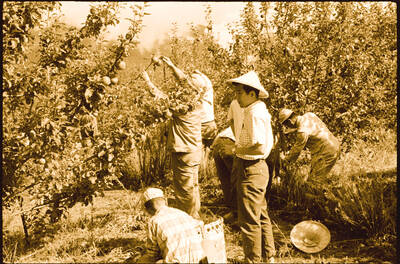
May 25 to May 31 Few believed that apples could be cultivated on a commercial scale in Taiwan’s high mountains. When horticulturalist Cheng Chao-hsiung (程兆熊) first proposed the idea in 1955, both American and Taiwanese colleagues dismissed it as implausible, arguing that temperate fruit could not be reliably grown on a subtropical island, especially on rugged terrain. However, it was this terrain in the Central Mountain Range where many Chinese Civil War veterans were resettled in the late 1950s. With limited job prospects and no family in Taiwan, they were placed on cooperative farms aimed toward self-sufficiency. Some say the conditions


 RSS
RSS