


Located across the street from Taipei Train Station, KMall is an unremarkable shopping center. But underneath the usual assortment of gadget stores, boutiques and restaurants lies a time portal that takes visitors back 40 years in Taiwan’s history. A neighborhood has been recreated block-by-block in the mall’s 1,500-ping basement, right down to potholes in the roads and sparrows roosting on an electric wire. In Taiwan Storyland (台灣故事館), it is perpetually dusk on an evening in 1965.
Founded in November 2005 by Franky Wu (吳傳治), an entrepreneur and memorabilia collector, Taiwan Storyland bills itself as a “historical experience,” where visitors can get a more intimate feel for the past than they would in a traditional museum. Taiwan Storyland is meant to represent an imaginary neighborhood located in what is now Taipei’s Zhongzheng District (中正區). Streets are lined with shop windows, all filled with genuine articles gathered by Wu over the course of 20 years. A corner store sells old-fashioned candy and toys, restaurants serve noodles and shaved ice, and a movie theater screens classic films twice a day.
“If you want to see art, you go to the National Palace Museum,” says deputy general manager Alford Tseng (曾干育). “But if you want to see how everyday people lived, you come here.” Tseng estimates that Taiwan Storyland receives an average of 25,000 visitors per month and that 75 percent of guests are Taiwanese, with the remainder mostly from Hong Kong, Macau and Japan.
“Visitors from Hong Kong are curious because it seems very foreign to them. On the other hand, Japanese guests think it’s different and familiar at the same time,” says Tseng, referring to the Japanese occupation of Taiwan. The colonial period’s influence on Taiwanese architecture is evident in many of the buildings recreated in Taiwan Storyland.
Founder Wu sold Taiwan Storyland to its current managers in 2007 (he still owns many of the items inside), but continues to operate Banana New Paradise (香蕉新樂園), a theme restaurant in Taichung that also pays homage to 1960s Taiwan in exacting detail.
Wu’s passion for vintage memorabilia started when he was a schoolboy. His family could not afford reference books for his high school art classes, so he visited a secondhand bookstore.
“While I was flipping through old books and periodicals, I kept finding things that people had left between the pages. There were old advertisements, photos, programs. I became very curious about those things,” says Wu.
As an adult, Wu visited buildings that were about to be demolished in his native Taichung and purchased their contents. Eventually, he began to focus on collecting items from the 1960s, when he was a small child.
Wu set Taiwan Storyland in 1965 because the year is not only his birth year, but also, from his perspective, a pivotal point in Taiwan’s social history.
“I grew up in a village in Taichung where Taiwanese people, Hakka people, Shanghainese people and other people from China all lived together. There wasn’t a sense of separation or even a political divide among us. We spoke different dialects, but we had no problem communicating,” says Wu. “At that time, the Chinese Nationalist Party (KMT) government’s goal was to defeat the Communist Party, but as villagers, our goal was to get along.”
Taiwan Storyland is fueled by nostalgia, but its view of history isn’t completely rose tinted. A large wooden sign near the classroom admonishes students to speak Mandarin instead of Hoklo (commonly known as Taiwanese) or Hakka (說國語不要說方言), a government policy at the time. Other KMT propaganda and slogans are pasted or painted onto walls, fences and even barrels in front of the puppet theater.
“When younger people see those signs, I think their reaction is ‘wow, were things really that over the top?’” says Wu. “They’ve studied Taiwanese history in their classes, but seeing those signs up close really gives them a sense of what our lives were like.”
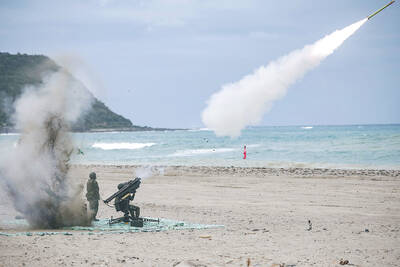
In late October of 1873 the government of Japan decided against sending a military expedition to Korea to force that nation to open trade relations. Across the government supporters of the expedition resigned immediately. The spectacle of revolt by disaffected samurai began to loom over Japanese politics. In January of 1874 disaffected samurai attacked a senior minister in Tokyo. A month later, a group of pro-Korea expedition and anti-foreign elements from Saga prefecture in Kyushu revolted, driven in part by high food prices stemming from poor harvests. Their leader, according to Edward Drea’s classic Japan’s Imperial Army, was a samurai

The following three paragraphs are just some of what the local Chinese-language press is reporting on breathlessly and following every twist and turn with the eagerness of a soap opera fan. For many English-language readers, it probably comes across as incomprehensibly opaque, so bear with me briefly dear reader: To the surprise of many, former pop singer and Democratic Progressive Party (DPP) ex-lawmaker Yu Tien (余天) of the Taiwan Normal Country Promotion Association (TNCPA) at the last minute dropped out of the running for committee chair of the DPP’s New Taipei City chapter, paving the way for DPP legislator Su
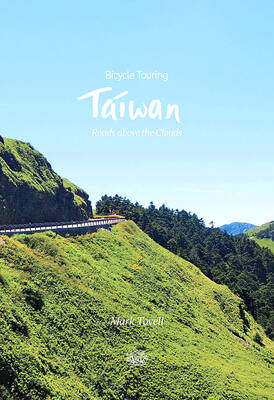
It’s hard to know where to begin with Mark Tovell’s Taiwan: Roads Above the Clouds. Having published a travelogue myself, as well as having contributed to several guidebooks, at first glance Tovell’s book appears to inhabit a middle ground — the kind of hard-to-sell nowheresville publishers detest. Leaf through the pages and you’ll find them suffuse with the purple prose best associated with travel literature: “When the sun is low on a warm, clear morning, and with the heat already rising, we stand at the riverside bike path leading south from Sanxia’s old cobble streets.” Hardly the stuff of your
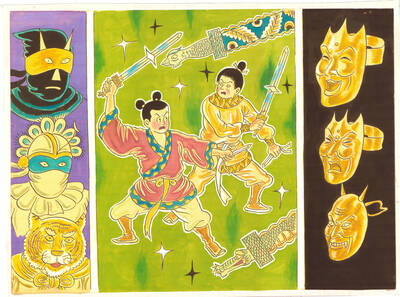
April 22 to April 28 The true identity of the mastermind behind the Demon Gang (魔鬼黨) was undoubtedly on the minds of countless schoolchildren in late 1958. In the days leading up to the big reveal, more than 10,000 guesses were sent to Ta Hwa Publishing Co (大華文化社) for a chance to win prizes. The smash success of the comic series Great Battle Against the Demon Gang (大戰魔鬼黨) came as a surprise to author Yeh Hung-chia (葉宏甲), who had long given up on his dream after being jailed for 10 months in 1947 over political cartoons. Protagonist


 RSS
RSS