


Tomorrow marks 10 years to the day that Taiwan was devastated by the 921 Earthquake, a magnitude 7.3 tremor that reduced tens of thousands buildings to rubble and claimed more than 2,400 lives.
But that catastrophic day also spawned a new beginning for the residents of Taomi Village (桃米村), located near the earthquake’s epicenter in Nantou County’s Puli Township.
“I couldn’t make money at home [before the quake], so I left this place,” says Guan Yu-fu (官裕富), a 43-year-old from Taomi who spent much of his 20s doing factory work and odd jobs throughout Taiwan.
Guan has since found work as an eco-tour guide and runs an idyllic guesthouse in the hills outside the village.
“Now, living here today, I feel a big sense of achievement.”
The quake destroyed more than half of Taomi’s buildings, but left one of its assets unscathed — its natural resources. The area’s unique ecosystem of wetlands, creeks and forests hosts a diversity of wildlife, including more than half of Taiwan’s 32 frog species and more than a third of its dragonfly and bird species.
The town is also the new home of the Paper Dome, a temporary church built in Kobe, Japan, after that city’s deadly earthquake in 1995. The structure opened to the public on Sept. 21 last year and is now a major tourist attraction.
Before 921, Taomi was a poor farming village, a mere dot on the map for tourists on their way to Sun Moon Lake (日月潭). Many of the village’s 1,200 residents farmed bamboo shoots for a living, but that business was already going downhill as post-processing factories moved to China.
Now, Taomi has reinvented itself as a popular eco-tourism destination, with nearly a dozen conservation areas and a cadre of 30 certified tour guides specializing in wildlife and botany.
The village is an example of a community whose residents managed to recover from one of the country’s worst natural disasters and are thriving thanks to an environmentally minded vision for the future.
LEARNING TO LOVE FROGS
It took a while for Guan to buy into that vision. He used to see nature as just “trees in the mountains.”
Back home and unemployed after the quake, he joined a government-funded work relief program where “volunteers” earned NT$600 a day helping to clean up the village.
There was a catch: To join the program, participants had to agree to spend weekends attending classes on Taomi’s ecology and wildlife.
“We got kidnapped,” laughed Guan. “But we had to do it — it was all for that NT$600.”
The carrot-and-stick approach to getting Taomi residents to attend classes came from the New Homeland Foundation (新故鄉文教基金會), which ran the work relief program under a government contract and was searching for a way to create sustainable jobs in Taomi after the quake. The Puli-based NGO initially saw conventional tourism as a possible option for redevelopment.
Then a survey of the area by the Council of Agriculture’s Taiwan Endemic Species Research Institute (TESRI) found an abundance of frog species, suggesting a rich and diverse ecosystem. This prompted the two organizations to broach the idea of eco-tourism with residents and led to the creation of a curriculum and licensing system for tour guides in 2000.
One year and an exam later, Guan was among a group of nine who received certification to lead
eco-tours at Taomi’s frog-watching sites.
In the beginning it was just a job. Guan was more impressed with the money — he earned NT$1,200 per tour — than the work itself. Despite hundreds of class hours on Taomi’s frogs, he still thought they were “ugly.”
It took a few observant tourists to help Guan put things in perspective. He changed his mind about frogs after witnessing one five-year-old’s effervescent reaction: “Ooooh! This frog is so pretty. How beautiful! How handsome!”
Guan shook his head. “I had lived to be 34 years old ... and it was only then that I came to see that frogs could be pretty, could be beautiful, could be cute.”
Another tourist’s comment really hit home. “You [tour guides] are pretty good at talking. But have you ever actually put your hands to work for your own community or home?”
For Guan, it was as if the tourist had seen right through him. The remark got him thinking about “bringing ecological conservation into” his own life.
As his affection for frogs grew, so did his appreciation for the land. He created frog-friendly ponds outside his home and guesthouse, a traditional sanheyuan (三合院) in Taomi’s forested hills. Soon, he and his family were surrounded day and night by a chorus of honking and chirping frogs.
A COMMUNITY COMES TOGETHER
Guan wasn’t the only person cultivating a new attitude toward nature. The ecology classes created by New Homeland and TESRI inspired other Taomi residents to clean up and maintain ponds and other natural sites around the village, something they continue to do today in a community-wide effort.
One project included the restoration of a section of Maopukeng Creek (茅埔坑溪) that was damaged by Typhoon Toraji in 2001. Concrete retaining walls on both sides of the creek were torn down and replaced with layers of rock. This slowed the river’s current and created a more hospitable habitat for wildlife.
The site is now maintained by Taomi residents as an “eco-park” for frog and butterfly watching and is safe for wading. It hasn’t been damaged by subsequent typhoons.
“Environmental engineering” projects such as these, along with the ecology classes, have encouraged Taomi residents to remain proactive about learning, says Liao Yung-kun (廖永坤), an eco-tour guide and owner of the Sanmaowu (三茅屋) guesthouse.
“Before [the quake], it was rare for us to gather in a class and discuss the community’s environment, culture or events. Now, everyone wants to work to build an ecological village, so we haven’t stopped taking classes or studying on our own,” he says.
Residents now organize their own classes through the Taomi Community Development Association (桃米社區發展協會).
Courses focus on vocational training and have covered everything from hospitality and catering for guesthouse owners to classes on how to deal with government regulations and policies. There are also workshops on crafts such as hat-weaving with paper pulp, something a few Taomi residents are trying to develop into a business.
New VALUES
Taomi’s tourist numbers paint a picture of success. In 2001, the village saw 7,000 visitors, which increased to 16,000 in 2002, says Liao, who started keeping track of the figures during his tenure as head of the Taomi Community Development Association.
He estimates that as many as 200,000 people will visit this year with the opening of the Paper Dome.
Taomi is a model of sustainable development, or “industrial development” without an environmental cost, says Chiang Ta-shu (江大樹), a professor of public policy and administration at National Chi Nan University in Puli.
“This community’s residents had to change their values. They had to learn about how to care for and cherish their natural environment and learn about ecological preservation. They were able to take this compassion for the natural environment and turn it into an employment opportunity.”
As southern Taiwan begins its recovery from Typhoon Morakot, Taomi offers a lesson for the central government in reconstruction, says Chiang. “They [government officials] should first encourage residents to learn about how they can develop in the future.”

In late October of 1873 the government of Japan decided against sending a military expedition to Korea to force that nation to open trade relations. Across the government supporters of the expedition resigned immediately. The spectacle of revolt by disaffected samurai began to loom over Japanese politics. In January of 1874 disaffected samurai attacked a senior minister in Tokyo. A month later, a group of pro-Korea expedition and anti-foreign elements from Saga prefecture in Kyushu revolted, driven in part by high food prices stemming from poor harvests. Their leader, according to Edward Drea’s classic Japan’s Imperial Army, was a samurai

The following three paragraphs are just some of what the local Chinese-language press is reporting on breathlessly and following every twist and turn with the eagerness of a soap opera fan. For many English-language readers, it probably comes across as incomprehensibly opaque, so bear with me briefly dear reader: To the surprise of many, former pop singer and Democratic Progressive Party (DPP) ex-lawmaker Yu Tien (余天) of the Taiwan Normal Country Promotion Association (TNCPA) at the last minute dropped out of the running for committee chair of the DPP’s New Taipei City chapter, paving the way for DPP legislator Su
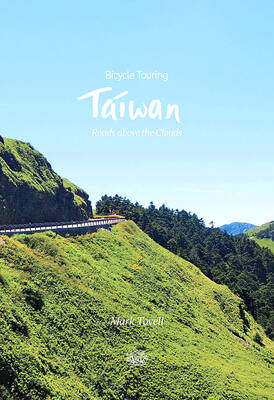
It’s hard to know where to begin with Mark Tovell’s Taiwan: Roads Above the Clouds. Having published a travelogue myself, as well as having contributed to several guidebooks, at first glance Tovell’s book appears to inhabit a middle ground — the kind of hard-to-sell nowheresville publishers detest. Leaf through the pages and you’ll find them suffuse with the purple prose best associated with travel literature: “When the sun is low on a warm, clear morning, and with the heat already rising, we stand at the riverside bike path leading south from Sanxia’s old cobble streets.” Hardly the stuff of your
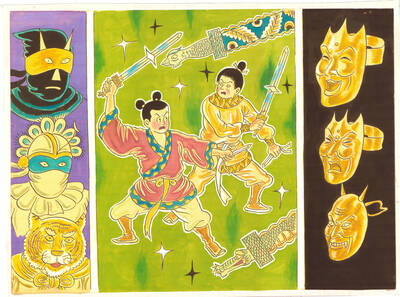
April 22 to April 28 The true identity of the mastermind behind the Demon Gang (魔鬼黨) was undoubtedly on the minds of countless schoolchildren in late 1958. In the days leading up to the big reveal, more than 10,000 guesses were sent to Ta Hwa Publishing Co (大華文化社) for a chance to win prizes. The smash success of the comic series Great Battle Against the Demon Gang (大戰魔鬼黨) came as a surprise to author Yeh Hung-chia (葉宏甲), who had long given up on his dream after being jailed for 10 months in 1947 over political cartoons. Protagonist


 RSS
RSS