


I am a little uneasy about this: an audience with the great Spanish-born tenor Jose Carreras at his leukemia research foundation in Barcelona, sandwiched between the man from the London Times and a journalist from a music magazine, all of us here to celebrate the lifetime achievement award he will be given at the Classical Brits on Thursday, and to discreetly plug his new disc, unenterprisingly titled The Jose Carreras Collection.
In some ways, the meeting is a polite fiction. Take the photograph on the front of the disc — an impossibly handsome thirtysomething with narrowed eyes and immaculate designer stubble. The picture is history, as are the disc’s curious collection of operatic standards and modernish songs, most of which were recorded a decade or more ago.
Even though he retired from the operatic stage in 2002, Carreras insists his career is far from over. “I’m still fully active,” he says. “I’m doing 50 or 60 concerts a year, both orchestral concerts and recitals. I carry on singing because I love it. The closer you are to the end, the more you understand how important it is.” Now 62, he recognizes that the end is approaching — “Next year is going to be 40 years that I am professionally singing, so it may be time” — but he refuses to put a date on when he will quit. He says he will know when the moment comes.
Carreras’ operatic career was shorter than the two other tenors with whom he will forever be linked — Luciano Pavarotti, who was commanding the stage at major opera houses into his mid-60s, and Placido Domingo, who is still taking on new roles at 68. That is because in 1987, Carreras was diagnosed with acute leukemia. Thereafter he had to husband his physical and vocal resources and restrict his appearances. He says the voice was still strong after chemotherapy and a couple of years off; the body less so. “For an artist in any field, it is important to know what are your limits, which is why I sang less opera afterwards,” he explains.
And now? “I don’t have the strength I had 25 years ago. If I could do tomorrow Carmen, or Boheme, or Andrea Chenier, or Il Trovatore, I wouldn’t sing it like 25 years ago. I would be comparing myself with the way I was then and this is not good.” Does he mourn the decline of that instrument? “The voice is like a man, like ourselves: we all feel melancholic about what we have lost, the things we could do when we were young. But having the possibility to still perform is wonderful. The voice loses elasticity as you age, but on the other hand maybe you are more mature as an interpreter, maybe your approach to singing deepens.”
In concert, he can sing material that suits his now more limited vocal resources — Catalan and Neapolitan songs, light opera, popular songs, those hybrid musico-religious numbers beloved of the new breed of tenor-crooners, as well as the odd heavy-duty aria. He has, in any case, always been willing to indulge in crossover — witness his much-criticized West Side Story with Leonard Bernstein in 1985 and his disc of Andrew Lloyd Webber songs in 1990, a step too far for Gramophone magazine, which refused to review it.
Why did he make such records? In the big-selling 1980s and 1990s, he admits, artists were guided by their record companies. But he also offers a more historically grounded defense of crossover. “We follow a certain legacy from important tenors — Caruso, Gigli, Di Stefano. All these singers sang the lighter music of their time; for a tenor, a Neapolitan song is almost like singing La Boheme. It’s a very important part of the repertoire. I didn’t believe in specialized singers — ‘This is a Verdi tenor, this is a Puccini soprano’; I believe in singing well or singing bad, and if you sing well La Boheme and Tosca and Carmen, for sure you have to try the Neapolitan songs, because it’s another way to express yourself.”
Carreras does not complain that he was struck down in his operatic prime. Indeed, he stresses how his illness enlarged his life. “Even out of severe difficulty some positive things come,” he says. One, of course, is the foundation, which he set up when he realized how much research work was needed to increase leukemia sufferers’ survival chances. Another, linked to his charity work, was the Three Tenors, which Carreras inspired.
“Yes, I’m sorry to say that the idea was mine,” he says with a full-bodied laugh. “I was singing in Florence, and somebody said, ‘Jose, we’re going to do a very special concert for the final of the World Cup, and we thought about having the best 20 opera singers in the world, like a marathon.’ And I said, ‘Look, don’t you feel it would be much more interesting for the audience if we put three tenors together,’ and the most popular ones were Luciano Pavarotti, Placido Domingo and myself.”
The concert, on the eve of the World Cup final in Rome in July 1990, was supposed to be a one-off, but its success led to the three performing together 30 times over the next 15 years, racking up vast record sales, and, some would argue, making record companies overreach themselves in both the size of contracts for classical artists and expectations of what discs might sell. This was the zenith for both artists and companies, and the subsequent decline was vertiginous.
Carreras, however, believes the Three Tenors phenomenon helped classical music. “We reached an audience that had never been interested in classical music and opera,” he insists. “We received thousands of messages saying, ‘Thank you, the concert was wonderful and it gave me the possibility to get to know this music.’” Were attitudes changed in the long term? “Many people who heard those concerts are now going to the opera and buying classical recordings as a result. Not all of them, of course, but a very good percentage.”
Carreras recognizes that he was to some degree in the shadow of his two older colleagues, and seems to accept a pecking order of Pavarotti, Domingo and then himself. But he believes the combination was special: “There was a chemistry between us.” And competition, too? “There was competition between us, but it was a sane competition.”
With two grown-up children, three grandchildren, his second wife’s three children, the foundation, his passion for Barcelona football club, and in the autumn of a lustrous career, Carreras seems content, that throaty laugh unforced. “I’m a very fortunate man,” he says. “I have in life everything I could dream of.” When you should, by all logic, have been dead at 40, your 60s are a delight, whether or not you can still hit high Cs or sing E lucevan le stele at La Scala. For Carreras, the stars still shine.

Behind a car repair business on a nondescript Thai street are the cherished pets of a rising TikTok animal influencer: two lions and a 200-kilogram lion-tiger hybrid called “Big George.” Lion ownership is legal in Thailand, and Tharnuwarht Plengkemratch is an enthusiastic advocate, posting updates on his feline companions to nearly three million followers. “They’re playful and affectionate, just like dogs or cats,” he said from inside their cage complex at his home in the northern city of Chiang Mai. Thailand’s captive lion population has exploded in recent years, with nearly 500 registered in zoos, breeding farms, petting cafes and homes. Experts warn the

The unexpected collapse of the recall campaigns is being viewed through many lenses, most of them skewed and self-absorbed. The international media unsurprisingly focuses on what they perceive as the message that Taiwanese voters were sending in the failure of the mass recall, especially to China, the US and to friendly Western nations. This made some sense prior to early last month. One of the main arguments used by recall campaigners for recalling Chinese Nationalist Party (KMT) lawmakers was that they were too pro-China, and by extension not to be trusted with defending the nation. Also by extension, that argument could be
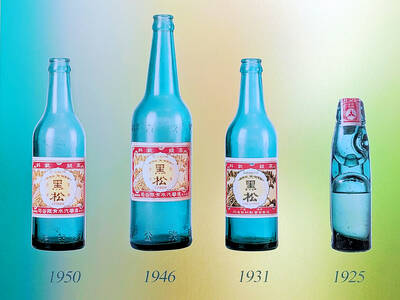
Aug. 4 to Aug. 10 When Coca-Cola finally pushed its way into Taiwan’s market in 1968, it allegedly vowed to wipe out its major domestic rival Hey Song within five years. But Hey Song, which began as a manual operation in a family cow shed in 1925, had proven its resilience, surviving numerous setbacks — including the loss of autonomy and nearly all its assets due to the Japanese colonial government’s wartime economic policy. By the 1960s, Hey Song had risen to the top of Taiwan’s beverage industry. This success was driven not only by president Chang Wen-chi’s

Last week, on the heels of the recall election that turned out so badly for Taiwan, came the news that US President Donald Trump had blocked the transit of President William Lai (賴清德) through the US on his way to Latin America. A few days later the international media reported that in June a scheduled visit by Minister of National Defense Wellington Koo (顧立雄) for high level meetings was canceled by the US after China’s President Xi Jinping (習近平) asked Trump to curb US engagement with Taiwan during a June phone call. The cancellation of Lai’s transit was a gaudy


 RSS
RSS