


“What would Dovima With Elephants have been without Dovima?” the curator Kohle Yohannan said last week, referring to a celebrated Richard Avedon photograph of 1955 that depicted the attenuated mannequin Dovima (nee Dorothy Virginia Margaret Juba) wearing a Christian Dior sheath and sandwiched between monumental pachyderms.
One could just as easily ask what Dovima With Elephants would have been without the elephants, of course, but then 3-tonne pachyderms don’t rate the cultural attention devoted to beautiful clothes-hangers who weigh 50kg.
Elephants don’t have fanzines, magazines, Web sites and blogs devoted to their images and antics. They don’t attract the thumb-tapping haiku artists of the Twitter-sphere. They do not rate museum shows consecrated to their essentially unsung contributions to fashion, art, feminism, commerce, body imagery and art. In truth, models have never garnered the full-scale museum treatment, either. Or they didn’t until now.
Opening at the Costume Institute of the Metropolitan Museum of Art today, The Model as Muse aims to give credit to the assorted women who, at least since the invention of photography, have helped set the standard of Western feminine beauty. The sophisticates (Dovima, Lisa Fonssagrives, Sunny Harnett) of the 1950s, with their distant gazes and angular figures, became the hippie goddesses (Veruschka, Penelope Tree, Twiggy) of the 1960s. And they in turn were transformed into the ruddy athletic types of the following decade (Lisa Taylor, Patty Hansen), who gave way to the glamourpuss supermodels (Christy Turlington, Naomi Campbell, Linda Evangelista) of the 1980s. And, with the notable exceptions of Kate Moss and Gisele Bundchen, that is pretty much where the occupational and cultural needle got stuck.
The Model as Muse seeks to examine the relationship, as Yohannan writes in the big glossy book that accompanies the exhibition, “between high fashion and the evolving ideals of beauty through the careers and personifications of iconic models who posed in the salons, walked the runways and exploded onto the pages of Vogue, Harper’s Bazaar and even Life and Time.”
Action verbs are one of the enduring tropisms of fashion-speak and so naturally models never “land” in either Vogue or our lives with a passive thump. Models are locomotives, to use an archaic Vreeland-era formulation. Models rocket. Models explode. Whether or not models are icons, they incontestably excite our attention and draw us in.
“I was a little Southern, ignorant white female and would have been one forever,” Lauren Hutton once told me, had modeling not propelled the Carolina tomboy from her simple beginnings and onto a string of Vogue covers and lucrative advertising campaigns.
Now in her 60s and still working, Hutton is among the few models to have improvised a durable career in a business where the talent is often considered a necessary nuisance and in which it is commonplace for people to talk about a model’s “use by” date.
“Modeling is a heinous job,” said Yohannan last week and, having been a model himself, the curator should know.
Yet an awful lot of people seem to want to be a model or else look at or look like or learn about one (check the Google hits for Gisele Bundchen). And it almost goes without saying that a reason for all this interest is that these gorgeous and petted and idealized creatures are passive — their beauty that of a butterfly pinned to a collector’s tray.
Still, models’ images “tell the story of entire generations of women,” or one aspect of it, anyway, claimed Yohannan, who shared curatorial duties with Harold Koda, the curator in charge of the Costume Institute. He cited the example of the 1920s model Marian Morehouse, whose lean physique and sleek modernist beauty marked a dramatic shift away from the simpering and corseted beauties of the Belle Epoque to a newly liberated and unfettered type.
“In a nutshell, the show is about expanding the way we see a fashion photograph to include the model,” Yohannan said.
Whether or not The Model as Muse sustains this notion, it does provide a guilt-free opportunity to revisit fashion’s back pages (literally; many of the images in the show exist only as tear sheets from magazines). The crowds likely to throng this show may include some of the kooks who carve out spooky cultist Web-caves devoted to favorites (one such site features 15,000 images), but also anyone looking to become reacquainted with a face from the past.
And what faces they had, and what surprising kinds of beauty. True, there are the symmetrically formed goddesses like Suzy Parker or Jean Shrimpton or Rene Russo. But there are also plenty of oddballs like Twiggy, whose gangly limbs and freckled androgyny seem as startling now as when Life magazine gushingly nominated her the “Face of 1967.” There is Vera von Lehndorff, or Veruschka, the double-jointed German aristocrat with slightly rubbery features, an Amazonian physique and a quirky intelligence that made her an ideal photographer’s foil.
There is Penelope Tree, the society girl with the high forehead of a Memling Madonna and eyes so wide-set she looks like a Martian bug. There is Peggy Moffitt, the model whose impassive face and stylized posture added a compelling Kabuki element to her collaborations with provocateur designers like Rudi Gernreich (she modeled his famous Topless bathing suit in 1964). There is the haughtily aristocratic Donyale Luna — born Peggy Anne Freeman in Detroit — an early African-American model whose phenomenally long limbs and ethereal aura made her an ideal vehicle for the futuristic creations of design innovators like Paco Rabanne.
Are models perhaps the last silent film stars? A preview of The Model as Muse suggests they are. A model’s face on a magazine cover may sell fewer issues than that of the latest hot actress, but they are ultimately a lot more compelling to look at and this is because we hardly ever have to hear about their private lives or be burdened with their thoughts.
It cannot be accidental that Kate Moss, the most persuasive contemporary example of a model as an artistic catalyst, has assiduously guarded what she says throughout her career. Moss is no dummy. She knows that the basic requirement of her particular job is silence. A model is a muse to the precise extent that a model is mute.
Established & Sons Buggs lamp by Sebastian Wrong.
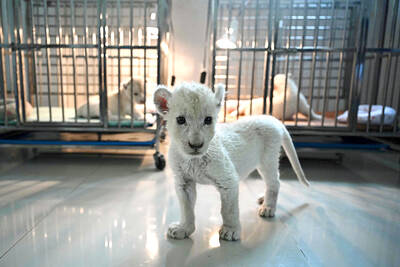
Behind a car repair business on a nondescript Thai street are the cherished pets of a rising TikTok animal influencer: two lions and a 200-kilogram lion-tiger hybrid called “Big George.” Lion ownership is legal in Thailand, and Tharnuwarht Plengkemratch is an enthusiastic advocate, posting updates on his feline companions to nearly three million followers. “They’re playful and affectionate, just like dogs or cats,” he said from inside their cage complex at his home in the northern city of Chiang Mai. Thailand’s captive lion population has exploded in recent years, with nearly 500 registered in zoos, breeding farms, petting cafes and homes. Experts warn the

The unexpected collapse of the recall campaigns is being viewed through many lenses, most of them skewed and self-absorbed. The international media unsurprisingly focuses on what they perceive as the message that Taiwanese voters were sending in the failure of the mass recall, especially to China, the US and to friendly Western nations. This made some sense prior to early last month. One of the main arguments used by recall campaigners for recalling Chinese Nationalist Party (KMT) lawmakers was that they were too pro-China, and by extension not to be trusted with defending the nation. Also by extension, that argument could be
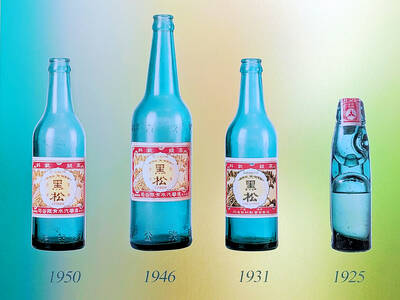
Aug. 4 to Aug. 10 When Coca-Cola finally pushed its way into Taiwan’s market in 1968, it allegedly vowed to wipe out its major domestic rival Hey Song within five years. But Hey Song, which began as a manual operation in a family cow shed in 1925, had proven its resilience, surviving numerous setbacks — including the loss of autonomy and nearly all its assets due to the Japanese colonial government’s wartime economic policy. By the 1960s, Hey Song had risen to the top of Taiwan’s beverage industry. This success was driven not only by president Chang Wen-chi’s
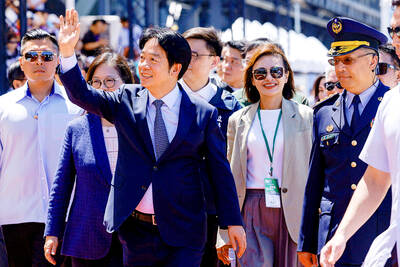
Last week, on the heels of the recall election that turned out so badly for Taiwan, came the news that US President Donald Trump had blocked the transit of President William Lai (賴清德) through the US on his way to Latin America. A few days later the international media reported that in June a scheduled visit by Minister of National Defense Wellington Koo (顧立雄) for high level meetings was canceled by the US after China’s President Xi Jinping (習近平) asked Trump to curb US engagement with Taiwan during a June phone call. The cancellation of Lai’s transit was a gaudy


 RSS
RSS