


During good times, an auction is the obvious choice for any collector wanting to sell a work of art. But as the recession takes its toll, many collectors have changed strategies and retreated to the more hidden — and potentially less lucrative — world of private sales.
For many sellers, the driving factor is fear. Fear that their friends will discover they need money. Fear that if a Picasso or Warhol, Monet or Modigliani doesn’t sell at auction, it will be considered yesterday’s goods. If they don’t have to, fewer collectors are putting their holdings up for auction at Sotheby’s and Christie’s, where prices and profits have plummeted. But executives at both houses say business in their private-sale departments has more than doubled in recent months.
Even institutions like the Museum of Modern Art in Manhattan are avoiding auctions. This season it has decided to sell two early classic 1960s paintings by Wayne Thiebaud through Haunch of Venison, a gallery owned by Christie’s. In 2005, when the market was nearing its peak, it sold a variety of works at auction at Christie’s for strong prices.
“There’s an element of uncertainty with an auction that in this climate makes it more prudent to sell privately,” said Ann Temkin, chief curator in the department of painting and sculpture at MoMA. (The Thiebauds were donated to the Modern with the express purpose of selling them to raise cash for future acquisitions.)
“The game has definitely shifted,” said Christopher Eykyn, a former head of Impressionist and modern art at Christie’s who is now a dealer in New York. “A lot of clients don’t want to be seen selling, so the private route is suddenly more attractive.”
Just six months ago Sotheby’s Impressionist and modern art sale brought US$223.8 million; its May 5 sale is expected to fetch only US$81.5 million. Christie’s Impressionist and modern art auction in November totaled US$146.7 million; its May 6 sale is estimated at only US$94.9 million.
“Clients want it now,” said Marc Porter, president of Christie’s in America. “And that means cash in their pockets.” Why wait months for the regularly scheduled auctions when you can have instant money, even if it means forfeiting the possibility of sparking a bidding war at auction?
Another factor is that collectors, seeing prices fall, are for the most part hanging onto their art, waiting for the auction market to rebound.
So secret are private transactions that confidentiality agreements bind the dealers and auction-house executives. Still, the art world loves to talk, and in recent months among the expensive paintings that have quietly changed hands are a 1970s De Kooning abstract canvas sold for around US$30 million; a Cy Twombly Blackboard painting for US$12 million; one of Gerhard Richter’s Color Charts for US$18 million; and Jeff Koons’ Hanging Heart Violet sculpture for US$11 million.
There are exceptions, of course. Estates continue to go to auction because executors have a fiduciary responsibility and prices are rarely challenged after public sales.
For the auction houses, private sales are lucrative and inexpensive. Generally Sotheby’s and Christie’s charge 5 to 10 percent of the purchase price of an artwork, depending on its value and the agreement with the seller. (If a work goes to auction the houses charge sellers 25 percent of the first US$50,000, 20 percent of the next US$50,000 to US$1 million and 12 percent of the rest.) Money earned from private transactions comes cheap, without expenses like advertising, insurance and shipping associated with auctions.
The dismal sales in New York in November, when night after night paintings by Monet and Matisse, Bacon and Warhol went unsold, meant big losses for Sotheby’s and Christie’s, which had a financial interest in most of this expensive art in the form of guarantees, undisclosed sums paid to sellers regardless of a sale’s outcome.
After the fall auctions, both houses immediately began changing the way they conduct business. In addition to announcing hundreds of layoffs — with perhaps more to come — they mostly halted the practice of guarantees and stopped giving consignors a cut in the fees they charge buyers. The days of publishing luscious catalogs have ended as well.
For their part, dealers say that their phones started ringing after Sept. 15, the day Lehman Brothers filed for bankruptcy. “It’s been pretty steady ever since,” said Steven Henry, director of the Paula Cooper Gallery in Chelsea. He said he had been getting inquiries about selling art from people who had investments with Bernard Madoff, or who had seen the value of their stock or real estate assets collapse.
Matthew Marks, another Chelsea dealer, has noticed that sellers “just aren’t into gambling anymore and auctions are no longer a sure thing.”
Dealers say that despite the increase in private sales, deals do not happen as briskly as they did in the days when collectors were on waiting lists for hot artists. “Everything is a negotiation,” Marks said.
Still, he is grateful for business. “I’m not asking sellers any questions,” Marks said. “I’m just happy the phone is ringing.”
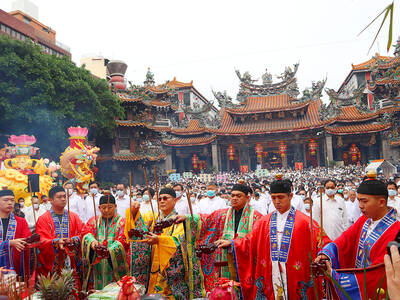
Recently the Chinese Nationalist Party (KMT) and its Mini-Me partner in the legislature, the Taiwan People’s Party (TPP), have been arguing that construction of chip fabs in the US by Taiwan Semiconductor Manufacturing Co (TSMC, 台積電) is little more than stripping Taiwan of its assets. For example, KMT Legislative Caucus First Deputy Secretary-General Lin Pei-hsiang (林沛祥) in January said that “This is not ‘reciprocal cooperation’ ... but a substantial hollowing out of our country.” Similarly, former TPP Chair Ko Wen-je (柯文哲) contended it constitutes “selling Taiwan out to the United States.” The two pro-China parties are proposing a bill that
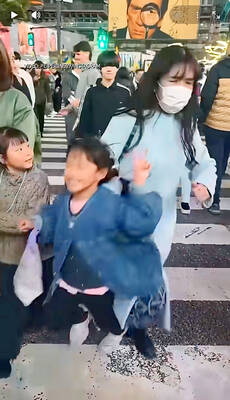
It starts out as a heartwarming clip. A young girl, clearly delighted to be in Tokyo, beams as she makes a peace sign to the camera. Seconds later, she is shoved to the ground from behind by a woman wearing a surgical mask. The assailant doesn’t skip a beat, striding out of shot of the clip filmed by the girl’s mother. This was no accidental clash of shoulders in a crowded place, but one of the most visible examples of a spate of butsukari otoko — “bumping man” — shoving incidents in Japan that experts attribute to a combination of gender

The race for New Taipei City mayor is being keenly watched, and now with the nomination of former deputy mayor of Taipei Hammer Lee (李四川) as the Chinese Nationalist Party’s (KMT) candidate, the battle lines are drawn. All polling data on the tight race mentioned in this column is from the March 12 Formosa poll. On Christmas Day 2010, Taipei County merged into one mega-metropolis of four million people, making it the nation’s largest city. The same day, the winner of the mayoral race, Eric Chu (朱立倫) of the Chinese Nationalist Party (KMT), took office and insisted on the current
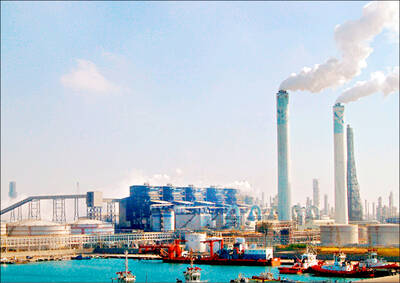
Last month, media outlets including the BBC World Service and Bloomberg reported that China’s greenhouse gas emissions are currently flat or falling, and that the economic giant appears to be on course to comfortably meet Beijing’s stated goal that total emissions will peak no later than 2030. China is by far and away the world’s biggest emitter of greenhouse gases, generating more carbon dioxide than the US and the EU combined. As the BBC pointed out in their Feb. 12 report, “what happens in China literally could change the world’s weather.” Any drop in total emissions is good news, of course. By


 RSS
RSS