


At the first Back to Spin party in October last year the crowd danced so hard you could feel the floor shake and tiles fell from the ceiling in the movie theater downstairs.
It happened at the venerable Paris Night Club (夜巴黎舞廳) in Ximending but the atmosphere felt like opening night at Luxy. Outside, the line snaked half a block down Wuchang Street (武昌街) while inside celebrities including Wong Kar Wai (王家衛) and Faith Yang (楊乃文) grooved with clubbers who were too young to have ever seen the inside of the party’s namesake, the old Spin disco on Heping East Road (和平東路).
Tomorrow it’s going to happen all again — only this time on a much larger scale. Organized by 10 former Spin patrons who are now in their mid to late 30s and mostly work in the entertainment industry, the second Back to Spin takes place in a converted warehouse at Huashan Culture Park (華山文化園區) on Bade Road (八德路). A capacity crowd of 550 attended the first party and 200 people had to be turned away. This time there’s room for 1,000, but as of Sunday 500 tickets had already been sold.
Opened in 1993, Spin was Taipei’s version of CBGB, the New York club where The Ramones, Blondie and The Talking Heads got their start. Spin wasn’t so much a place to drink and hook up — though there was certainly a lot of that going on — as it was a mecca for people who liked music and knew that here the DJs always played the latest releases from the US and Europe, which in those days were hard to find anywhere else. It was “an information center” in the words of Back to Spin organizer Arthur Chen (陳彥豪) where you could meet “lots of weird people.”
Customers would rendezvous at 45 — the bar was a major hangout before it got chopped in half to make room for a parking lot — and buy a drink to get free ticket to Spin. Then they’d head to the 7-Eleven at Heping East and Jinshan South (金山南路) roads, down a few beers outside and hide a couple more in their pockets before descending into the pit next door. Spin was dark, dirty, filled with dancing, sweaty, head-banging bodies, it smelled of smoke and stale beer and the floor was sticky. The police often visited and nasty fights frequently started inside. It was the best club in Taipei.
Tomorrow, former house DJs Alex 36, Mykal, Fish and Randy will play a mix of old favorites like Pulp, Suede, Rage Against the Machine and Nirvana along with new rock and electronica. As with the first Back to Spin, you must partake in a “ceremony” upon entering: downing a (free) shot of tequila. And if in the unfortunate event you can’t get in, you can always go to Underworld (地下社會) on Shida Road (師大路) where Back 2 the Future (回到未來) is holding another one of its DJ parties that bring to mind the way things used to be at Spin.
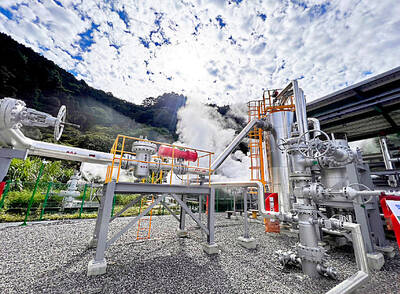
Taiwan’s semiconductor industry consumes electricity at rates that would strain most national grids. Taiwan Semiconductor Manufacturing Co (TSMC) alone accounted for more than 9 percent, or 2,590 megawatts (MW), of the nation’s power demand last year. The factories that produce chips for the world’s phones and servers run around the clock. They cannot tolerate blackouts. Yet Taiwan imports 97 percent of its energy, with liquefied natural gas reserves measured in days. Underground, Taiwan has options. Studies from National Taiwan University estimate recoverable geothermal resources at more than 33,000 MW. Current installed capacity stands below 10 MW. OBSTACLES Despite Taiwan’s significant geothermal potential, the
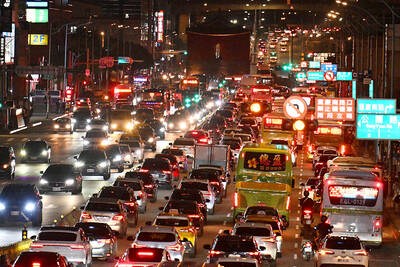
By global standards, the traffic congestion that afflicts Taiwan’s urban areas isn’t horrific. But nor is it something the country can be proud of. According to TomTom, a Dutch developer of location and navigation technologies, last year Taiwan was the sixth most congested country in Asia. Of the 492 towns and cities included in its rankings last year, Taipei was the 74th most congested. Taoyuan ranked 105th, while Hsinchu County (121st), Taichung (142nd), Tainan (173rd), New Taipei City (227th), Kaohsiung (241st) and Keelung (302nd) also featured on the list. Four Japanese cities have slower traffic than Taipei. (Seoul, which has some

In our discussions of tourism in Taiwan we often criticize the government’s addiction to promoting food and shopping, while ignoring Taiwan’s underdeveloped trekking and adventure travel opportunities. This discussion, however, is decidedly land-focused. When was the last time a port entered into it? Last week I encountered journalist and travel writer Cameron Dueck, who had sailed to Taiwan in 2023-24, and was full of tales. Like everyone who visits, he and his partner Fiona Ching loved our island nation and had nothing but wonderful experiences on land. But he had little positive to say about the way Taiwan has organized its

The entire Li Zhenxiu (李貞秀) saga has been an ugly, complicated mess. Born in China’s Hunan Province, she moved to work in Shenzhen, where she met her future Taiwanese husband. Most accounts have her arriving in Taiwan and marrying somewhere between 1993 and 1999. She built a successful career in Taiwan in the tech industry before founding her own company. She also served in high-ranking positions on various environmentally-focused tech associations. She says she was inspired by the founding of the Taiwan People’s Party (TPP) in 2019 by Ko Wen-je (柯文哲), and began volunteering for the party soon after. Ko


 RSS
RSS