


Behind a shop window near the Shida night market, passersby can glimpse four workbenches placed back to back, their surfaces laden with small blowtorches, tiny anvils and miniature hammers. Most afternoons, young men sit hunched over the tables, their hands delicately tapping away. Turn the corner and you will see the fruits of their meticulous labor: intricately handcrafted sterling silver jewelry artfully displayed in an airy showroom.
Primary Silver (元銀手作) opened in September on Longquan Street, just a few steps from the night market and right next to a popular purveyor of steamed buns. The store was founded by a group of four jewelers, including manager Zhou Jian-Ting (周建廷). The team originally produced gold jewelry for clients. Eventually, they decided it was time to start focusing on their own designs. Primary Silver provides Zhou and his colleagues with a workspace and a showroom for their creations.
“Each of us like creating things that are a bit more unusual than what other jewelry stores usually want. We figured that if we opened Primary Silver, we’d be able to find time to create and sell our own designs in between doing production work for other companies,” Zhou says.
The designers use sterling silver for their own pieces because it is cheaper than white gold and allows them to manipulate the natural oxidation of silver to create design effects. One bracelet (NT$4,500) has cloud-like whorls highlighted with iridescent blue and purple hues that resemble enamel on first glance, but is in fact the oxide that forms on silver after it has been exposed to air or water.
Each piece is created in limited quantities, and Zhou hopes that the intricacy of the designs will redefine people’s notions of what a handmade object can look like.
“When people hear ‘handmade’ now, I think they tend to think of things that are relatively simple and maybe a bit homespun-looking, so it’s obvious that it’s not machine-made,” Zhou says. “Of course that has its appeal, but we wanted to show our customers that something made by hand can also be very refined and very detailed.”
Pieces include earrings made to look like a pair of miniature lily pads (NT$880), with the texture of the leaves and each thin vein carefully delineated in sterling silver; and a playful pendant that looks like a kitten dangling from a branch with its tiny claws (NT$2,200). More abstract pieces include a series of pendants inspired by the undulating curves of the female body (NT$2,200). Techniques used by the designers include shaping the silver by hammering, drilling or soldering it, and lost-wax casting, in which a wax form is first carved, allowing for finer detailing, then used to make a mold.
Primary Silver also makes custom designs, which range from a few hundred NT dollars for small, simple pieces to about NT$20,000 for larger and more detailed jewelry. Custom jewelry is also available in white gold, which is priced according to the weight and complexity of the finished piece.
One customer recently requested a pair of matching pendants for him and his girlfriend but wasn’t quite sure what design he wanted.
“He said it had to be romantic, but he didn’t want a traditional heart pendant,” Zhou says.
Zhou asked the man about his girlfriend’s tastes and interests and found out that she likes elephants, a motif he decided to incorporate into the jewelry. The finished set of pendants are identical but meant to be worn differently: the girlfriend’s pendant, which hangs horizontally, looks like a stylized, heart-shaped elephant; the boyfriend’s vertically-hung pendant transforms the same design into a more masculine, abstract stone shape.
By placing Primary Silver’s workbenches in the showroom and right next to a large window, Zhou hopes to not only attract potential customers, but give passersby a peek into the art of silversmithing.
“A lot of stores don’t want people to see inside their workspaces,” Zhou says. “But I think a lot of people enjoy seeing how jewelry is made. And we think that understanding the care that is put into each piece allows people to value and enjoy their jewelry even more.”

In late October of 1873 the government of Japan decided against sending a military expedition to Korea to force that nation to open trade relations. Across the government supporters of the expedition resigned immediately. The spectacle of revolt by disaffected samurai began to loom over Japanese politics. In January of 1874 disaffected samurai attacked a senior minister in Tokyo. A month later, a group of pro-Korea expedition and anti-foreign elements from Saga prefecture in Kyushu revolted, driven in part by high food prices stemming from poor harvests. Their leader, according to Edward Drea’s classic Japan’s Imperial Army, was a samurai

The following three paragraphs are just some of what the local Chinese-language press is reporting on breathlessly and following every twist and turn with the eagerness of a soap opera fan. For many English-language readers, it probably comes across as incomprehensibly opaque, so bear with me briefly dear reader: To the surprise of many, former pop singer and Democratic Progressive Party (DPP) ex-lawmaker Yu Tien (余天) of the Taiwan Normal Country Promotion Association (TNCPA) at the last minute dropped out of the running for committee chair of the DPP’s New Taipei City chapter, paving the way for DPP legislator Su
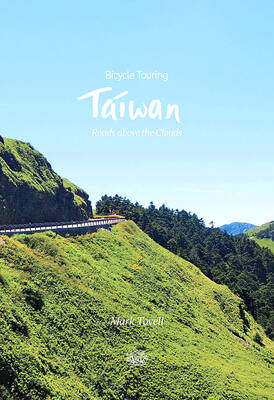
It’s hard to know where to begin with Mark Tovell’s Taiwan: Roads Above the Clouds. Having published a travelogue myself, as well as having contributed to several guidebooks, at first glance Tovell’s book appears to inhabit a middle ground — the kind of hard-to-sell nowheresville publishers detest. Leaf through the pages and you’ll find them suffuse with the purple prose best associated with travel literature: “When the sun is low on a warm, clear morning, and with the heat already rising, we stand at the riverside bike path leading south from Sanxia’s old cobble streets.” Hardly the stuff of your
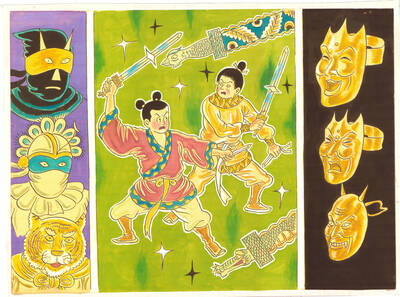
April 22 to April 28 The true identity of the mastermind behind the Demon Gang (魔鬼黨) was undoubtedly on the minds of countless schoolchildren in late 1958. In the days leading up to the big reveal, more than 10,000 guesses were sent to Ta Hwa Publishing Co (大華文化社) for a chance to win prizes. The smash success of the comic series Great Battle Against the Demon Gang (大戰魔鬼黨) came as a surprise to author Yeh Hung-chia (葉宏甲), who had long given up on his dream after being jailed for 10 months in 1947 over political cartoons. Protagonist


 RSS
RSS