


IT would be dark soon, we could tell, because the sun had dipped behind the far ridge of the absurdly picturesque valley, but there didn’t seem to be any urgency to return to our bungalow. The tea country of the Western Ghats in southern India, the knuckle of mountains separating lush Kerala from the plains of Tamil Nadu, is tranquil to the point of caricature and the only danger lay in the eyes of our seven-year-old, Esme, who feared we might encounter more tea pickers.
Earlier, walking up from the bungalow that had once belonged to the English manager of the vast Tallayar estate, the last of these to finish work had descended past us. Three women, Tamils wearing saris, had pinched Esme’s cheeks so hard her smile had morphed into a grimace. Now the tea pickers had all reached their homes further down the valley, from where later in the dark we would hear Tamil film music drifting up. Instead, we were stopped by the recently installed manager of the estate, having first been alerted to his presence by the growl of his gleaming Enfield motorbike. Elephants, he said, roamed these hillsides; and yes, they could be very dangerous and yes, we’d best hurry back to the bungalow.
Packing for this two-week adventure, we had not counted being savaged by wild pachyderms among the possible dangers. Instead, there had been questions about what would Sam and Esme eat and what sort of malaria pills should we take, or would they be simply overwhelmed by the country itself. Before Zoe and I met we had both traveled around India. The three weeks I’d spent in the south with a gang of teenage mates, rucksacks filled with filthy washing on our backs, had left me with the potentially foolhardy idea of wanting to instill the fascination I’d felt with this part of the world in two under-10s.
Kerala’s history is intertwined with that of travelers seduced by its spectacular beauty. In Cochin, to which we flew via Sri Lanka, there is still — just about — one of the oldest Jewish diaspora communities in the world as well as India’s oldest European church, St Francis, where the explorer Vasco da Gama was originally buried.
Our own journey had seen Zoe pick up a bug on the flight, and the family’s entrance into the country had been heralded by a fellow passenger announcing to the stewardesses, “she is vomiting,” with the sort of hard, percussive “v” and elongated vowel sound that also announces India. So much for the children’s welfare.
But this was a holiday at which we were chucking the savings, and whereas last time it had been trains and buses, now we were met by our own car and driver, the heroic Rajesh, with whom we weaved calmly north for an hour-and-a-half to what we could see, in the warm light of morning, were the Athirapally Falls. This is a popular spot for local tourists, and the view from our adjoining bedrooms at our eco-friendly hotel of the Chalakudy River crashing down 24m was spectacular.
The falls had also attracted a film crew shooting a Malayalam movie in the forest when Sam, Esme and I sweated past later in the heat, with a chorus line of extras and a troop of monkeys waiting in the shade. For the children, it immediately felt very different from the school playground on a Friday afternoon, and later, on a drive deeper into the forest, we saw deer and a giant red squirrel, but no elephants here either, despite the promised chance of a sighting.
The deal had been that we would split the trip between wildlife, beach and culture and next morning, with Zoe recovered, we drove back to Cochin. The route was initially through lush countryside, with Rajesh pointing out the banana trees, tapioca, rubber trees and much more, as if this were a botany lesson. This is a fertile land for religion, too, and beside the temples and mosques, there were huge churches with gaudy paint jobs to enable them to compete with their Hindu counterparts. Imposing mansions also studded the roadside, evidence of Kerala’s growing prosperity.
Long the most literate state in India, it is benefiting from workers at every level, from construction workers to medics, sending money home from newfound jobs in the Gulf. Tourism plays its part, too, and in Cochin the sort of boutique hotel that simply didn’t exist in India 20 years ago — backpacker’s budget or not —was awaiting us.
Before dinner in the courtyard of the chic Malabar House, there was the inevitable visit to the city’s famous Chinese fishing nets and then to a kathakali show. Genuine performances of this ancient form of dance-drama apparently last through the night, but even though this show was thankfully truncated and the protagonists looked spectacular in their lurid make-up, there was still the question of why the children should be subjected to it when I had suffered a similar show that had bored me close to tears 20 years ago. But it proved a surprise hit thanks to the woman who explained the action to the audience.
“What you will see now is the emotion of anger,” she would mutter. And the dancer would half raise an eyebrow. “Now you will see the emotion of joy.” The same chap would curl his lip. The subtleties passed us by, and I’m afraid to say that for the next 10 days, kathakali became a running joke in the family.
The cultural trail was leading us to Madurai across the Western Ghats in Tamil Nadu, but to break the nine-hour drive we stopped for the night in tea country, 45 minutes on from the town of Munnar. En route, the children were entertained by the scenery but also by a CD of the Just William stories we’d brought with us to play on the car stereo; it turned out that the sound of Martin Jarvis recounting the adventures of William, Ginger, Douglas et al proved the most apposite soundtrack to our arrival at the Tallayar Estate bungalow — a perfect throwback to the Raj. Delphiniums and forget-me-nots prettified the garden and the strawberries were just coming into season; later, the cook asked the children to identify the veg patch cauliflower they fancied for dinner. We were the only guests, treated to vast bedrooms and chipped ceramic baths, and the cook and housekeeper were there at 4am to see us off.
The early start wasn’t in the itinerary (however relentless it seemed), but the stoic Rajesh had been alarmed by news of a hartal — a strike — called to protest against rising fuel prices in Kerala. So we wound through the mountains as dawn crept up — privilege to the most spectacular views — in order to make the state border before angry picket lines could stop us; Rajesh was genuinely relieved when we made it down into the plains without incident.
The ancient city of Madurai with its rubbish-strewn streets served as a sharp contrast to the more genteel charms of Cochin. But to visit its stellar attraction, the Meenakshi temple, we took rickshaws from the hotel and the children loved the mayhem of our race there. If ever any journey made a mockery of the demand that they put their seat belts on when in the car back home, this was it.
The vast temple complex, with its 12 gopurams, beats an Anglican church hands down when it comes to child-friendliness, too: we could pad around barefoot, play hide and seek among the sculptures, visit the temple shops — and gain a keen sense of a religion practiced in near-unbroken form for millennia. Sam said later that the temple was — and here he adopted the sort of formulation that would see Rajev tell us that from Madurai to our next destination it was “near ... and also far” — both “boring and ... interesting.” Serious praise.
In Madurai we also visited a tailor, who kitted out both children in Indian clothes, which seemed like a further measure of their acclimatization. The food, too, was proving a breeze — the idea of a curry provoked few fears, with biscuits and bananas coming to the rescue if there really wasn’t anything they fancied. Only a ritual of our own cast a pall; advice on whether it was really necessary to take precautions against malaria in southern India was mixed, which meant that the children were bullied into wolfing down their bitter pills every evening before dinner. This, Esme maintains, was, cheek-pinchers included, “the absolute worst thing about India.”
From Madurai it was a scramble back to the coast, but the journey was broken by two nights at the Periyar Wildlife park, the biggest in south India. The first time I had visited here, if memory serves, there were few buildings and little in the way of hotels and it was in the adjacent town of Thekkady that my friends and I had been approached by a wiry fellow asking, “sirs, would you be interested in seeing marijuana growing?” followed by his sales pitch. Now it was shop owners inviting us in to look at artifacts from around the country — pashminas from Kashmir and such like. The advantage of Periyar remains that it is easy to visit — a vast artificial lake dominates the park and every hour three or four boats with Indian honeymooners and Western tourists sputter off across the water.
But first we hired a guide to take us walking into the jungle, which meant more monkeys and a raccoon, as well as tiger scratch marks but no tigers and no elephants. Easy to imagine they were scared off by the occasional moan from a child still sweltering in the becalming, relative coolness of the thick interior. But it was still fantastically like The Jungle Book. Later, the boat ride proved restive, apart from the sudden frenzied gesticulation necessary when anyone thought they had spotted a big beast on the shore. Sadly, they were only deer.
Never mind, because next day, finally there were elephants, tame ones that we rode around a patch of jungle in Thekkady. The Madurai rickshaw race was recreated at ambling pace — the danger now in the possibility of Zoe panicking and falling off. This was, Esme later said, “the best thing we did in India.”
From there, we bumped down towards the sea, entering the part of Kerala famous for its luscious backwaters, where the distinction between land and water threatens to disappear. First we stopped for two nights at an absurdly luxurious hotel called Privacy on the shores of the vast Lake Vembanad and then hit a beach resort.
This stretch of the frenzied journey served as a reward for everyone — lazing by the swimming pool, cycling through country lanes, being buffeted by the warm waves of the Arabian Sea, drifting through backwaters in a modified canoe. By this stage, for the adults, there was little of the sense of adventure that had characterized our earlier trips to India, though we continued to marvel at recent developments in the country that made our lives easier now — such as functioning cash points. But every day brought something new to Sam and Esme.
The only shame was that we had to part company with Rajesh who, like everyone we met, could not have been nicer to the children. Sam gashed his foot in the pool at Privacy but by then Zoe and I were beyond worrying. The junior contingent started moaning, but only that we absolutely had to return to Kerala at the earliest possible opportunity.
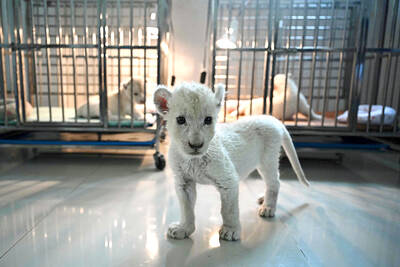
Behind a car repair business on a nondescript Thai street are the cherished pets of a rising TikTok animal influencer: two lions and a 200-kilogram lion-tiger hybrid called “Big George.” Lion ownership is legal in Thailand, and Tharnuwarht Plengkemratch is an enthusiastic advocate, posting updates on his feline companions to nearly three million followers. “They’re playful and affectionate, just like dogs or cats,” he said from inside their cage complex at his home in the northern city of Chiang Mai. Thailand’s captive lion population has exploded in recent years, with nearly 500 registered in zoos, breeding farms, petting cafes and homes. Experts warn the

The unexpected collapse of the recall campaigns is being viewed through many lenses, most of them skewed and self-absorbed. The international media unsurprisingly focuses on what they perceive as the message that Taiwanese voters were sending in the failure of the mass recall, especially to China, the US and to friendly Western nations. This made some sense prior to early last month. One of the main arguments used by recall campaigners for recalling Chinese Nationalist Party (KMT) lawmakers was that they were too pro-China, and by extension not to be trusted with defending the nation. Also by extension, that argument could be

Aug. 4 to Aug. 10 When Coca-Cola finally pushed its way into Taiwan’s market in 1968, it allegedly vowed to wipe out its major domestic rival Hey Song within five years. But Hey Song, which began as a manual operation in a family cow shed in 1925, had proven its resilience, surviving numerous setbacks — including the loss of autonomy and nearly all its assets due to the Japanese colonial government’s wartime economic policy. By the 1960s, Hey Song had risen to the top of Taiwan’s beverage industry. This success was driven not only by president Chang Wen-chi’s
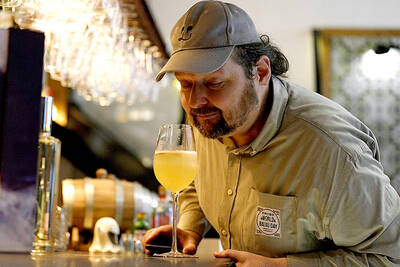
The centuries-old fiery Chinese spirit baijiu (白酒), long associated with business dinners, is being reshaped to appeal to younger generations as its makers adapt to changing times. Mostly distilled from sorghum, the clear but pungent liquor contains as much as 60 percent alcohol. It’s the usual choice for toasts of gan bei (乾杯), the Chinese expression for bottoms up, and raucous drinking games. “If you like to drink spirits and you’ve never had baijiu, it’s kind of like eating noodles but you’ve never had spaghetti,” said Jim Boyce, a Canadian writer and wine expert who founded World Baijiu Day a decade


 RSS
RSS