


One of two major exhibitions that coincide with the National Palace Museum’s 83rd anniversary, Masterpieces of Chin and Tang Dynasty Calligraphy (晉唐書法名積) is the kind of tour de force that marks the institution as one of the great museums in the world. The whole exhibition includes just 17 items, but these include many of the texts that formed the foundation of calligraphy for the millennium that followed. According to He Yan-chuan (何炎全), an assistant curator of the exhibition, the calligraphic texts shown in this exhibition represent a very considerable portion of all the extant original calligraphic texts from this early period, and never have so many of these texts been displayed together at one time at the museum.
The Jin Dynasty (separated into Eastern and Western Jin) ruled in China from 265 to 420 and the Tang ruled from 618 to 907. They were both periods of enormous cultural efflorescence, when many aspects of what we now accept as Chinese culture were established. The scrolls on display are some of the oldest, though among the colorful ceramics, the priceless jades, and the imposing bronzes, this exhibition might seem to have little to recommend it to the non-expert viewer. In darkened rooms specially lit to protect the delicate exhibits — under museum regulations they cannot be shown again for at least two years after this 40-day stint in the limelight — the pages of text are dark with age. With a number of notable exceptions, the calligraphy itself does not look that spectacular — indeed, if you’ve been wondering around the museum for a while, it might look all too familiar.
The reason is that these texts, especially the three works by Wang Xizi (王羲之, 303-361), became, during the Tang Dynasty, templates for good calligraphy. The works by Wang are not originals, but copies made in the 11th century of 4th-century originals that are now lost. They are the closest thing that now exists to the writing of a man regarded as the godfather of Chinese calligraphy. Microscopic inspection shows a work such as the Yuan Huan (遠宦帖) to have been reproduced by the careful tracing of outlines. “It makes this work just one step away from the original,” He said.
An introduction at the beginning of the exhibition and longer-than-usual explanatory cards placed with the exhibits provide some context, but without a general knowledge of the cultural background in which someone like Wang is known to every high school student, the true importance of what is on display is hard to appreciate. The other artists on display also hold seminal positions in the pantheon of Chinese calligraphy. There is the Autobiography (自敘帖, 777) by Huai Shu (懷素), which formed the template for the wild cursive style, the Draft of a Requiem to My Nephew (祭姪文稿, 758) by Yan Zhenqin (顏真卿), which established a more rustic style in contrast to Wang’s elegance, and Inquiring After Friends in the Twelve Months (十二月朋友相聞書), an instructional template in the art of polite letter writing by an anonymous Tang Dynasty calligrapher.
There is something endlessly fascinating about being in the presence of the very ancient, especially when there is such a clear connection with the present world. Wang’s calligraphy, after all, formed the basis of every child’s eduction in calligraphy until at least the beginning of the last century. As fascinating as this exhibition is, it also highlights the academically driven nature of many of the museum’s “special” exhibitions. The fun is in the details, and while some effort has been made to make these works accessible (a fairly detailed English-language introduction to some of the works is available at the museum’s Web site at www.npm.gov.tw/exh97/chintang/eng_info.html), much that makes this exhibition so important is likely to remain just beyond the grasp of a general audience.

In late October of 1873 the government of Japan decided against sending a military expedition to Korea to force that nation to open trade relations. Across the government supporters of the expedition resigned immediately. The spectacle of revolt by disaffected samurai began to loom over Japanese politics. In January of 1874 disaffected samurai attacked a senior minister in Tokyo. A month later, a group of pro-Korea expedition and anti-foreign elements from Saga prefecture in Kyushu revolted, driven in part by high food prices stemming from poor harvests. Their leader, according to Edward Drea’s classic Japan’s Imperial Army, was a samurai

The following three paragraphs are just some of what the local Chinese-language press is reporting on breathlessly and following every twist and turn with the eagerness of a soap opera fan. For many English-language readers, it probably comes across as incomprehensibly opaque, so bear with me briefly dear reader: To the surprise of many, former pop singer and Democratic Progressive Party (DPP) ex-lawmaker Yu Tien (余天) of the Taiwan Normal Country Promotion Association (TNCPA) at the last minute dropped out of the running for committee chair of the DPP’s New Taipei City chapter, paving the way for DPP legislator Su
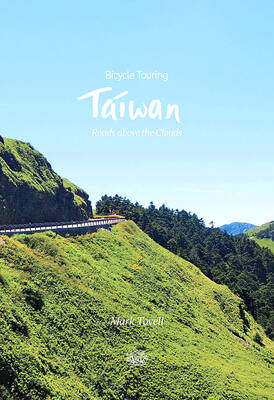
It’s hard to know where to begin with Mark Tovell’s Taiwan: Roads Above the Clouds. Having published a travelogue myself, as well as having contributed to several guidebooks, at first glance Tovell’s book appears to inhabit a middle ground — the kind of hard-to-sell nowheresville publishers detest. Leaf through the pages and you’ll find them suffuse with the purple prose best associated with travel literature: “When the sun is low on a warm, clear morning, and with the heat already rising, we stand at the riverside bike path leading south from Sanxia’s old cobble streets.” Hardly the stuff of your
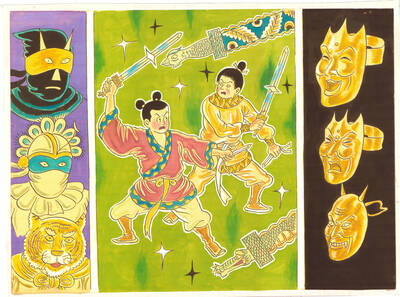
April 22 to April 28 The true identity of the mastermind behind the Demon Gang (魔鬼黨) was undoubtedly on the minds of countless schoolchildren in late 1958. In the days leading up to the big reveal, more than 10,000 guesses were sent to Ta Hwa Publishing Co (大華文化社) for a chance to win prizes. The smash success of the comic series Great Battle Against the Demon Gang (大戰魔鬼黨) came as a surprise to author Yeh Hung-chia (葉宏甲), who had long given up on his dream after being jailed for 10 months in 1947 over political cartoons. Protagonist


 RSS
RSS