


Gripping his flashlight, Tommy Cassoe looks like Indiana Jones as he crawls out of a bunker in the sand, one of 7,000 the Nazis built along Denmark’s western shores to fend off an Allied invasion.
“Mission accomplished. The bunker is empty,” Cassoe exclaims, showing off his bounty on the Krylen beach to a crowd of onlookers: rusty cans, a plastic vial containing medicine in case of a mustard gas attack, and electrical cables.
This bunker and three others, entombed under the sand dunes of Houvig since 1945, were uncovered a few months ago in a violent storm, when giant waves swept away the sand, exposing glimpses of the cement and iron structures.
The discovery was “a sensation” for history buffs like Cassoe and archaeologists.
“What’s so fantastic is that we found them completely furnished with beds, chairs, tables, communication systems and the personal effects of the soldiers who lived inside,” says Jens Andersen, the curator of the Hanstholm museum that specializes in Nazi fortifications.
The Nazis built some 8,000 bunkers in Denmark, 7,000 of them on the western coast. They were “emptied by the Danes of their contents after World War II to salvage the scrap iron and electrical devices that were needed.”
The discovery in May of the four fully furnished bunkers, untouched after 63 years under the sand, is considered “unique in Europe,” according to Bent Anthonisen, a Danish expert on European bunkers.
They were located by two 9-year-old boys after they spotted a bucket in front of the entrance to one of the bunkers.
Their discovery was reported by a local newspaper, drawing the attention of Cassoe, an electrician who has been fascinated by the existence of the thousands of bunkers since childhood.
He rushed immediately to the scene, and was the first to enter the still-furnished bunkers.
“It was like entering the heart of a pyramid with mummies all around. I dug a tunnel through the sand that was blocking the entrance to the bunkers and what I saw blew me away: it was as if the German soldiers had left only yesterday,” he said.
Experts and archaeologists also hastened to the scene, and, working together with Cassoe, emptied the structures within a few days of boots, undergarments, socks, military stripes, mustard and aquavit bottles, books, inkpots, stamps featuring Hitler, medicines, soda bottles, keys, hammers and other objects.
“It was a race against the clock because of the risk of looters. We lied to keep them at bay, saying that there was only one furnished bunker and that it was guarded around the clock, which wasn’t true. But even so there were two attempted break-ins,” Anthonisen says.
Due to the intense media coverage, the long Krylen beach peppered with bunkers has become the big attraction this summer, drawing thousands of tourists from Denmark and neighboring Germany for guided tours.
Anthonisen leads a group on a tour of one of the bunkers. Nine soldiers and their commander lived in the cramped, 20m2 space for five years.
“It was surprising to see the soldiers’ living conditions in the bunkers,” says Ute Eichorst, a German tourist surrounded by her children and grandchildren.
The bunkers have sparked strong reactions among tourists and the local media.
“In a way, this discovery can be compared to Tutankhamun’s tomb almost a century ago. It has to be preserved, and to blow up the bunkers as some have suggested would be like denying that World War II ever existed,” says Ole Becher, a Dane whose grandfather was part of the resistance and who was denounced to the Gestapo toward the end of the war.
Local resident Mogens Kock Hansen disagrees, writing in the local newspaper that “everything should be blown up.” He’s “disgusted that people want to attract tourists to this kind of garbage.”
The head of the Ringkoebing-Skjern museum, Kim Clausen, said that while the find “was not from the bronze age, what has been found is incredibly authentic and tells us a lot about how they lived in these bunkers.”
All of the objects from the shelters have been taken to the conservation center at Oelgod museum, some 30km from the beach, to be examined.
The center’s German curator Gert Nebrich judged the find “very interesting because it is so rare.”
“We don’t expect contemporary objects like these to be so well preserved. Maybe it’s because they were kept for 60 years in the cold and dark like in a big vacuum,” he says, carefully showing four stamps featuring Hitler’s image and the German eagle.
They were used by soldiers to “send Christmas presents to their families in 1944,” which consisted mostly of packets of Danish butter, Anthonisen says.
“World War II and its memories will not just go away. And discoveries like these breathe new life into the story and the fascination that still surrounds this war,” the local newspaper, Dagbladet Ringkoebing-Skjern, wrote in an editorial recently.
That is why the bunkers need to be preserved, it said, adding: “They are part of our common European history.”

In late October of 1873 the government of Japan decided against sending a military expedition to Korea to force that nation to open trade relations. Across the government supporters of the expedition resigned immediately. The spectacle of revolt by disaffected samurai began to loom over Japanese politics. In January of 1874 disaffected samurai attacked a senior minister in Tokyo. A month later, a group of pro-Korea expedition and anti-foreign elements from Saga prefecture in Kyushu revolted, driven in part by high food prices stemming from poor harvests. Their leader, according to Edward Drea’s classic Japan’s Imperial Army, was a samurai

The following three paragraphs are just some of what the local Chinese-language press is reporting on breathlessly and following every twist and turn with the eagerness of a soap opera fan. For many English-language readers, it probably comes across as incomprehensibly opaque, so bear with me briefly dear reader: To the surprise of many, former pop singer and Democratic Progressive Party (DPP) ex-lawmaker Yu Tien (余天) of the Taiwan Normal Country Promotion Association (TNCPA) at the last minute dropped out of the running for committee chair of the DPP’s New Taipei City chapter, paving the way for DPP legislator Su
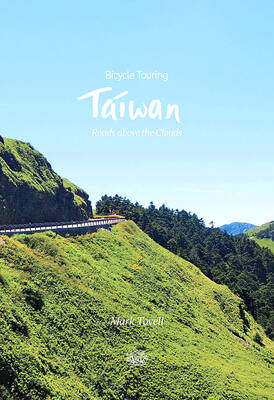
It’s hard to know where to begin with Mark Tovell’s Taiwan: Roads Above the Clouds. Having published a travelogue myself, as well as having contributed to several guidebooks, at first glance Tovell’s book appears to inhabit a middle ground — the kind of hard-to-sell nowheresville publishers detest. Leaf through the pages and you’ll find them suffuse with the purple prose best associated with travel literature: “When the sun is low on a warm, clear morning, and with the heat already rising, we stand at the riverside bike path leading south from Sanxia’s old cobble streets.” Hardly the stuff of your
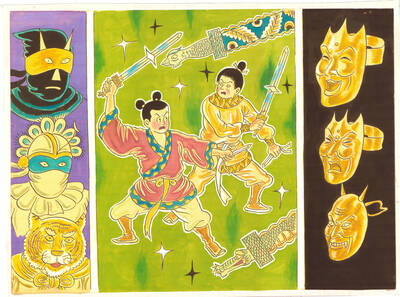
April 22 to April 28 The true identity of the mastermind behind the Demon Gang (魔鬼黨) was undoubtedly on the minds of countless schoolchildren in late 1958. In the days leading up to the big reveal, more than 10,000 guesses were sent to Ta Hwa Publishing Co (大華文化社) for a chance to win prizes. The smash success of the comic series Great Battle Against the Demon Gang (大戰魔鬼黨) came as a surprise to author Yeh Hung-chia (葉宏甲), who had long given up on his dream after being jailed for 10 months in 1947 over political cartoons. Protagonist


 RSS
RSS