


Take the beauty and grace of traditional Chinese melodies, put them to jazz grooves, and you have the music of Sizhukong (絲竹空). The group, whose name reads “silk, bamboo and emptiness,” is a six-piece jazz ensemble formed by pianist and composer Peng Yu-wen (彭郁雯) who aims to create “a new kind of Chinese music” with “a soul of jazz.”
Sizhukong will present new material in a run of shows this month, starting tomorrow night at Witch House and on Sunday at Da-an Forest Park (大安森林公園) in Taipei.
The performances are billed as Samba Paradise, and audiences can expect to hear Latin jazz rhythms backing the distinctive voices of traditional Chinese instruments such as the liuqin (柳琴), a four-stringed lute, and dizi (笛子), a kind of Chinese flute.
“I want to bring the dance and groove [elements of jazz] to Chinese music,” said Peng. “Chinese music doesn’t always have to be calm or elegant.”
Sizhukong embraces the ethos of jazz fusion: its music takes established forms — jazz and classical Chinese styles — and gives them a new twist. In songs like Bathing in the Stream, the ensemble plays a joyful melody originating from Guangdong Province, but adds a modern groove with upright bass and drums. Soon enough, the song expands into more abstract territory, with extended improvisations on piano, liuqin and erhu (二胡). As the song returns to the melodic theme, the jazz and Chinese “voices” intermingle to create a sound both familiar and new.
Peng took an indirect path to conceiving this uniquely Chinese form of jazz. She studied Western classical music at a young age, but grew bored with it and eventually gave up. But after hearing swing jazz for the first time during university, Peng was inspired to return to music and earned a degree in jazz composition at the Berklee College of Music in Boston.
After returning to Taipei, Peng helped form a small jazz combo, Metamorphosis, which is known for recasting Taiwanese folk songs in modern jazz styles, including Latin jazz, be-bop and post-bop.
Seeking new directions in her music, Peng studied nanguan (南管) and beiguan (北管), two traditional music forms with roots in southern China and Taiwan. Her collaboration with renowned liuqing player Chen Yi-chien (陳怡蒨) set the stage for Sizhukong’s formation.
With Chen in mind, Peng created a samba jazz arrangement of Fengyang (鳳陽), a folk song from China’s Anhui Province. Chen’s performance skills left a deep impression: “I never thought that Chinese music could be this beautiful,” Peng said. And Chen turned out to be a natural with jazz. “The rhythm and syncopation — she caught on easily.” The pair built on their collaboration, and recorded Sizhukong’s first album, which was released last year.
Just as Peng has expanded her notion of jazz music by bringing in Chinese elements, she finds that the same has been true for classical Chinese musicians. Peng cites the example of one of her past students, a guzheng (古箏, Chinese zither) player who studied the instrument for 20 years but didn’t enjoy it until she started playing jazz.
And she has opened doors for jazz musicians as well. Saxophonist Jeff Chang (張哲嘉) of the US, who is playing with the group as a special guest this weekend, said that Peng’s music was something he had “always been looking for” as a musician with Taiwanese roots.
Ultimately, for Peng the jazz spirit lies in “exploring different kinds of music. My feel for music is changing, and my composing goes along with that.”
Sizhukong’s lineup includes Toshi Fujii (藤井俊充) on drums and percussion, Huang Chih-ping (黃治評) on dizi and dongxiao (洞簫, bamboo flute), Alex Wu (吳政君) on erhu and percussion, Chen Chih-ling on liuqin and zhongruan (中阮) and Belgian Martijn Vanbuel on bass.
They will be joined by special guests Mogauwane Mahloelo of South Africa on djembe and vocals, and Janelle Chang (張宜蓁) on violin and satar (薩塔琴), a traditional Uygur instrument.
The group is currently working on a new album expected for release at the end of the year, with each musician contributing their own compositions.

Behind a car repair business on a nondescript Thai street are the cherished pets of a rising TikTok animal influencer: two lions and a 200-kilogram lion-tiger hybrid called “Big George.” Lion ownership is legal in Thailand, and Tharnuwarht Plengkemratch is an enthusiastic advocate, posting updates on his feline companions to nearly three million followers. “They’re playful and affectionate, just like dogs or cats,” he said from inside their cage complex at his home in the northern city of Chiang Mai. Thailand’s captive lion population has exploded in recent years, with nearly 500 registered in zoos, breeding farms, petting cafes and homes. Experts warn the

The unexpected collapse of the recall campaigns is being viewed through many lenses, most of them skewed and self-absorbed. The international media unsurprisingly focuses on what they perceive as the message that Taiwanese voters were sending in the failure of the mass recall, especially to China, the US and to friendly Western nations. This made some sense prior to early last month. One of the main arguments used by recall campaigners for recalling Chinese Nationalist Party (KMT) lawmakers was that they were too pro-China, and by extension not to be trusted with defending the nation. Also by extension, that argument could be
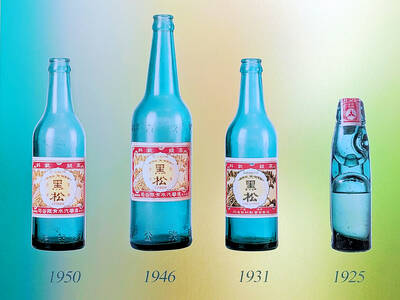
Aug. 4 to Aug. 10 When Coca-Cola finally pushed its way into Taiwan’s market in 1968, it allegedly vowed to wipe out its major domestic rival Hey Song within five years. But Hey Song, which began as a manual operation in a family cow shed in 1925, had proven its resilience, surviving numerous setbacks — including the loss of autonomy and nearly all its assets due to the Japanese colonial government’s wartime economic policy. By the 1960s, Hey Song had risen to the top of Taiwan’s beverage industry. This success was driven not only by president Chang Wen-chi’s
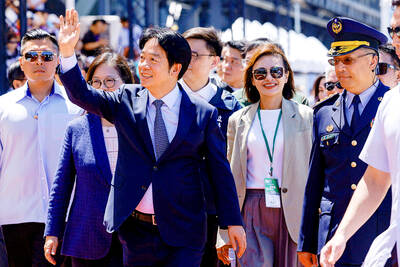
Last week, on the heels of the recall election that turned out so badly for Taiwan, came the news that US President Donald Trump had blocked the transit of President William Lai (賴清德) through the US on his way to Latin America. A few days later the international media reported that in June a scheduled visit by Minister of National Defense Wellington Koo (顧立雄) for high level meetings was canceled by the US after China’s President Xi Jinping (習近平) asked Trump to curb US engagement with Taiwan during a June phone call. The cancellation of Lai’s transit was a gaudy


 RSS
RSS