


A 1975 set of three self-portraits by Francis Bacon fetched US$34.5 million in London, the most expensive lot at Christie’s International sale of contemporary art.
At least four bidders competed for the 36cm-high, gray- hued oil canvases Three Studies for Self-Portrait, featuring faces that are twisted, sliced and gorged. The lot, with a presale estimate of more than US$20 million and seen in public for the first time, went to an anonymous phone bidder. The record for Bacon was set in May when Triptych, 1976, depicting a headless corpse eaten by vultures sold for US$86 million.
Christie’s 58-lot auction last night netted US$172 million, against the company’s own low estimate of US$160 million. Eighty-three percent of the lots were sold. Bacon’s piece was one of four trophy works — the other three are by Lucian Freud, Jeff Koons and Lucio Fontana — whose combined estimates represented half the auction’s value. The Bacon was the only one that sold for much more than its top estimate.
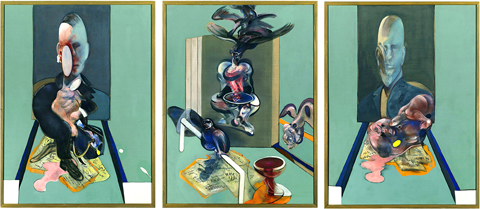
PHOTO: AP
Koons’s 3.4m-, 5cm-high chromium-steel sculpture Balloon Flower (Magenta) sold for an artist record of US$25.8 million, against a presale estimate of US$24 million. Freud’s 1980 canvas, Naked Portrait With Reflection, showing a nude model reclining on a battered sofa, sold for US$23.6 million, compared with a top estimate US$30 million.
The Bacon and the Koons were among 14 lots whose sellers received guaranteed minimum prices, according to Christie’s catalog. When auction houses guarantee items, they usually share a percentage of the amount above an agreed price; If the lot doesn’t sell, the auction house — or a third-party guarantor — pays for the work and owns it.
“When estimates are high, people won’t bid,” New York dealer Jose Mugrabi said in an interview. Mugrabi said the market was otherwise “better than ever.”
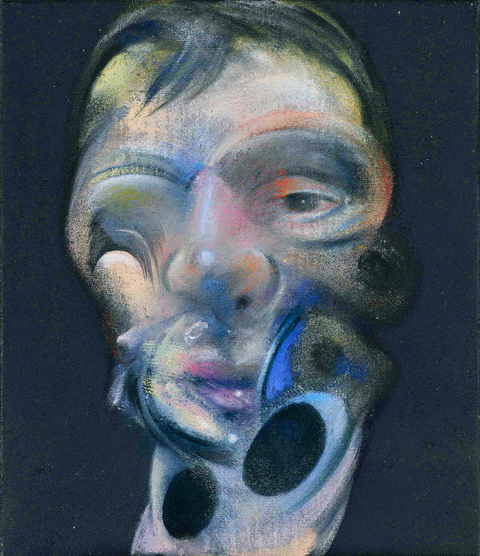
PHOTO: AP
The salesroom fell silent when Fontana’s pink canvas La Fine di Dio, expected to fetch US$16 million, failed to sell. In February, a similar Fontana work, painted in the more desirable gold, sold for a record US$20.6 million at Sotheby’s in London, against an estimate of US$8 million.
“Christie’s estimate was very aggressive,” said Heinrich zu Hohenlohe, director of the dealers Dickinson, Berlin, in an interview. “Even in the current market there is a limit.”
Damien Hirst’s 12m-wide painting,
L-Tyrosine-15N, dating from 2001, was another casualty, failing to sell against an estimate of US$4 million to US$6 million.
A work from Andy Warhol’s 1979-86 Nine Multicolored Marilyns (Reversal Series) sold to an unidentified buyer for US$8.2 million, said Christie’s. At Phillips de Pury’s contemporary-art auction the night before, another painting from the same Warhol series fetched US$5 million.
To Her Majesty, a 37-part black-and-white photographic piece on London pub life by Gilbert & George in 1973, fetched an auction record of US$3.8 million. The previous record for the duo of US$1.272 million was set in February.
“The market was waiting for a significant work by Gilbert & George like this,” said Brett Gorvy, Christie’s international co-head of contemporary art, in an interview after the sale.
According to Christie’s, 42 percent of purchases came from the UK and Europe, 48 percent from the Americas, 8 percent from Asia and 2 percent from other regions.
Prices include a buyer’s commission of 25 percent of the hammer price up to US$50,000, 20 percent of the price from US$50,000 to US$1 million, and 12 percent above US$1 million.
Estimates do not reflect commissions.
Last week, Christie’s and rival auction house Sotheby’s, which between them account for 90 percent of the global art auction market, combined for nearly US$600 million worth of impressionist and modern art sales over three days of auctions in London.
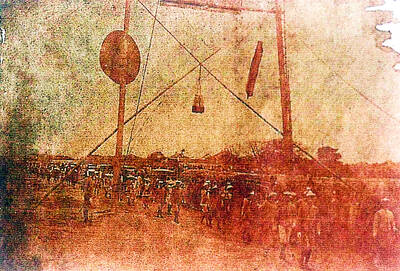
June 23 to June 29 After capturing the walled city of Hsinchu on June 22, 1895, the Japanese hoped to quickly push south and seize control of Taiwan’s entire west coast — but their advance was stalled for more than a month. Not only did local Hakka fighters continue to cause them headaches, resistance forces even attempted to retake the city three times. “We had planned to occupy Anping (Tainan) and Takao (Kaohsiung) as soon as possible, but ever since we took Hsinchu, nearby bandits proclaiming to be ‘righteous people’ (義民) have been destroying train tracks and electrical cables, and gathering in villages

Swooping low over the banks of a Nile River tributary, an aid flight run by retired American military officers released a stream of food-stuffed sacks over a town emptied by fighting in South Sudan, a country wracked by conflict. Last week’s air drop was the latest in a controversial development — private contracting firms led by former US intelligence officers and military veterans delivering aid to some of the world’s deadliest conflict zones, in operations organized with governments that are combatants in the conflicts. The moves are roiling the global aid community, which warns of a more militarized, politicized and profit-seeking trend

Dr. Y. Tony Yang, Associate Dean of Health Policy and Population Science at George Washington University, argued last week in a piece for the Taipei Times about former president Ma Ying-jeou (馬英九) leading a student delegation to the People’s Republic of China (PRC) that, “The real question is not whether Ma’s visit helps or hurts Taiwan — it is why Taiwan lacks a sophisticated, multi-track approach to one of the most complex geopolitical relationships in the world” (“Ma’s Visit, DPP’s Blind Spot,” June 18, page 8). Yang contends that the Democratic Progressive Party (DPP) has a blind spot: “By treating any

The wide-screen spectacle of Formula One gets a gleaming, rip-roaring workout in Joseph Kosinski’s F1, a fine-tuned machine of a movie that, in its most riveting racing scenes, approaches a kind of high-speed splendor. Kosinski, who last endeavored to put moviegoers in the seat of a fighter jet in Top Gun: Maverick, has moved to the open cockpits of Formula One with much the same affection, if not outright need, for speed. A lot of the same team is back. Jerry Bruckheimer produces. Ehren Kruger, a co-writer on Maverick, takes sole credit here. Hans Zimmer, a co-composer previously, supplies the thumping


 RSS
RSS