


To disagree with Kermit the Frog, it is easy being green.
By now, if you’re not sleeping on bamboo sheets, drying off after your shower with organic cotton towels, slipping into a soy sheath and flashing conflict-free diamonds, you’re just not eco-chic.
The greening of the fashion industry — building for the past couple of years — is moving from class to mass. Indeed, what started with a handful of designers on environmental missions selling their wares at indie boutiques has become a full-fledged fashion phenomenon, with major players like JC Penney joining in.
Concern about climate changes, energy costs and product safety are among the factors driving consumers to want clothes and other products that are made from environmentally sustainable materials like bamboo. More than one-third of American adults say they “regularly” buy green products, up from just 12 percent last year, according to Mintel, a market research company. Much of the growth is attributed to young adults, with 51 percent of those ages 18 to 24 surveyed saying they are regular green shoppers.
While 20 percent of the people surveyed by consumer researcher NPD Group said they’d be willing to spend up to 20 percent more on green products and interest in such products has tripled, the economic downturn may make consumers revert to old habits.
“Green is at a substantial crossroads — it’s either going to brown out or get three shades deeper green,” says Marshal Cohen, chief analyst for the NPD Group, which surveys consumers on their shopping habits.
Also influencing shopping habits is so-called “greenwashing,” the practice of misleading people about a company’s environmental practices or the eco-friendly qualities of its products. “Consumers have grown in their understanding and purchasing of green products. Brands need to justify their green connection,” Cohen says.
Companies can make claims to use organic materials but it’s hard to police it, Cohen says. “There have been a lot of false starts in the apparel industry,” he says. You can use organic cotton to sew buttons on a blouse, but that doesn’t really make something ‘green.’”
Cohen says the brands that have “green built into their DNA,” companies like Aveda and Patagonia, are the ones that will stick.
Retailers dealing with emerging fashion companies have to do their own research when it comes to vetting the “greenness” of a garment.
Emilie Oliver and Hallie Wastell earlier this month opened a women’s clothing boutique in a Denver suburb. Their shop specializes in “ethically and ecologically made clothing.”
They sell American-made or fair-trade-certified apparel made of earth-friendly fabrics such as organic cotton, silk and hemp produced with minimal environmental impact.
“I’ve always thought of myself as an environmentalist,” says Oliver, 32.
Customers of Unity, another green shop in Denver, like the idea of clothes that are made from environmentally sustainable fabrics and support domestic manufacturing jobs. “When we first opened, it was hard to find vendors,” Smith says. “The amount of eco-products has doubled or tripled.”
Among the lines Unity carries is Super Lucky Cat, which uses items like vintage scarves to create new garments. All of the store’s denim lines are made in Los Angeles.
Denver designer Tricia Hayworth creates sportswear, dresses and wedding gowns from materials she finds at such places as estate sales and Goodwill Industries.
With a background in interior design and love for vintage fashion, Hayworth, 36, started making clothes a couple of years ago. “I like to see the potential in a piece, and bring new life to something that another person has discarded. I feel good about the recycling aspect of it. It motivates me to do more.”
Jeff Schmitt, founder of the Colorado Clothing Co, discovered a blend of soy and bamboo that was soft to the touch, durable and unlike anything else in the market.
Schmitt trademarked Soybu in 2003 and started using it for robes, towels, lounge wear and various clothing items. The fabric, he says, “feels like cashmere,” is cool to the skin, has anti-microbial properties, is easy to care for and lasts a long time.
Soybu garments are sold in the US at Nordstrom and are staples at resorts and spas. The company continues to work on new fabrics and now incorporates recycled polyester and organic cotton into its collections.
Another aspect separating many of these apparel companies and stores from traditional businesses is their philanthropy, often environment-related. Portland, Oregon-based Nau, which makes technical outdoor clothing from organic and recycled materials, gives 5 percent of each sale to a local charity.
NPD Group analyst Cohen credits young consumers with helping spur the green movement. “Youths are exposed to Earth Day because it’s taught in school. The youth market is clearly going to be the driver in keeping it alive.”
Earth Day, first observed in 1970, was embraced by baby boomers, but the appeal faded in the 1980s. The difference today, Cohen says, is the energy situation. “The price of oil in the 1980s was not nearly the issue it is now,” he says, adding that until alternative energy sources are widely used, it will continue to be an issue.

In late October of 1873 the government of Japan decided against sending a military expedition to Korea to force that nation to open trade relations. Across the government supporters of the expedition resigned immediately. The spectacle of revolt by disaffected samurai began to loom over Japanese politics. In January of 1874 disaffected samurai attacked a senior minister in Tokyo. A month later, a group of pro-Korea expedition and anti-foreign elements from Saga prefecture in Kyushu revolted, driven in part by high food prices stemming from poor harvests. Their leader, according to Edward Drea’s classic Japan’s Imperial Army, was a samurai

The following three paragraphs are just some of what the local Chinese-language press is reporting on breathlessly and following every twist and turn with the eagerness of a soap opera fan. For many English-language readers, it probably comes across as incomprehensibly opaque, so bear with me briefly dear reader: To the surprise of many, former pop singer and Democratic Progressive Party (DPP) ex-lawmaker Yu Tien (余天) of the Taiwan Normal Country Promotion Association (TNCPA) at the last minute dropped out of the running for committee chair of the DPP’s New Taipei City chapter, paving the way for DPP legislator Su
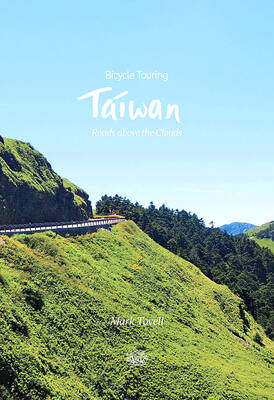
It’s hard to know where to begin with Mark Tovell’s Taiwan: Roads Above the Clouds. Having published a travelogue myself, as well as having contributed to several guidebooks, at first glance Tovell’s book appears to inhabit a middle ground — the kind of hard-to-sell nowheresville publishers detest. Leaf through the pages and you’ll find them suffuse with the purple prose best associated with travel literature: “When the sun is low on a warm, clear morning, and with the heat already rising, we stand at the riverside bike path leading south from Sanxia’s old cobble streets.” Hardly the stuff of your

April 22 to April 28 The true identity of the mastermind behind the Demon Gang (魔鬼黨) was undoubtedly on the minds of countless schoolchildren in late 1958. In the days leading up to the big reveal, more than 10,000 guesses were sent to Ta Hwa Publishing Co (大華文化社) for a chance to win prizes. The smash success of the comic series Great Battle Against the Demon Gang (大戰魔鬼黨) came as a surprise to author Yeh Hung-chia (葉宏甲), who had long given up on his dream after being jailed for 10 months in 1947 over political cartoons. Protagonist


 RSS
RSS