

It isn't about eating bugs or luring studs. Yet Project Runway, which begins its fourth season in the US Wednesday, is one of the most popular reality shows on TV.
How did a series about watching creative people think, draw and sew end up setting ratings records for the Bravo network, inspiring a passionate Internet community and becoming an influential force in fashion?
Because on TV, fashion is the new food.

PHOTO: NY TIMES NEWS SERVICE
Early in this century, bammed-up by Emeril Lagasse and the Food Network, the US became a nation of culinary junkies. We got addicted to shows about eating and cooking, which we watched while lying on the couch in our sweats scarfing down frozen pizza. We found endless discussions about real vs fake wasabi fascinating. We turned chefs into rock stars.
Eventually, some of us got bammed out. Still on the couch in our sweats, we began noticing that Sex and the City wasn't the only clothes-happy show on TV. We found the Style Network and soon were obsessing over makeover shows, shopping shows and celebrity red-carpet shows. The great debate became Jimmy Choo vs Manolo Blahnik. For us, fashion arbiters became the new rock stars.
Best case in point: Tim Gunn, Project Runway's den mother to the designers. He has gone from relatively unknown teacher at the prestigious Parsons School of Design to a nationally worshipped fashion commentator with a book (A Guide to Quality, Taste and Style); his own makeover show on Bravo (Tim Gunn's Guide to Style, which returns with new episodes today in the US); a job as chief creative officer for Liz Claiborne Inc; and a catchphrase: "Make it work."
But when Project Runway began filming in 2004, neither Gunn nor co-creator-producer-host-supermodel Heidi Klum were confident it would succeed because of its rather cerebral premise.
"When we were taping Season 1," Gunn said in a conference call last week, "I was looking at what we were doing, and I thought, 'Who's going to really want to watch this? Who's going to be as caught up in the intensity of creating this work as we are?'
"I underestimated our viewers, that's for certain."
In each episode, contestants are given a creative challenge: make something out of US$50 worth of items from a grocery store, make an outfit for another designer's mother and the results are sent down a runway and judged by a panel of four: Klum, designer Michael Kors, Elle magazine fashion director Nina Garcia and a guest fashionista. They pick a winner and a loser, who gets sent home.
Klum, who says she came up with the show's premise, thinks that the focus on the creative process is why Project Runway is so popular.
"I think people just really love talented people … . People on the street, young and old, they say, 'Wow that was amazing when they did this, that and the other.' They remember."
In its first season, Project Runway was dominated by inexperienced young designers seeking a break. Its place in fashion and pop culture is now such that it attracts experienced designers who have good careers and want more exposure.
This season's 15 finalists include a designer with a Los Angeles store who once dressed Jessica Alba for MTV's Video Music Awards; one who designed a jeans line for Victoria's Secret that was featured on a catalog cover; one who has her own line and has co-authored a makeover book; and one whose lingerie line is sold in stores including Neiman Marcus and Nordstrom.
Gunn and Klum think this season has Project Runway's most talented field. Some have observed that all this talent might have cost the show some of its amateur-hour, star-making charm. But although it has been more than a year since there have been new episodes, fan buzz is stronger than ever.
Gunn says he remains amazed at Project Runway's popularity, but he has come to grasp its appeal.
"It's like television crack. It's addictive," he said, adding wryly, "That's why I would never persuade anyone to watch the show."
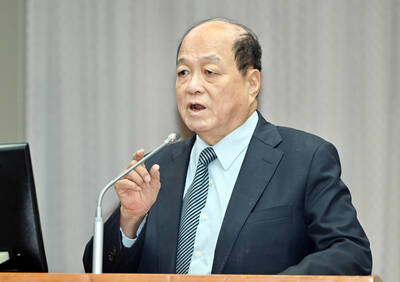
The Nuclear Safety Commission (NSC, 核安會) on Sept. 24 approved the re-operation plan that Taiwan Power Co (Taipower, 台電) filed in March for the Ma-anshan Nuclear Power Plant in Pingtung County, after three rounds of review and 589 comments. Taipower now has to carry out the work in the plan and its own inspections on ageing, radiation and seismic resistance, then report back to the commission for review and on-site checks. Minister of Economic Affairs Kung Ming-hsin (龔明鑫) has named 2028 as the earliest restart. The NSC has given no date. THE DEBATE No challenge has been identified as to whether Ma-anshan
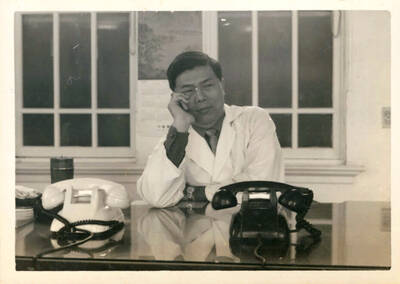
Oct. 12 to Oct. 18 After 11 years in prison on Green Island, Yen Shih-hung (顏世鴻) was finally due for release when a camp guard asked him for NT$20,000 to help pay his bride price. Yen refused. The next day, officials deemed that he had “failed to improve his thinking” and ordered him to undergo further political reeducation on Siaoliouciou (小琉球), where prisoners were also subjected to forced labor. He spent another 19 months there before regaining his freedom in January 1964. Yen’s punishment stemmed from his joining the Taiwan Provincial Student Affairs Committee

Cognitive warfare, says the Ministry of National Defense (MND), is the People’s Republic of China’s (PRC) use of “political, economic, cultural, military and legal means, with the intent to divide internal unity and undermine social stability” in Taiwan. Last week offered several examples. PRC media in October last year reported that the Chongqing Municipal Public Security Bureau had opened an investigation into Democratic Progressive Party (DPP) Legislator Puma Shen (沈伯洋), the DPP’s mayoral candidate for Taipei in next month’s election, for “Taiwan independence” activities. This was a cognitive warfare ploy, designed to unsettle the targeted person and to establish the idea

In pandemic preparedness work, scientists like to focus on the technical challenges: identifying pathogens, diagnosing infections, understanding their effects and developing vaccines and treatments. Each step promises progress through human innovation, investment and planning. The WHO, for example, brings experts together to identify and prioritize emerging disease threats and collect the evidence needed to prepare for them. But preparedness depends on more than scientific innovation. As the past week has shown, politics is the elephant in the room in all of this. No one could have predicted we would be talking about pneumonic plague, and that the death of a single


 RSS
RSS