

will be rushing to tighten gun laws after all


"S o what do you think of the Second Amendment now?" This is one of many thought-provoking questions asked, between barrages of gunfire, in the course of Shoot 'Em Up. I won't answer the question here - I get enough angry e-mail, thanks - but I'm happy to affirm my general devotion to the whole Bill of Rights, in particular the First Amendment, which protects Michael Davis's right to make this movie, New Line Cinema's right to market it and, best of all, my right to tell you what a worthless piece of garbage it is. (I interrupt this burst of patriotism to note that Shoot 'Em Up was filmed in Toronto.)
First, let's sample a bit more wisdom from the mouth of the movie's hero, Smith, a righteous gunman played, with his usual charismatic glower, by Clive Owen. The person who profits, he advises, apropos of unraveling a nefarious conspiracy involving a US senator, a firearms manufacturer, a lot of diapers and Paul Giamatti, is always the bad guy. Which leaves me off the hook, since not only did I not profit from Shoot 'Em Up, but I also lost 93 minutes I will never see again.
What I did see was Owen doing, as he did in the incalculably superior Children of Men, his utmost to protect a baby. Awwww. Sitting on a bench one evening, minding his business, Smith witnesses bad guys pursuing a pregnant woman. After a pause during which the person sitting next to me at the preview screening loudly beseeched Smith to help her, he did just that, dispatching a warehouse full of thugs and delivering a healthy infant.
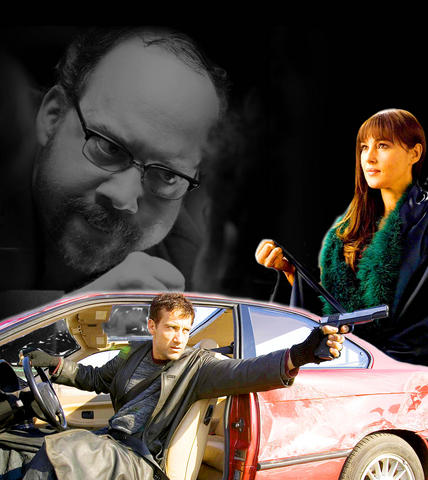
PHOTO: COURTESY OF WARNER BROS
The mother, sadly, took a bullet in the head, but her baby - it's a boy, by the way - turned out to be pretty resilient. Wouldn't you be if you had Monica Bellucci for a wet nurse?
Bellucci plays Donna Quintano, a lactating prostitute. That is not a sentence I thought I'd ever write, but I'm sure Bellucci feels the same way about some of her lines, like, "Does this give you any new ideas about who wants Oliver's bone marrow?" Excellent question!
Oliver is the baby, by the way, and his bone marrow is needed to further the cause of gun control. Or to thwart the cause of gun control. In New Line's press notes, Davis is quoted as saying that, in conceiving Shoot 'Em Up, that "the hard part was to figure out the mystery and rationale as to why the bad guys want the baby."
That task is no easier now that the movie has been made, though "made" (to say nothing of "movie") is perhaps too generous a word for this slapdash assembly of hectic, poorly shot action sequences, lame catchphrases (tell me Owen didn't say, "What's up, Doc?"), sadistic gags and heavy-metal tunes. The body count is astronomical as Owen shoots 'em up while rappelling down a stairwell, driving a BMW and feigning intercourse with Bellucci. (Not all at once, by the way. Now that would be cool.) Also, he drives a carrot through the back of one man's head and uses another one to put out an eye.
Which is funny because, you know, carrots are supposed to improve your eyesight. That's about the level of wit to which Shoot 'Em Up aspires. Smith, described by Donna as "the angriest man in the world," is full of large and small complaints, usually prefaced by "You know what I hate?" Again with the questions! He hates aggressive drivers and so forces one off the road. He hates the corporal punishment of children and so gives a guilty mom a spanking. He even hates guns, which is why he shoots down scores of bit players.
You know what I hate? Witless, soulless, heartless movies that mistake noise for bravura and tastelessness for wit. I'd never call myself the angriest man in the world, but after sitting through Shoot 'Em Up, I felt some sympathy for poor Smith.
SHOOT 'EM UP
DIRECTED BY: Michael Davis
STARRING:
Clive Owen (Smith), Paul Giamatti (Hertz), Monica Bellucci (Donna Quintano), Stephen McHattie (Hammerson), Greg Bryk (Lone Man)
RUNNING TIME: 93 MINUTES
TAIWAN RELEASE: TODAY

Ajay Verma, a consultant gastroenterologist at Kettering general hospital in Northamptonshire, says our gut is a “complex machine.” “It is constantly providing us with the nutrition we need, initially to grow and develop, and then for us to survive, thrive and repair from injury and illness.” How can we keep it functioning well? Put simply: “Make sure what you put into it is balanced, and that you clear out its waste products adequately,” Verma says. “In a general gastroenterology clinic, the most common conditions we see are irritable bowel syndrome (IBS), gastroesophageal reflux disease, inflammatory bowel disease and constipation,” says Nisha
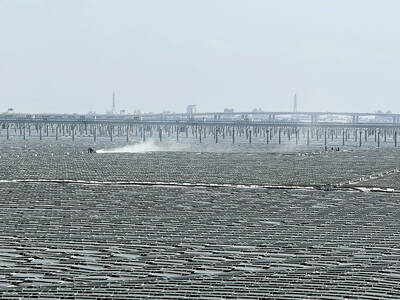
The arithmetic is straightforward and uncomfortable. By the end of 2025, Taiwan had committed itself to a 50-30-20 electricity mix — half natural gas, 30 per cent coal, 20 per cent renewables. The Ministry of Economic Affairs’s (MOEA) own monthly energy reports tell a different story. Natural gas reached 47.8 per cent of generation last year. Coal stood at 35.4 per cent, comfortably above its target ceiling. Renewables came in at 13.1 per cent, well short of the 20 per cent Taipei had pledged a decade earlier. Installed renewable capacity reached roughly half of the 12 gigawatts (GW) the government

Last week US President Donald Trump was asked by a reporter whether he would speak on the phone to the President of Taiwan. “l’ll speak to him. I speak to everybody. We have that situation very well in hand,” Trump said. This marked the second time in a couple of weeks he had said he would talk to the President of Taiwan. In 2016 he famously took a call from then-president Tsai Ing-wen (蔡英文), when he was president-elect. Despite warnings that the apocalypse was nigh because of a phone call, the world quickly forgot about the conversation between two democratically-elected presidents.
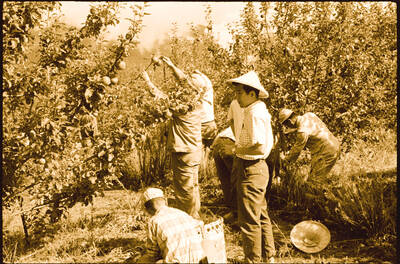
May 25 to May 31 Few believed that apples could be cultivated on a commercial scale in Taiwan’s high mountains. When horticulturalist Cheng Chao-hsiung (程兆熊) first proposed the idea in 1955, both American and Taiwanese colleagues dismissed it as implausible, arguing that temperate fruit could not be reliably grown on a subtropical island, especially on rugged terrain. However, it was this terrain in the Central Mountain Range where many Chinese Civil War veterans were resettled in the late 1950s. With limited job prospects and no family in Taiwan, they were placed on cooperative farms aimed toward self-sufficiency. Some say the conditions


 RSS
RSS