


Film festivals are one of the only recourses for moviegoers in Taiwan who want something more than action adventure or romantic comedy. Notable among these ventures is the biennial Taiwan International Ethnographic Film Festival (TIEFF, 台灣國際民族誌影展). Since it was first created in 2001 by Hu Tai-li (胡台麗), a research fellow at the Institute of Ethnology, Academia Sinica and a respected documentary filmmaker in her own right, the event has become a platform for the exploration of ethnic identity and a channel for Taiwan's ethnographic filmmakers to present their work locally and internationally.
Island Odyssey, a look at various aspects of island culture, was the theme of the first event in 2001, followed by Migration Story in 2003 and Family Variations in 2005. This year, under the direction of Lin Wen-ling (林文玲), chairperson of the Taiwan Association of Visual Ethnography and an associate professor at the National Chiao Tung University (國立交通大學), the festival has decided on the theme Indigenous Voices, turning the conventional perspective of ethnographic filmmaking upside down and showcasing the great strides that Aboriginal peoples around the world have taken in presenting their own point of view. This could be seen as a response to the screenings Margret Mead's film in the first TIEFF. She helped popularize the use of the movie camera to document the lives of Aboriginal peoples, but subsequently came in for criticism for imposing her own agenda - most notably sexual morality - on the subjects she presented.
The recording of Aboriginal life by members of its own community is still a relatively new phenomenon, but has already produced a significant body of work. From Taiwan, the work of Mayaw Biho (馬躍比吼), a filmmaker and social activist, will be showcased with screenings of his well-known work Dear Rice Wine, You Are Defeated (親愛的米酒,妳被我打敗了), which documents the use (or, as some see it, abuse) of rice wine in rites of passage for young men in the Makutaay tribe. Two other films, Carry the Paramount of Jade Mountain on My Back (揹起玉山最高峰) and Children of Heaven (天堂小孩) will also be screened during the festival. (See Taipei Times, Page 18 on Sunday for a profile of the director.)

PHOTO: COURTESY OF TIEFF
The other director to be featured is the American Indian filmmaker Victor Masayesva, whose 1993 film Imaging Indians has been an inspiration to Aboriginal peoples around the world to reassert control over their cultures. It is a response to the impositions placed on the Native American identity by the filming of the Hollywood feature film The Dark Wind, which took the relationship between Caucasians and American Indians as its backdrop. His most recent work Water Land Life - H2opi Run to Mexico will also be shown.
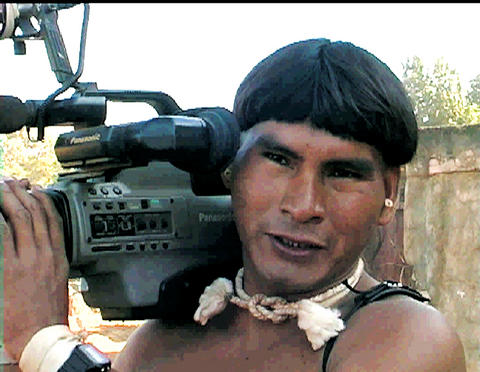
While independent filmmakers such as Mayaw Biho and Masayesva will make up the bulk of directors featured in Indigenous Voices, a new corporatism among Aboriginal peoples will be on display with works produced by Taiwan Indigenous Television (台灣原住民族電視台), the Central Australian Media Association and Video in the Villages, a documentary project run by South American Indians.
From its inception, TIEFF has had a somewhat academic feel. "The main difference between the films we choose and documentary films screened by National Geographic Channel or Discovery is in the manner of the representation. It is usually based on much longer-term interaction with the subjects ... and provides a deeper insight. It is much more than simply a report," Lin said.
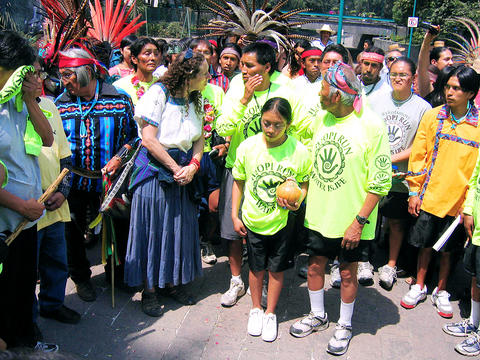
Another aspect of ethnographic films is its often-close relationship with activism, which can be seen in the work of both the featured directors. Mayaw Biho is best known in Taiwan for his involvement in efforts to promote the use of tribal names, rather than adopted Han Chinese names, among Taiwan's Aborigines, as a way of affirming cultural identity.
The festival program encompasses a wide range of films. At one end of the spectrum there are strict academic exercises, such as Hu Tai-li and Lee Daw-ming's (李道明) Songs of Pasta'ay (矮人際之歌), a study of the Pasta'ay ceremony of Taiwan's Saisiat people, which will screen in a double feature with Pas-taai: The Saisiat Ceremony in 1936 (巴斯達隘: 1936年的賽夏祭典) by Japanese anthropologist Nobuto Miyamoto, who was a professor at what was then the Taipei Imperial University (now National Taiwan University). At the other end of the spectrum, there are films like Mark Sandiford's Qallunaat! Why White People Are Funny, a humorous film inspired by the satirical essays of Inuit writer Zebedee Nungak, which turns the tables on generations of anthropologists, teachers, adventurers and administrators who went North to pursue their Arctic Dreams, and Futuru Tsai's (蔡政良) Amis Hip Hop (阿美嘻哈), which documents how a group of young Amis men have blended influences from contemporary social and cultural life in Taiwan with their traditional practice of ritual dance performance in their village.
With the improvement in cheap recording technology and access to education, Aboriginal peoples have increasingly been able to take control of how they are represented. This has generated new perspectives and many new questions about the distortion created by recording media.
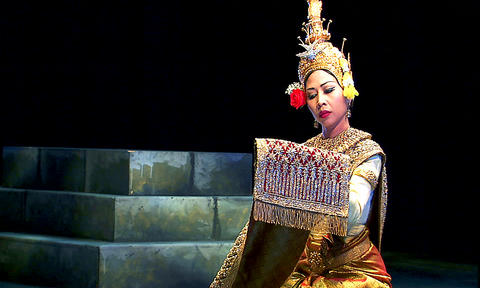
Lin said that the relationship between Aboriginal peoples and modern media might be perceived by some as a Faustian pact in which the very efforts by which Aboriginal peoples seek to save their culture becomes a tool that will ultimately destroy it; this need not necessarily be the case. With a lineup of 43 films over five days, with each screening followed by a question-and-answer session, often with the director, there will be plenty of opportunities for audience members to ponder the many issues raised by the festival.



Taiwan’s English education system is being pulled apart by three opposing forces. Bilingual Nation 2030 pulls students toward English and global communication. Artificial Intelligence (AI) readiness pulls them toward digital judgment, verification and AI-mediated work. But Taiwan’s old exam culture pulls them back toward memorization, grammar drills, timed reading and correct answers. If the education system keeps using old exams to define success, it risks producing graduates who are neither genuinely bilingual nor genuinely AI-ready, but trained for tasks machines can already perform. The first force is Bilingual Nation 2030. Launched in 2018, the policy aimed to “help Taiwan’s workforce connect

“Taiwan’s Opposition Leader Comes to US With a Message Straight Out of Beijing” read a May 31 headline in the Wall Street Journal. Top US administration officials and members of Congress almost certainly read the WSJ, and if there was a bullet point takeaway that people in Washington should absorb ahead of Chinese Nationalist Party (KMT) Chair Cheng Li-wun’s (鄭麗文) arrival in DC on June 9, that headline is it. The last few columns have discussed this very topic, and the timing is not coincidental. While those top officials likely do not read the Taipei Times, judging by the number

With weighty, anxiety-inducing geopolitical topics dominating the headlines, checking in on the wild and weird state of local politics can take some of the edge off. This November’s elections will determine who will be in charge of fixing potholes in your neighborhood, not the potholes in Taiwan’s complicated geopolitical space. Recently, after an online interview with a Taipei-based journalist, I commented that Taipei journalists never go further than the MRT can take them. He laughed and agreed. Naturally, the Taipei mayoral race is eating up much of the press attention. TAIPEI CITY Democratic Progressive Party (DPP) candidate Puma Shen (沈伯洋) has
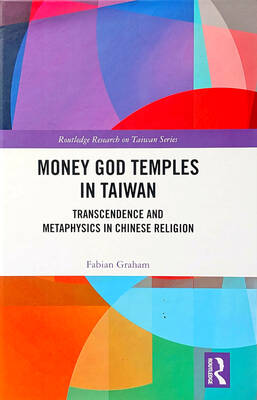
As someone who normally steers clear of books with “transcendence” or “metaphysics” in their subtitles, this reviewer — a casual observer of local belief systems since the 1990s — found Fabian Graham’s Money God Temples in Taiwan a challenging read. Those who’ve only dipped their toes into temple culture will likely need to parse several sections with special care if they’re to keep up with the author, a British ethnographic researcher whose previous books have investigated religious practices among ethnic Chinese in Southeast Asia. This scholarly volume examines a facet of Taiwan’s religious landscape that didn’t exist a century ago, and


 RSS
RSS