


When the wife and younger daughter of Rear Admiral Kenneth Moritsugu of the US Navy were fatally injured in separate automobile accidents, he authorized the donation of organs and tissues from both of them.
Moritsugu, acting surgeon general of the US, calls organ donation "the ultimate act of human kindness." But the number of donor organs falls far short of the need. As of June, 97,000 people awaited lifesaving transplants in the US, and each day the waiting list grows five times faster than the donation rate.
People typically wait three to five years for donated organs, and each day 17 of them die.
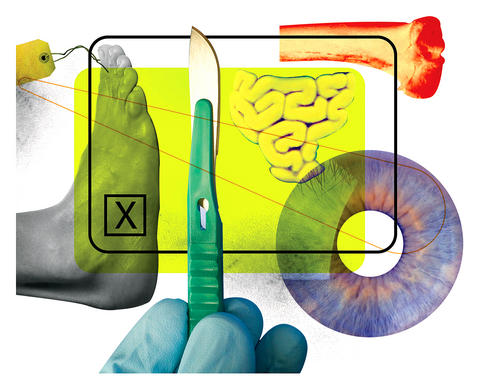
But, as Moritsugu noted recently in The Journal of the American Dietetic Association, "The shortage of donor organs is a medical problem for which there is a cure."
When the decision is made to donate, he said, those families, "often in a time of grief and tragedy, rise above personal concern to help others in need of lifesaving transplantation."
The parents of Laurie McLendon, 42, chose to donate when their daughter suffered cardiac arrest at New York-Presbyterian Hospital. Two women received her kidneys, a burn unit received skin, her corneas went to an eye bank, and her liver was transplanted into a 61-year-old pediatric oncologist, Michael Harris of Englewood, New Jersey, who had contracted hepatitis C years earlier while caring for a patient.
Other organs and tissues that can be donated are the heart, pancreas, lungs, intestines, bone marrow, heart valves and connective tissue. A kidney, part of a liver, lobe of a lung and bone marrow can be obtained from living donors. But three out of four transplanted organs come from people who die and had indicated their willingness to be donors by signing an advance directive or by telling the person designated to speak for them when they can no longer speak for themselves.
Although willingness to donate has risen in recent years, major hurdles remain. Some people, for example, believe incorrectly that patients who might otherwise be saved are sometimes "killed" for their organs. Strict regulations are in place to prevent this.
In the early days of transplantation, donated organs and tissues came from victims of cardiac death, people who were no longer breathing and had no pulse, and whose hearts could not be revived. Often by the time organs could be removed after a cardiac death, they had been without a blood supply for too long and were unusable or unlikely to survive in the recipients.
In 1968, death was redefined as occurring when the brain ceased to function, although the heart may continue to beat with the support of drugs, and breathing is sustained by a ventilator. With a brain-based definition of death, organs are often in much better condition for transplants.
But just 1 percent to 2 percent of patients who die in hospitals are declared brain dead. And because continuous circulation is needed to keep organs healthy, deaths that occur outside a hospital are almost never a source of usable organs. Thus, donation after an unexpected fatal cardiac arrest is rare.
There are several ways to increase the supply of organs. They include persuading more people to agree to be donors when they die, putting hospital policies and procedures in place to foster organ donation, obtaining more organs donated from the victims of brain death and cardiac death and increasing the number of live donors, especially people unrelated to the recipients.
The success of any transplant program depends on the number of individuals who indicate in advance of their death their willingness to be donors. While most Americans say they approve of donation, only about one person in four has indicated that by signing forms. In Europe, where you are considered a potential donor unless you expressly declare that you do not want to be one, more than 90 percent of people are organ donors.
Age is no longer a limit to donation. So consider indicating willingness to be a donor on your driver's license or in your living will. Even more helpful is to tell your next of kin or health care agent that you want to be a donor. And carry a signed organ donor card in your wallet.
Through the efforts of the national Organ Procurement Transplantation Network and its regional chapters, more hospitals today have a system in place that fosters donation. When patients who may be suitable donors are dying, families are more often asked to consider donations.
But more hospitals need to expand their use of brain-dead donors who are less than perfect, including people older than 60 and those with high blood pressure. Studies have shown that their organs can be successfully transplanted.
Another approach is to retrieve more organs from individuals who suffer cardiac deaths, that is irreversible loss of heart and respiratory function rather than irreversible loss of all brain functions, the criterion for brain death. Although organs retrieved from victims of cardiac death account for just 8 percent of donations from dead donors, they are the most rapidly increasing source of donations.
According to Robert Steinbrook, a consultant for The New England Journal of Medicine, the potential for a much higher percentage of donations from victims of cardiac death has been demonstrated at organ banks in Wisconsin, the Boston metropolitan region and the Finger Lakes region of New York, places where cardiac death donors account for more than 20 percent of all deceased donors.
Steinbrook said potential donors included patients on ventilators after devastating and irreversible brain injuries, as might follow a hemorrhagic stroke, as well as patients with high spinal cord injuries and terminal musculoskeletal diseases like ALS, for whom further medical treatment is deemed futile.
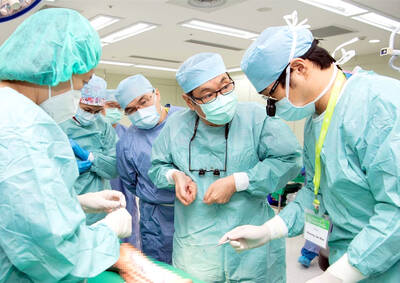
These patients are technically not dead. But if they are considered suitable donors and the families agree to donation, life-support measures are ended. When the patient's heart stops, doctors wait five minutes before declaring the patient dead and removing viable organs for transplant.
If the heart does not stop within a reasonable time, planned donations have to be canceled, which occurs in about one in five cardiac deaths.
To be transplanted successfully, the liver has to be retrieved within 30 minutes and the kidneys and pancreas within an hour after a patient is removed from life support. When this protocol is followed, Steinbrook said, the success of a transplant after cardiac death is similar to that of a transplant after brain death.
On April 26, The Lancet published a letter from two doctors at Taichung-based China Medical University Hospital (CMUH) warning that “Taiwan’s Health Care System is on the Brink of Collapse.” The authors said that “Years of policy inaction and mismanagement of resources have led to the National Health Insurance system operating under unsustainable conditions.” The pushback was immediate. Errors in the paper were quickly identified and publicized, to discredit the authors (the hospital apologized). CNA reported that CMUH said the letter described Taiwan in 2021 as having 62 nurses per 10,000 people, when the correct number was 78 nurses per 10,000

As Donald Trump’s executive order in March led to the shuttering of Voice of America (VOA) — the global broadcaster whose roots date back to the fight against Nazi propaganda — he quickly attracted support from figures not used to aligning themselves with any US administration. Trump had ordered the US Agency for Global Media, the federal agency that funds VOA and other groups promoting independent journalism overseas, to be “eliminated to the maximum extent consistent with applicable law.” The decision suddenly halted programming in 49 languages to more than 425 million people. In Moscow, Margarita Simonyan, the hardline editor-in-chief of the

Six weeks before I embarked on a research mission in Kyoto, I was sitting alone at a bar counter in Melbourne. Next to me, a woman was bragging loudly to a friend: She, too, was heading to Kyoto, I quickly discerned. Except her trip was in four months. And she’d just pulled an all-nighter booking restaurant reservations. As I snooped on the conversation, I broke out in a sweat, panicking because I’d yet to secure a single table. Then I remembered: Eating well in Japan is absolutely not something to lose sleep over. It’s true that the best-known institutions book up faster

Though the total area of Penghu isn’t that large, exploring all of it — including its numerous outlying islands — could easily take a couple of weeks. The most remote township accessible by road from Magong City (馬公市) is Siyu (西嶼鄉), and this place alone deserves at least two days to fully appreciate. Whether it’s beaches, architecture, museums, snacks, sunrises or sunsets that attract you, Siyu has something for everyone. Though only 5km from Magong by sea, no ferry service currently exists and it must be reached by a long circuitous route around the main island of Penghu, with the


 RSS
RSS