


When Umass (巫瑪斯), a Paiwan tribe member who is credited with reinventing the Aboriginal group's tradition of glass bead-making, was conducting research he found anthropologist Chen Chi-lu's (陳奇祿) lavishly illustrated books invaluable.
Chen, a member of Academia Sinica and retired National Taiwan University professor, is regarded as a pioneer of Taiwan's modern anthropology and historiography. Chen's fieldwork in the 1950s and 1960s systematically classified many of the objects made by tribes throughout Taiwan. The drawings and many of the Aboriginal artifacts he drew are currently on view on the first floor of the National Taiwan Museum.
Li Tzu-ning (李子寧), the exhibit's curator, says the exhibit is a tribute to Chen and a response to an earlier show.
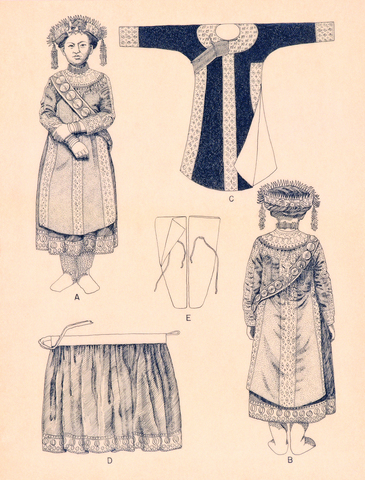
"The way they did the exhibition … [was] to emphasize the drawing[s] as works of art. But this time we are trying to put his drawings in the original context, which is anthropology."
The museum has done this by supplementing the original illustrations with the objects Chen drew. The drawings are predominately from Chen's seminal book Material Culture of the Formosan Aboriginals, published by the museum in 1968 when Chen was director for exhibitions.
Li calls the drawings on display "visual notebooks" because they document and authenticate the objects under investigation.
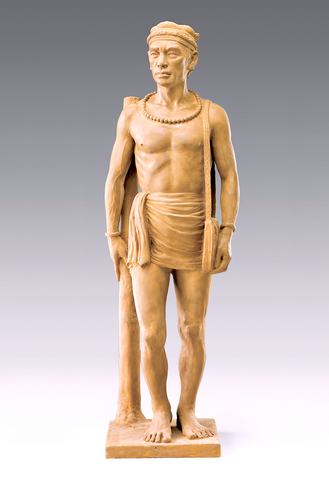
"During fieldwork he would make a first sketch in order to document the artifacts he observed or collected and then he would go home or go to his office and draw them in more detail," he said.
For rituals, Chen would use a camera.
Li says that by drawing the objects, Chen was able to create a social context for them. But though Chen was adept at illustrating objects used in rituals and ceremonies, the museum fails to create the necessary context to explain why we are looking at the drawings.
In the exhibit, titled Fieldwork, artifacts, illustration: The multi-faceted world of Dr. Chen Chi-lu's ethnological drawings, the emphasis on Chen is understandable. And yet, it seems that his life's work — the study of the art and culture of Taiwan's indigenous tribes — is overshadowed by the lack of context of the objects and illustrations he made during his sojourns. This is a pity, because it reduces his scholarship to pictures, even though they speak a thousand words.
When Chen studied Taiwan's indigenous peoples, there were 10 recognized tribes, today there are 13.
Visitors could walk away from the exhibit without ever knowing that there are 13 tribes in Taiwan because only 10 are mentioned.
There is also a degree of flippancy in the way the tribes are presented by the museum with one caption reading, "… Paiwan, Rukai, Puyuma, Ami, Yami, etc." What does "etc" mean? Was it too much for the curators to mention the names of all 10 tribes? The manner in which the captions were written and the content suggests that no member of any tribe that Chen studied was consulted before the exhibition was mounted.
As such, before viewing Chen's excellent drawings and the objects that accompany them, visitors are well advised to first visit the third floor exhibit, which examines in detail 12 of Taiwan's 13 tribes.
Failing to provide any context to the indigenous tribes, the museum inadvertently objectifies the indigenous cultures by minimizing their importance to the exhibit. Nowhere does the museumgoer see their words; nowhere are their myths told or the study of anthropology thirty years ago to that of today compared. Expanding the exhibition would have done justice to Chen's scholarship and reveal the degree to which Chen contributed to the study of Taiwan's indigenous peoples.
Simply showing the technical prowess of Chen's drawings and the objects he drew without any commentary on why they are important belittles the tremendous contribution he made to the field of anthropology.

In late October of 1873 the government of Japan decided against sending a military expedition to Korea to force that nation to open trade relations. Across the government supporters of the expedition resigned immediately. The spectacle of revolt by disaffected samurai began to loom over Japanese politics. In January of 1874 disaffected samurai attacked a senior minister in Tokyo. A month later, a group of pro-Korea expedition and anti-foreign elements from Saga prefecture in Kyushu revolted, driven in part by high food prices stemming from poor harvests. Their leader, according to Edward Drea’s classic Japan’s Imperial Army, was a samurai

The following three paragraphs are just some of what the local Chinese-language press is reporting on breathlessly and following every twist and turn with the eagerness of a soap opera fan. For many English-language readers, it probably comes across as incomprehensibly opaque, so bear with me briefly dear reader: To the surprise of many, former pop singer and Democratic Progressive Party (DPP) ex-lawmaker Yu Tien (余天) of the Taiwan Normal Country Promotion Association (TNCPA) at the last minute dropped out of the running for committee chair of the DPP’s New Taipei City chapter, paving the way for DPP legislator Su
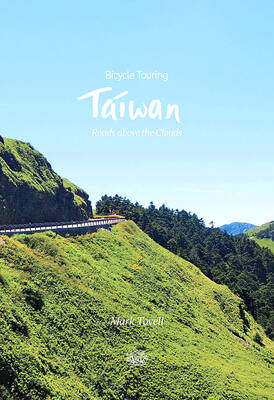
It’s hard to know where to begin with Mark Tovell’s Taiwan: Roads Above the Clouds. Having published a travelogue myself, as well as having contributed to several guidebooks, at first glance Tovell’s book appears to inhabit a middle ground — the kind of hard-to-sell nowheresville publishers detest. Leaf through the pages and you’ll find them suffuse with the purple prose best associated with travel literature: “When the sun is low on a warm, clear morning, and with the heat already rising, we stand at the riverside bike path leading south from Sanxia’s old cobble streets.” Hardly the stuff of your
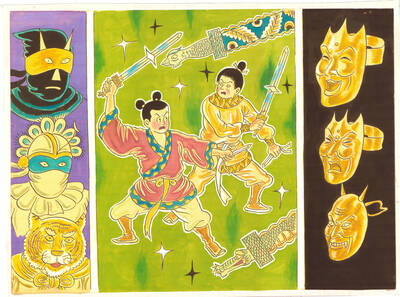
April 22 to April 28 The true identity of the mastermind behind the Demon Gang (魔鬼黨) was undoubtedly on the minds of countless schoolchildren in late 1958. In the days leading up to the big reveal, more than 10,000 guesses were sent to Ta Hwa Publishing Co (大華文化社) for a chance to win prizes. The smash success of the comic series Great Battle Against the Demon Gang (大戰魔鬼黨) came as a surprise to author Yeh Hung-chia (葉宏甲), who had long given up on his dream after being jailed for 10 months in 1947 over political cartoons. Protagonist


 RSS
RSS