


Archetypes and symbols solemnly parade through Seraphim Falls, a handsome, old-fashioned western of few words and heavy meanings that unfolds with the sanctimonious grandeur of a biblical allegory. In this drama of pursuit, revenge and forgiveness, set in 1868, Pierce Brosnan and Liam Neeson are soldiers who fought on opposite sides of the Civil War and are now engaged in a life-and-death chase that takes them from the Ruby Mountains of Nevada to a final showdown in the desert.
"Nobody can protect nobody in this world," growls Neeson's character, Colonel Morsman Carver of the Confederate Army. When such pronouncements are uttered in a movie this taciturn, they carry a pseudo-prophetic resonance. For much of this too long film, Carver appears to be the villain as he tracks Gideon (Brosnan) with a party of four sinister hired guns, whose number steadily diminishes as the chase continues.
Gideon, a former Union captain, initially appears to be an innocent wilderness explorer or prospector set upon by a gang of bandits. Where Carver is so obsessed with capturing his prey that he casually kills a wounded henchman rather than be delayed, Gideon shows abundant signs of humanity. While Gideon shivers, shaggy and sorrowful in threadbare winter clothing, his sinewy, gimlet-eyed nemesis glares down his nose, bundled up in a splendid fur-collared overcoat. Each time Gideon wriggles out of Carver's grasp, you applaud his survival skills, although he too kills and steals when necessary.
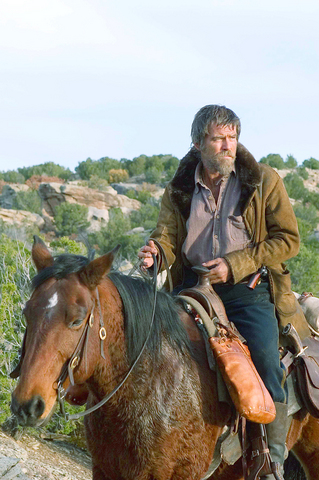
PHOTO: COURTESY OF LONG SHONG
These first impressions, it turns out, are somewhat misleading. Little flashes inserted along the way intimate an ugly history between the men. But it isn't until near the end that the source of Carver's grievance, a wartime atrocity in Seraphim Falls, Georgia, is revealed in all its horror.
It's then that the moral lesson kicks in. This Old West might as well be the Middle East, the former Yugoslavia, Northern Ireland or anywhere else blood feuds and grudges lead to mass slaughter in an endless chain of retribution. What prevents this rendition of an old, familiar fable from landing emotionally is the formal distance it keeps from its desperate characters. A few moments of empathetic eye contact between enemies won't do.
You are aware at all times that Seraphim Falls has "classic western" genes woven into its DNA. It never loosens up enough to convince you that Carver and Gideon are more than pawns in a high-minded allegory. And when the critical moment arrives for the movie to demonstrate its heart, it opts for pretentious, surreal gimmickry.
Seraphim Falls is the first feature film directed by David von Ancken, who wrote the screenplay with Abby Everett Jaques. Its strongest element is the austere majesty of the cinematography by John Toll (Braveheart, Legends of the Fall, The Thin Red Line), in which the severe beauty of the Western landscape looms over the characters as a silent rebuke.
The opening sequence, in which Gideon is shot in the arm and tumbles down a snowy mountainside into a river that carries him over a waterfall, out of which he miraculously pulls himself to shore, sets the bar high for visceral adventure. Nothing in the rest of the film comes close to matching the impact of Gideon's carving the bullet from his arm with his hunting knife, then cauterizing the wound while emitting agonizing howls. This scene is enough to give you vicarious hypothermia.
Once Gideon finds temporary shelter with a pioneer family, Seraphim Falls softens into a meticulously illustrated historical diorama, punctuated with spasms of violence. He encounters a gang of callow bank robbers, then hides out in a wagon train of Mormon settlers and comes upon a camp of laborers on the transcontinental railroad. Wherever he goes, Carver follows in his footsteps.
The movie Seraphim Falls most resembles is Clint Eastwood's 1976 classic The Outlaw Josey Wales; it follows that film's story closely enough to qualify as a self-conscious homage.
Late in the game, Seraphim Falls takes a fatal left turn from the solemn into the ridiculous. On the way to their final confrontation, Gideon and Carver each encounter lone symbolic figures who seem to have been awaiting their arrival, each offering a vaguely Satanic bargain. The first is an Indian trader with a slippery smile. The second, Madame Louise (Anjelica Huston in her grifter mode), is a haughty, witchlike peddler in a horse-drawn carriage, hawking an alcoholic cure-all.
With all due respect to Jim Jarmusch and Alejandro Jodorowsky, tossing such hallucinatory curveballs into the movie this near the end may look like a stroke of avant-garde brilliance, but it's really an act of cowardice.

Last week, Viola Zhou published a marvelous deep dive into the culture clash between Taiwanese boss mentality and American labor practices at the Taiwan Semiconductor (TSMC) plant in Arizona in Rest of World. “The American engineers complained of rigid, counterproductive hierarchies at the company,” while the Taiwanese said American workers aren’t dedicated. The article is a delight, but what it is depicting is the clash between a work culture that offers employee autonomy and at least nods at work-life balance, and one that runs on hierarchical discipline enforced by chickenshit. And it runs on chickenshit because chickenshit is a cultural

My previous column Donovan’s Deep Dives: The powerful political force that vanished from the English press on April 23 began with three paragraphs of what would be to most English-language readers today incomprehensible gibberish, but are very typical descriptions of Democratic Progressive Party (DPP) internal politics in the local Chinese-language press. After a quiet period in the early 2010s, the English press stopped writing about the DPP factions, the factions changed and eventually local English-language journalists could not reintroduce the subject without a long explanation on the context that would not fit easily in a typical news article. That previous
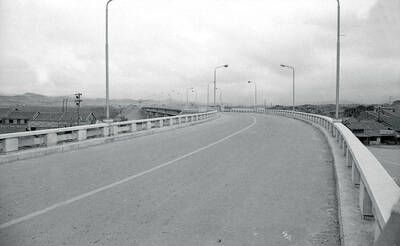
April 29 to May 5 One month before the Taipei-Keelung New Road (北基新路) was set to open, the news that US general Douglas MacArthur had died, reached Taiwan. The military leader saw Taiwan as an “unsinkable aircraft carrier” that was of huge strategic value to the US. He’d been a proponent of keeping it out of Chinese Communist Party (CCP) hands. Coupled with the fact that the US had funded more than 50 percent of the road’s construction costs, the authorities at the last minute renamed it the MacArthur Thruway (麥帥公路) for his “great contributions to the free world and deep

Years ago, I was thrilled when I came across a map online showing a fun weekend excursion: a long motorcycle ride into the mountains of Pingtung County (屏東) going almost up to the border with Taitung County (台東), followed by a short hike up to a mountain lake with the mysterious name of “Small Ghost Lake” (小鬼湖). I shared it with a more experienced hiking friend who then proceeded to laugh. Apparently, this road had been taken out by landslides long before and was never going to be fixed. Reaching the lake this way — or any way that would


 RSS
RSS