


One of Taipei's oldest and most reputed Indian restaurants, Tandoor Indian Restaurant, has recently found a new home in the multicultural Tienmu neighborhood serving the same authentic North Indian cuisine and an enchanting interior design mixing elegance with modern chic.
Named after the traditional Indian clay oven, Tandoor takes its native recipes seriously and imports all the spices and herbs from India. For each dish, at least 10 to 12 spices are used.
"Many people ask us if we make changes to appeal to local palates. I always reply that there is no such need since the menu is so extensive, diners are bound to find something to their liking," said manager Monisha Relwani.
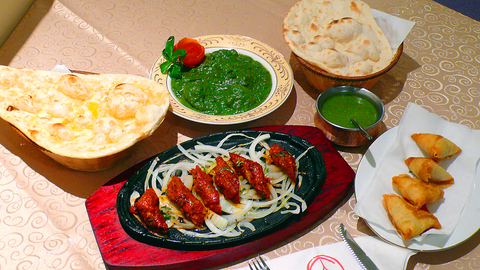
PHOTO: HO YI, TAIPEI TIMES
Relwani's confidence is not unfounded since the restaurants experienced Indian chefs study the ancient combinations of spices and are skilled at making over 100 different sauces.
For appetizers, the barbecued delicacies come highly recommended as they are roasted in the tandoor in the traditional way. Seekh kabab (NT$290), or the roasted minced mutton, is one of the most-ordered dishes.
The Indian gravies come in three basic kinds: yellow, which is made of various vegetables and ginger powder; red, which is either tomato or chili-based; and green, which is the spinach-based. The vindaloo is not for the faint-hearted. If you prefer something milder, chicken saagwalla (NT$300) has a slight tang of spices mixed with the fresh flavor of spinach.
Arguably the world's favorite Indian dish, chicken tikka masala (NT$350), cooked with green peppers, onions and spices, is perfect with a basket of garlic naan (NT$70), according to Relwani.
"All our meats are deboned and skinned since North Indian cuisine was traditionally served at the imperial family's dinning table and the royal family liked their food immaculately prepared," the manager explained.
As for the vegetable options, aloo gobi (NT$220), or cauliflower and potatoes cooked with dry herbs and spices and chana masala (NT$220), which is chickpeas cooked in traditional Punjabi style with a thick spicy gravy, are two must-tries for vegetarians.
A tip to Tandoor's customers: ask for a doggie bag for leftovers since the sauces are the soul of the food and excellent seasonings for bread, rice or noodles.

Taiwan’s English education system is being pulled apart by three opposing forces. Bilingual Nation 2030 pulls students toward English and global communication. Artificial Intelligence (AI) readiness pulls them toward digital judgment, verification and AI-mediated work. But Taiwan’s old exam culture pulls them back toward memorization, grammar drills, timed reading and correct answers. If the education system keeps using old exams to define success, it risks producing graduates who are neither genuinely bilingual nor genuinely AI-ready, but trained for tasks machines can already perform. The first force is Bilingual Nation 2030. Launched in 2018, the policy aimed to “help Taiwan’s workforce connect
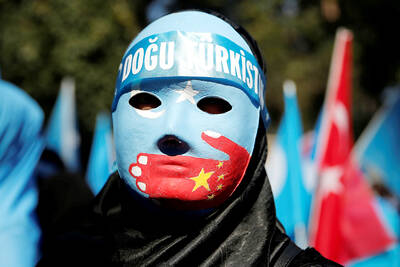
It seems every few days one bumps into one of those “real man” comments in which Taiwan is urged to “face reality” or similar, and “make a deal,” with the speaker implying that soon it will be too late. “Deal” advocates always present themselves as having a superior grip on reality, and the manly ability to make the “hard choice.” Their testosterone-laden language often echoes that of Taiwan sellout advocates. Note that such commentary always specifies a process (“make a deal, work with, make progress”), never the end state of what occupation by a violent authoritarian colonialist state will entail. In
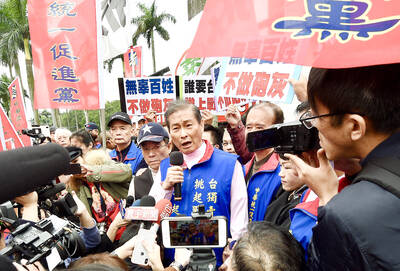
There are shadowy cabals plotting to sell out Taiwan to be annexed by China, by invasion if necessary. Fortunately, they are buffoons. In 2019, former Bamboo Union gangster and founder of the China Unification Promotion Party (CUPP), Chang An-le (張安樂, colorfully known as “White Wolf”), led a protest at the Legislative Yuan against comments made by then-premier Su Tseng-chang (蘇貞昌) that in the event of an attack by China, he would never surrender, but would protect the nation by fighting to the end, even if he only had a broom. Chang had party members bring a wooden casket that they
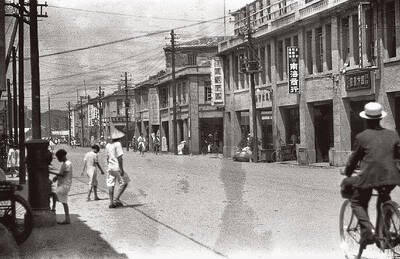
June 1 to June 7 "If all Taiwanese were as afraid of dying as you, then what would happen?” Physician Shih Chiang-nan (施江南) reportedly said this to his wife Chen Chiao-tung (陳焦桐) after she urged him to stop intervening on behalf of Taiwanese soldiers stranded overseas after serving in the Japanese Army during World War II. Shih had clashed with high-ranking officials over the issue, engaged in several heated arguments with Taiwan governor-general Chen Yi (陳儀) and allegedly shouted at general Ko Yuan-fen (柯遠芬), chief of staff of the Taiwan Garrison Command, over


 RSS
RSS