


Mr Lai is on the horns of a dilemma as he stands amid what may be the most dazzling collection of luxury goods gathered under one roof in modern China. Should he listen to his wife and buy the US$750,000 Rolls Royce Phantom or should he listen to his instincts and stick with his modest Mercedes Benz?
"It's not the money I'm worried about," says the 43-year-old head of a major textile company. "It's just that if I drive a car like that, we'll need a bodyguard too. When they see you inside a Rolls Royce, some people hate you and you need protection."
In nearby Shenzhen, where a parallel exhibition is being staged, Xhang Ming is in a black mood after having spent two days watching the wealthy browse among Bentleys and jewelry that he could not afford in a lifetime's labor.
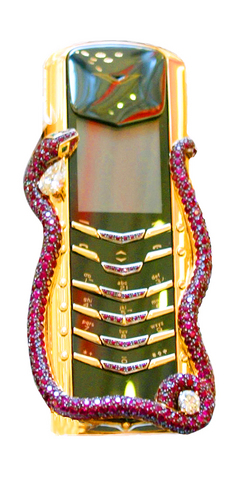
PHOTO: AP
"I hate these people," hisses the 28-year-old security guard, paid US$4 a day to patrol with dozens of other uniformed guards for the three-day event. "Everyone knows that none of them get their money honestly."
He gestures towards a circular Hastens bed from Sweden at the center of the hall with a price tag of US$49,000. "It's disgusting," he sneers. "In my hometown in Hunan province, you can buy three apartments for that money. How could anyone spend so much on something like that?"
In today's China, the answer to his question is "very easily."
This is the brash new China, where more than 20 years after former leader Deng Xiaoping (鄧小平) announced that to be rich was glorious, thousands of people are gloriously, spectacularly and, arguably, obscenely rich — and they want the freedom to flaunt their wealth in public.
Millionaires from across the nation in December descended on the southern cities of Shenzhen and Guangdong for the two fairs aimed at showing them ways of spending their newfound fortunes and taking some of the stigma out of being filthy rich in China.
Wealthy guests — personally invited from the 27,000 people in China now worth US$6 million or more — spent US$12 million in Shenzhen alone in two days, and donated hundreds of thousands more at charity auctions held to raise money for orphaned children.
Most of China's super-rich are young — in their 30s and their 40s — and driven by a desire for opulence. At the same time, however, they are fearful of the reactions to their extravagance. There is good reason for their fear. Millions of their fellow countrymen are resentful of their wealth, suspicious of its origins and find it hard to come to terms with the notion of a super-rich elite in a country where equality and socialism are still meant to be guiding principles.
Most of China's 1.3 billion people still scrape by on no more than a few hundred US dollars a year while a small elite are yuan billionaires worth a minimum of US$13 million — and more than 90 per cent of them are the children of senior Communist Party officials.
Not everyone is wary of being ostentatious. Li Cai, the ebullient 37-year-old head of the Guangzhou Yulong Tenggao Electronics Company, who took one look at a light aircraft as he toured the Guangzhou fair then signed up for a US$50,000 membership in a private flying club, exclaiming with a broad grin: "It's so cheap. I would like to buy a boat while I'm here too if I can find one."
The twin cities of southern China were chosen for the luxury goods' exhibitions because they have a more liberal attitude to wealth than Beijing 2,000km to the north, and also because Guangdong is the nation's richest province.
Staging luxury goods' shows for exclusive millionaire audiences might appear to be a sure way of inflaming the situation — but the organizers of the event in Guangzhou, Boya International, said it could help break down barriers by showing the positive aspects of being wealthy.
"Luxury is still a dirty word for many people," admitted exhibition organizer Liu Jidong. "There is still a big gap between the rich and the poor in our country but maybe if people learn more about these luxury products, they will begin to believe that if they work hard, they too can enjoy these better things in life."
It would have been difficult to stage the events in China's capital Beijing, Mr. Liu admitted. "There are too many old soldiers and revolutionaries there who wouldn't like it," he said.
The highlight of the Shenzhen fair was a US$400-dollars-a-head televised dinner and millionaires' auction for 800 invited guests, hosted by a Hong Kong TV comedian, to raise money for underprivileged children.
"The idea of the auction is to show that rich people really care," said Mr. Liu. "If they do things like this more often, maybe the poor people will not envy them."
Outside the auction venue, migrant worker Wang Guihua, 35, who moved to Guangzhou from Sichuan province with her husband four years ago to earn money for their 10-year-old son's education by sweeping streets, laughed bitterly when told of Mr. Liu's remarks.
"Doesn't he understand we belong to different worlds?" she asked.

In late October of 1873 the government of Japan decided against sending a military expedition to Korea to force that nation to open trade relations. Across the government supporters of the expedition resigned immediately. The spectacle of revolt by disaffected samurai began to loom over Japanese politics. In January of 1874 disaffected samurai attacked a senior minister in Tokyo. A month later, a group of pro-Korea expedition and anti-foreign elements from Saga prefecture in Kyushu revolted, driven in part by high food prices stemming from poor harvests. Their leader, according to Edward Drea’s classic Japan’s Imperial Army, was a samurai

The following three paragraphs are just some of what the local Chinese-language press is reporting on breathlessly and following every twist and turn with the eagerness of a soap opera fan. For many English-language readers, it probably comes across as incomprehensibly opaque, so bear with me briefly dear reader: To the surprise of many, former pop singer and Democratic Progressive Party (DPP) ex-lawmaker Yu Tien (余天) of the Taiwan Normal Country Promotion Association (TNCPA) at the last minute dropped out of the running for committee chair of the DPP’s New Taipei City chapter, paving the way for DPP legislator Su
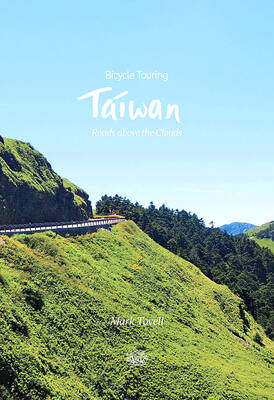
It’s hard to know where to begin with Mark Tovell’s Taiwan: Roads Above the Clouds. Having published a travelogue myself, as well as having contributed to several guidebooks, at first glance Tovell’s book appears to inhabit a middle ground — the kind of hard-to-sell nowheresville publishers detest. Leaf through the pages and you’ll find them suffuse with the purple prose best associated with travel literature: “When the sun is low on a warm, clear morning, and with the heat already rising, we stand at the riverside bike path leading south from Sanxia’s old cobble streets.” Hardly the stuff of your
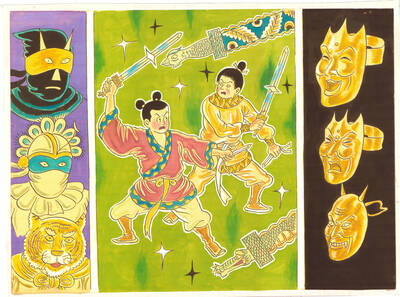
April 22 to April 28 The true identity of the mastermind behind the Demon Gang (魔鬼黨) was undoubtedly on the minds of countless schoolchildren in late 1958. In the days leading up to the big reveal, more than 10,000 guesses were sent to Ta Hwa Publishing Co (大華文化社) for a chance to win prizes. The smash success of the comic series Great Battle Against the Demon Gang (大戰魔鬼黨) came as a surprise to author Yeh Hung-chia (葉宏甲), who had long given up on his dream after being jailed for 10 months in 1947 over political cartoons. Protagonist


 RSS
RSS