


Edward Lam (林奕華) questions everything. From democracy to the media, the fiercely independent thinker has made a career out of exploring the contradictions that he sees pervade all facets of society. But in person, Lam is far from bombastic or confrontational. Instead, he prefers to vent his displeasure in the newspaper articles he writes or the plays he directs.
"In terms of my personality, I am quite soft, but I can feel my anger from the things that I see, especially living in Hong Kong," Lam said in a recent interview.
He started writing at the age of 14 and has worked variously since the late 1970s in radio, TV and film and created the Edward Lam Dance Theater, which he founded while working and studying in Europe, in 1991.
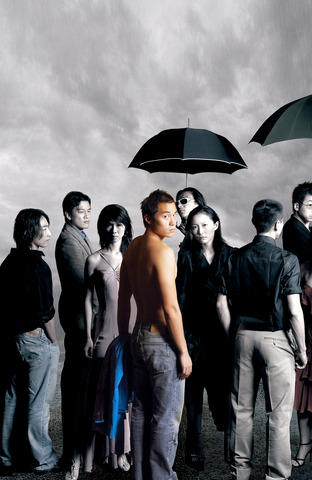
Lam is pessimistic about Asian audiences' appreciation of theater. "Theater is very much treated like yogurt from a supermarket. You need it because you need it," he said. "It's not like you need it because you think it will stimulate you and you are not just consuming it."
A long-time collaborator of Mathias Woo from Hong Kong's Zuni Icosahedron, Lam has written and directed numerous plays that question, and are often critical of Hong Kongers' sensibilities and attitudes. Among them are Les Parents Terrible, Ideal School and the popular East Wing West Wing series. He is currently in Taipei directing the sold-out What Is Man? at the National Theater.
When Lam returned to Asia from Europe in the mid-1990s, he hit the theater scene with a number of productions that explored issues of sexual identity. In 1996, he used the word tongzhi (同志) — a term coined by Sun Yat-sen (孫逸仙) meaning 'comrade' — to refer to gays in Taiwan with the aim of fostering awareness of homosexual issues and solidarity. The issue of sexuality led him into a broader investigation of heterosexuality and its influence on the gay world.
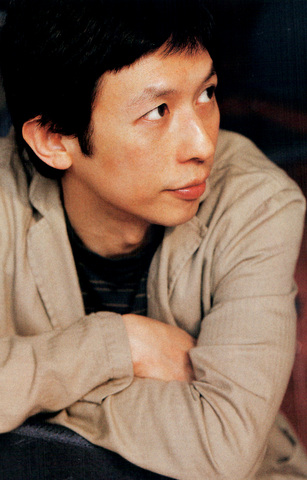
"It was in '97 I had the feeling that I should not keep on doing gay-oriented theater because all the sufferings that the gays are sharing are based on [the ideology] of [heterosexuals]," he said. "Gay men are looking for men who are strong, who are masculine, who are wealthy, who are powerful. They are still looking for something very hetero in their lives."
If his earlier work takes homosexuality as the starting point, he now considers it important to address heterosexual culture because of its influence on gay culture. Lam says that because heterosexual culture is male-generated and thus male-oriented, it is imperative that gay artists investigate what it means to be homosexual in a culture largely dominated by heterosexual ideologies.
"We have everything from the center of man and we have to follow the rules laid by man. That is why you wouldn't have TV programs [or] newspapers that are based on gay culture. That is why I would take hetero as a center, rather than gay as a center. Every time you ask the question, who these man are, and if I am one of them, am I different, or if I am not, then why."
For Lam, one way of answering this question is to trace elements of identity back to classical Chinese literature, which he believes exerted a tremendous influence on ideas of masculinity in contemporary Chinese popular culture. "If you understand the ideology of [a] particular tribe or country, you will naturally understand what that culture is; because ideology is how they see things, how they value things, and what they think of what value is."
Whereas Lam's earlier work focused on contemporary society, history is playing an increasingly important role in his current work and how it shapes Chinese culture.
There seems to be a parallel between sexual identity and Hong Kong. When I mentioned how people in Hong Kong must have experienced a crisis of identity back in the nineties before the British returned the territory to Hong Kong, Lam redirected my observation by pointing out how citizens of Hong Kong don't have a framework within which to think about themselves as individuals.
"When you grow up in a place like Hong Kong you just don't think identity could become something like a crisis. You are not brought up [with] any sort of education to tell you that you have to think about who you are, you have to question yourself and the relationship between you and history. We simply don't have that concept of "what is history," so if you don't have that concept, how would you have the concept of who you are? You've got to have the idea of the bigger environment and then you try to find your position." The absence of this kind of reflection of history — where we are intimately tied up with its unfolding — is what he hopes audiences in Taiwan will think about when watching What Is Man?
Lam has a commitment with the National Theater Concert Hall to direct the Four Great Classical Novels of Chinese literature. He chose The Water Margin (水滸傳) — the inspiration for What Is Man? — first because it serves as a foundation for the other three. "I would say all four of these books are built on one important, key issue: What Chinese are like, no matter man or woman."
According to Lam, the four most important desires for man in Chinese culture are wine, sex, money and fame, all of which are included in The Water Margin.
By using texts from history to investigate contemporary society, Lam feels that the theater will be able to speak to audiences in a way that is different from movies or the Internet.
"With media like the Internet, people are looking for something immediate so time is everything. Speed is everything. Theater is totally different. It requires patience. It requires depth. The influence of the theater nowadays is so limited because it is not a media thing. Anything that is not connected to making money — mainly media — will [have] less influence."
And though Lam is not overly optimistic about the ability of theater to reach a wide audience, he believes the stage still retains the kind of independence necessary to ask the difficult questions neglected by the popular media.

In late October of 1873 the government of Japan decided against sending a military expedition to Korea to force that nation to open trade relations. Across the government supporters of the expedition resigned immediately. The spectacle of revolt by disaffected samurai began to loom over Japanese politics. In January of 1874 disaffected samurai attacked a senior minister in Tokyo. A month later, a group of pro-Korea expedition and anti-foreign elements from Saga prefecture in Kyushu revolted, driven in part by high food prices stemming from poor harvests. Their leader, according to Edward Drea’s classic Japan’s Imperial Army, was a samurai

The following three paragraphs are just some of what the local Chinese-language press is reporting on breathlessly and following every twist and turn with the eagerness of a soap opera fan. For many English-language readers, it probably comes across as incomprehensibly opaque, so bear with me briefly dear reader: To the surprise of many, former pop singer and Democratic Progressive Party (DPP) ex-lawmaker Yu Tien (余天) of the Taiwan Normal Country Promotion Association (TNCPA) at the last minute dropped out of the running for committee chair of the DPP’s New Taipei City chapter, paving the way for DPP legislator Su
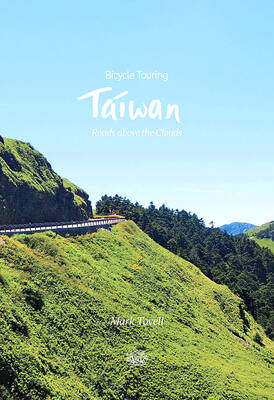
It’s hard to know where to begin with Mark Tovell’s Taiwan: Roads Above the Clouds. Having published a travelogue myself, as well as having contributed to several guidebooks, at first glance Tovell’s book appears to inhabit a middle ground — the kind of hard-to-sell nowheresville publishers detest. Leaf through the pages and you’ll find them suffuse with the purple prose best associated with travel literature: “When the sun is low on a warm, clear morning, and with the heat already rising, we stand at the riverside bike path leading south from Sanxia’s old cobble streets.” Hardly the stuff of your
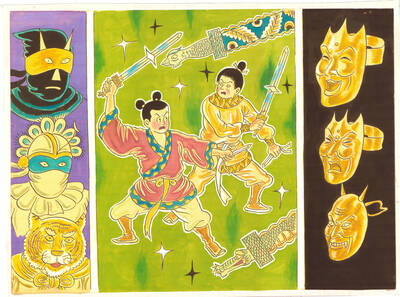
April 22 to April 28 The true identity of the mastermind behind the Demon Gang (魔鬼黨) was undoubtedly on the minds of countless schoolchildren in late 1958. In the days leading up to the big reveal, more than 10,000 guesses were sent to Ta Hwa Publishing Co (大華文化社) for a chance to win prizes. The smash success of the comic series Great Battle Against the Demon Gang (大戰魔鬼黨) came as a surprise to author Yeh Hung-chia (葉宏甲), who had long given up on his dream after being jailed for 10 months in 1947 over political cartoons. Protagonist


 RSS
RSS