


Madagascar is an island of huge variety and not a few extremes: from the tropical rainforests of the north east, where rain and sun splice the day at regular intervals, to the dry baking heat of the west and southwest coast, to the cooler central highlands, where winter can take root with freezing rain and biting cold.
Given the wildly different textures of climate and landscape, you would be well advised to sit down with a guidebook before deciding which bits of this beautiful country to sample. And it's not only beautiful: the country's isolation, for millions of years, helped to spark and then protect an explosion of unique vegetation and wildlife. When the current president tripled the amount of protected land on the island last year, WWF (formerly the World Wide Fund for Nature) described it as a “gift to the Earth.”
And visitors of an ethical bent may want to pay particular attention to the type of places they stay. Madagascar is a desperately poor country, but there are tour operators who will guide you towards places that offer the locals a chance to share in the wealth you bring.
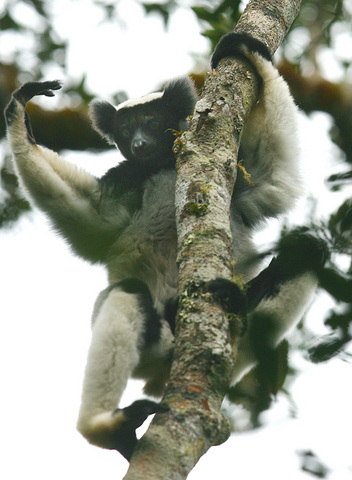
PHOTO: AP
The capital city is somewhere that could do with an injection of wealth. Antananarivo, known as Tana by the locals, is a hard city — edgy, noisy and not always pretty. It offers the visitor a harsh contrast to the breathtaking beauty of the country beyond its limits. At the very least, it acts as a corrective to the images of reef and rainforests that sell the island and allows you to appreciate the extreme forces that coexist here.
With street kids, prostitutes and, in places, near shanty-town conditions, it can seem intimidating, particularly with Isabella, my 14-year-old daughter, in tow. But it has its charms, and considering that this is a city where 30 percent of houses have no running water and escalating fuel prices heap hardship on the locals, it's a testament to their spirit that Tana is as energetic as it is.
A world away from the hard edge of the capital — and it would be difficult to find a more graphic illustration of the extremes on offer — is the resort at Anjajavy. Nestling in a stretch of protected dry deciduous forest on the north west coast, it is virtually unreachable by road; instead, we pick up a seven-seater plane from Tana airport, the 90-minute flight ending in a glorious descent as the pilot arcs over the small peninsula that houses Anjajavy. Half a dozen white sand beaches ring the tiny coastline and around one of these sit the two dozen or so wooden villas of the resort. The plane swoops over the hotel and swings round to land bumpily on a tiny strip of red earth. On one side of the landing strip a cluster of small children gather to stare at tourists from another world.
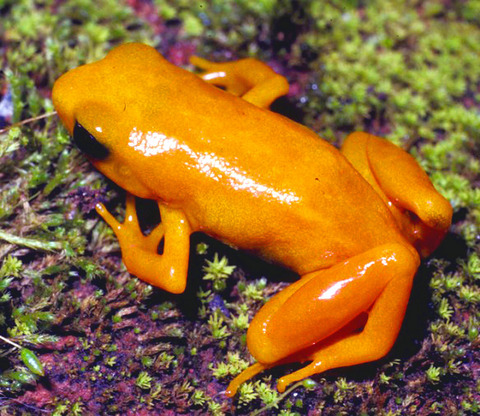
PHOTO: NY TIMES NEWS SERVICE
A 10-minute trip in a 4x4 brings you to the hotel. On arrival it's as if you've walked straight into the pages of Conde Nast Traveller — infinity pool, palm trees, beautifully appointed villas and a small army of workers dressed in brilliant white linen cleaning the decks or brushing the lawn. The delightful timber-framed main house leads to an outside terrace and a lawn fringed with flowers and palm trees. Just beyond it, the Mozambique Channel sparkles. Each villa has a deck with an inviting hammock facing the sea.
You could do worse than lie there listening to the waves and the bird song and watching the frisky lemurs dance among the trees, but there are myriad pursuits for those who eventually choose to leave the comfort of the hammock: walks and bike rides through the forest to spot any number of different species (hummingbirds, lemurs, malachite kingfishers); diving and snorkeling; and deep-sea fishing for marlin and tuna.
A less strenuous option is to take a sunset cruise among the mangroves. Setting off in late afternoon, the hotel boat waltzes around the forest — flooded now at high tide. Huge birds with exotic-sounding names and even more exotic-looking beaks perch imperiously on the highest trees, casting a desultory eye over the forest below. But easily the most magical moment is when the boatman cuts the engine: the world appears to come to a standstill. Any trace of sound is absorbed by the swampy mangroves; apart from the occasional call of the birds, there is nothing. Savor this, the quietest, stillest and calmest few moments possible. It is impossibly beautiful — and the rum cocktails consumed en route help a little too.

PHOTO: AP
Another must-do trip is to take the hotel boat to Morumba bay, skirting the Anjajavy peninsula and passing a scattering of makeshift fishing villages perched on the sand just meters from the ocean. As you pass endless isolated white beaches, beautiful coves and tiny craggy islands, the only obvious living being is a Madagascar eagle resting in one of the majestic baobab trees that are dotted along the coastline.
The boat will leave you for the afternoon in the castaway-like cove of Morumba. After a few blissful hours of snorkeling and swimming, you'll be ready to tuck into your packed lunch of sandwiches, a cool beer and some fresh fruit. This treasure of a beach is surrounded by the forest, which tumbles down almost into the sea. It's simple and idyllic.
And you really should not leave Anjajavy without visiting the little village across the sea from the hotel that is home to 200 people. There are no concessions to tourists: it's basic and lived-in, with a school (which the charming director will take you around), a tiny six-bed hospital and wooden huts built meters from the sea. There are fish drying outside the huts, pots cooking rice and a tiny sign that indicates a bar — really just a room scattered with crates of beer. The school was built with assistance from the hotel (so too the wind-powered water pumps) since the resort works in partnership with an NGO, Ecoles du Monde. Many of the villagers work at the hotel, which sources much of its fresh food from the local fishermen and farmers. It's a small but effective way of redistributing the fruits of tourism to the people who have tended and maintained this paradise for centuries.
PHOTO: NY TIMES NEWS SERVICE
Anjajavy is a special place and not just because of the weather, the location, or even the wildlife and flora. The people are memorable as well. Not just the charming Malagasy, who wear broad smiles permanently: everyone at the lodge manages to create an atmosphere of warmth and there is a total lack of formality, pretension or arrogance. It is expensive, but we offset this by spending the rest of the holiday staying in the most basic of accommodation.
And nothing was more spartan than our trip to Nosy Mangabe, a small island reserve on the other side of the country, off the north east coast. (Bear in mind that the state of Madagascan infrastructure means any lengthy trip will involve you flying back to the capital and out again, so if you plan to visit two or three locations, be prepared to pass through Tana airport each time. Traveling by car is possible, but probably only sensible if you have fluent French and are driving a 4x4. You'll need the French in case you find yourself lost or broken down — both of which, given the state of the roads, are entirely probable.)
Nosy Mangabe is reached by boat from Maroantsetra, a small, sleepy town mostly consisting of basic one-story buildings. A walk through the town — and in particular the market, where just about anything is peddled — offers a glimpse of the subsistence-style living endured by many Malagasy. Taking photographs of these exotic market sellers can seem deeply exploitative, so do them the courtesy of asking their permission and don't be surprised when many of them — tired, probably, of this particular fashion shoot — politely decline, and in some cases not so politely.
The boats to Nosy Mangabe can be arranged in Maroantsetra, but you'll have to book ahead since it has strict limits on numbers — not least because the only place to stay is a very simple camping area. This is referred to as camping sauvage by our guides, and they aren't far wrong — no electricity, no showers and only the most basic toilets and washing facilities. It is a world away from Anjajavy, as is the landscape. The island is in the heart of Madagascar's rainforest region and has escaped the ravages of modernity that have blighted parts of the mainland. It is one of the purest examples of rainforest and is particularly famous for the chance to glimpse the elusive aye-ayes, the largest nocturnal primate in the world.
For this you'll have to set out with your guide on a night trek through the forest, torch in one hand as you scour the thick foliage for a glimpse. There are none to be seen on our visit, but by the next morning the forest can be seen in all its glory. The sun is intermittent, driving shafts of light through the cloud and mist that envelope the densest forest imaginable. Owls, lemurs, geckos, chameleons and any number of spectacular birds shriek and dance in the trees. And they're not called rainforests for nothing — the air is moist and damp and the leaves drip continuously.
When you stand in the middle of this magical landscape you feel as if you've walked on to the set of Jurassic Park, or maybe Fitzcarraldo. The whole experience of Nosy Mangabe is other-worldly and dramatic from the minute you step on to the beach and notice how the dark-green trees rise almost from the sea, leaving virtually no space for the sand that has all but been claimed by the forest.
From Nosy Mangabe you can venture further north along the coast to the Masoala peninsula. This is another two-hour boat journey and will deposit you in one of the remotest outposts in this national park. This too is a rainforest area where the lowland canopy stretches right down to the sea. Accommodation is, again, basic and most visitors will be coming to hike through the forests, snorkel or kayak, or simply swim the beaches after a hard day's trek. It is a magnet for conservationists since it's home to rare wildlife, including the red-ruffed lemur, helmet vanga, panther chameleon and the bright red tomato frog.
We stay at a small encampment, Chez Arol — meters from the beach, at the edge of the forest — where small cabins (and extremely basic no-frills communal showers) prove an idyllic and impossibly serene location. Night closes in early and this, together with rationed electricity and frighteningly early starts for the forest treks, means that you submit to the forces of nature — bedding down early, rising at dawn, trekking, reading, sleeping. Even drinking seems almost impure in these surroundings. There is little better than retiring to the cabin's porch after supper and reading before darkness falls, surrounded for kilometers by rainforest and the distant rumble of the Indian Ocean.
Chez Arol tries to integrate into the local village — a tiny settlement of huts on the edge of the forest. The men fish the seas and farm vegetables for food to sell to Chez Arol. The money in turn is used by the villagers to buy much-needed medicines, the rest of their worldly needs taken care of by the ocean and the minuscule farms around the huts. They farm and fish enough to live, and the rest of their money (pooled by the entire village) is spent on clothes or medicines. This is as basic an existence as I've ever seen, and it's humbling in the extreme to see a community with little or nothing beyond what they feed their bodies with each day.
As we leave Masoala by boat to head back to Maroantsetra, we are gripped by one of the most invigorating and spontaneous events of the holiday. It should have been a routine journey — but that was without a violent tropical storm. It visits our little six-seater boat without warning and within minutes we are being tossed about and sprayed with massive waves. The boat doesn't quite rise vertically in the water, but it gets close. There is much dramatic squealing as waves of water hit the deck and we cling for dear life to the rails.
Once the initial fear subsides it is magnificent and exhilarating fun. Much like Madagascar, in fact.

Sept.16 to Sept. 22 The “anti-communist train” with then-president Chiang Kai-shek’s (蔣介石) face plastered on the engine puffed along the “sugar railway” (糖業鐵路) in May 1955, drawing enthusiastic crowds at 103 stops covering nearly 1,200km. An estimated 1.58 million spectators were treated to propaganda films, plays and received free sugar products. By this time, the state-run Taiwan Sugar Corporation (台糖, Taisugar) had managed to connect the previously separate east-west lines established by Japanese-era sugar factories, allowing the anti-communist train to travel easily from Taichung to Pingtung’s Donggang Township (東港). Last Sunday’s feature (Taiwan in Time: The sugar express) covered the inauguration of the

The corruption cases surrounding former Taipei Mayor and Taiwan People’s Party (TPP) head Ko Wen-je (柯文哲) are just one item in the endless cycle of noise and fuss obscuring Taiwan’s deep and urgent structural and social problems. Even the case itself, as James Baron observed in an excellent piece at the Diplomat last week, is only one manifestation of the greater problem of deep-rooted corruption in land development. Last week the government announced a program to permit 25,000 foreign university students, primarily from the Philippines, Indonesia and Malaysia, to work in Taiwan after graduation for 2-4 years. That number is a

In a stark demonstration of how award-winning breakthroughs can come from the most unlikely directions, researchers have won an Ig Nobel prize for discovering that mammals can breathe through their anuses. After a series of tests on mice, rats and pigs, Japanese scientists found the animals absorb oxygen delivered through the rectum, work that underpins a clinical trial to see whether the procedure can treat respiratory failure. The team is among 10 recognized in this year’s Ig Nobel awards (see below for more), the irreverent accolades given for achievements that “first make people laugh, and then make them think.” They are not

This Qing Dynasty trail takes hikers from renowned hot springs in the East Rift Valley, up to the top of the Coastal Mountain Range, and down to the Pacific Short vacations to eastern Taiwan often require choosing between the Rift Valley with its pineapple fields, rice paddies and broader range of amenities, or the less populated coastal route for its ocean scenery. For those who can’t decide, why not try both? The Antong Traversing Trail (安通越嶺道) provides just such an opportunity. Built 149 years ago, the trail linked up these two formerly isolated parts of the island by crossing over the Coastal Mountain Range. After decades of serving as a convenient path for local Amis, Han settlers, missionaries and smugglers, the trail fell into disuse once modern roadways were built


 RSS
RSS