


If you can't find time in your busy schedule to take a trip on the Qinghai-Tibet railroad and venture to the Roof of the World, a Tibetan restaurant called Samdom hidden in a quiet alley in the Shida (師大) neighborhood offers home-cooked Tibetan meals.
Having lived in Taiwan for 10 years, Tibetan Kelsang Chodaic decided to try his luck and run a small business of his own. “There are a few thousand Tibetans living in Taiwan and most of them have made their home in Taipei. Sometimes we miss the food from home which can't be found anywhere in the city. So I opened this place to serve my fellow Tibetans and our cuisine to Taiwan,” Chodaic said.
According to Chodaic, typical Tibetan cuisine is light in taste and is usually boiled. Indian and Chinese influences are evident in many of the restaurant's dishes.
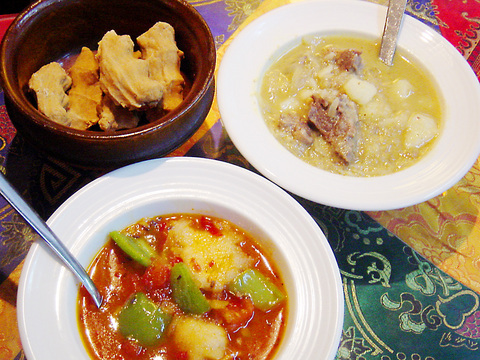
PHOTO: HO YI
Coming to a Tibetan restaurant, one simply can't pass up the regions' staple food pag, also called Tibetan parched barley cake. The scented dried paste should be broken into pieces using your hands, and is eaten as an accompaniment to main dishes.
If you opt for an authentic dinning experience, mutton and beef are the customary choices on a Tibetan family's dinning table, while chicken, seafood and vegetables are rarely served. The joint's light, fragrant stews are pleasantly familiar to local palates. And the plate of spicy fried beef lungs in tomato sauce (NT$100) is the eatery's specialty for more adventurous dinners.
Momo, the Tibetan steamed beef dumplings are another must-try on the menu. For people who prefer to mix the exotic with a tinge of familiarity, one of the popular dishes catering to local tastes is the chili chicken mixed with green bell pepper and onion (NT$80).
As for an after-meal drink, the well-known Tibetan butter beverage is definitely worth trying, even though the possibility is high that you will find the slightly salty and rich refreshment is not your cup of tea. A household beverage in Tibet, the tea is traditionally made with salt, goat's milk and butter and the concoction enjoys a novelty appeal among non-Tibetans. In Samdon however, goat's milk is replaced by cow's milk.

In late October of 1873 the government of Japan decided against sending a military expedition to Korea to force that nation to open trade relations. Across the government supporters of the expedition resigned immediately. The spectacle of revolt by disaffected samurai began to loom over Japanese politics. In January of 1874 disaffected samurai attacked a senior minister in Tokyo. A month later, a group of pro-Korea expedition and anti-foreign elements from Saga prefecture in Kyushu revolted, driven in part by high food prices stemming from poor harvests. Their leader, according to Edward Drea’s classic Japan’s Imperial Army, was a samurai

The following three paragraphs are just some of what the local Chinese-language press is reporting on breathlessly and following every twist and turn with the eagerness of a soap opera fan. For many English-language readers, it probably comes across as incomprehensibly opaque, so bear with me briefly dear reader: To the surprise of many, former pop singer and Democratic Progressive Party (DPP) ex-lawmaker Yu Tien (余天) of the Taiwan Normal Country Promotion Association (TNCPA) at the last minute dropped out of the running for committee chair of the DPP’s New Taipei City chapter, paving the way for DPP legislator Su
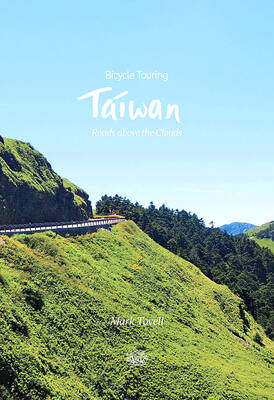
It’s hard to know where to begin with Mark Tovell’s Taiwan: Roads Above the Clouds. Having published a travelogue myself, as well as having contributed to several guidebooks, at first glance Tovell’s book appears to inhabit a middle ground — the kind of hard-to-sell nowheresville publishers detest. Leaf through the pages and you’ll find them suffuse with the purple prose best associated with travel literature: “When the sun is low on a warm, clear morning, and with the heat already rising, we stand at the riverside bike path leading south from Sanxia’s old cobble streets.” Hardly the stuff of your
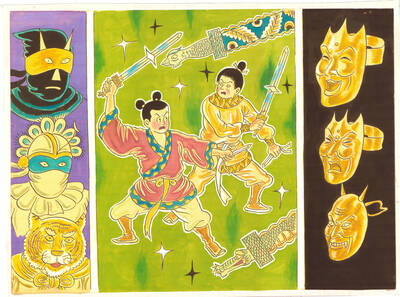
April 22 to April 28 The true identity of the mastermind behind the Demon Gang (魔鬼黨) was undoubtedly on the minds of countless schoolchildren in late 1958. In the days leading up to the big reveal, more than 10,000 guesses were sent to Ta Hwa Publishing Co (大華文化社) for a chance to win prizes. The smash success of the comic series Great Battle Against the Demon Gang (大戰魔鬼黨) came as a surprise to author Yeh Hung-chia (葉宏甲), who had long given up on his dream after being jailed for 10 months in 1947 over political cartoons. Protagonist


 RSS
RSS