


Although there are no cardboard boxes to speak of, Cheryl Lai (賴秀如), president of Radio Taiwan International (RTI), said her office "is all packed up right now."
An impending vote could see her turfed out of a job and a change in direction for one of Taiwan's oldest and least known media organizations.
In terms of international coverage area, RTI is by far the largest radio station in the country -- its Chinese-language programming in four dialects can be heard on shortwave almost anywhere in the world, except Taiwan.
RTI's board of directors are due to vote on whether to retain its chairman since 2003, Lin Feng-cheng (
Lin brought in Lai and set a new agenda for the station -- developing services for foreign spouses and workers, and attempting to buck its history as an inefficient government mouthpiece.
RTI, formerly the Central Broadcasting System (CBS, 中央廣播電台), was founded in 1928 in China, but was boxed up and carried off to Taiwan with the Chinese Nationalist Party (KMT) in 1949, after which it beamed propaganda across the Taiwan Strait to China, including Teresa Teng (鄧麗君) albums and calls for Chinese air force pilots to jet over to the "free China."
Eventually it become clear that Teresa Teng was not going to incite a capitalist revolution, and outright propaganda was eschewed, at least nominally. In 1998, the radio station was reorganized into a largely government-funded non-profit organization, eventually becoming Radio Taiwan International in 2003.
Lai inherited an organization that she found to be sorely in need of reform. "We didn't have any ethics code, we didn't have any handbook, we didn't have any on-the-job training or pre-job training," she said. Underperforming hosts were almost impossible to get rid of, and salary was not tied to performance. "If your story lacked quality, it wouldn't be thrown out. We just accepted everything," Lai said.
A new contract system instituted last year assigns pay incentives and penalties based on hosts' performance as evaluated by an outside panel. And in theory, yearly contracts mean that non-performers can now be sacked more easily. According to Lai, it is too early to tell if the reforms have improved quality.
"I tried to move ahead. I tried to reorganize, and to a degree we made it. To me, it's still not good enough to be proud of," she said. "Maybe in another year you'll see a change."
Unsurprisingly, there is no consensus about what "message" RTI should be transmitting. Lai sees a shift from a model like Voice of America -- which broadcasts a US-friendly perspective -- to a BBC-style station with a more traditional journalistic focus divorced from politics.
Others are more ambivalent.
Wu Jui-wen (
The station has developed a reputation as being sympathetic to pan-green politics.
Management insists this is pigeonholing.
Joyce Huang (
Lai is guardedly optimistic about RTI's future: "The Taiwanese people deserve quality public radio," she said, adding that RTI could eventually be in a position to provide that.
While many of her associates share her conviction that RTI, despite its difficulties, has an integrity that sets it apart from much other media here, skepticism about national broadcasting runs high.
IS ANYBODY OUT THERE?
One thing many at RTI seem to agree on is that people are listening. Actually proving that this is the case, though, is tricky when it comes to international radio -- especially as according to the station's research, half of its audience is in China. Members of the station cite well-attended listeners'-club meetings, sales of shortwave receivers in China and letters from listeners.
There are obstacles for any shortwave radio station to find listeners, especially since China jams outside broadcasts in many urban areas. Surprisingly, it's young people who are RTI's main audience in China, according to a study obtained from the station.
Increasingly, they are accessing content online (www.rti.com.tw). RTI has many resources to help circumvent the Great Firewall. "If you cannot get through on the Internet you can just send us an MSN or e-mail and we will respond to you immediately with another IP," said Lai.
Another point of consensus is that having a sizeable Chinese audience doesn't translate into support for Taiwan. Wu said that Chinese tell him they listen because "they want to hear what we are up to."

Last week, Viola Zhou published a marvelous deep dive into the culture clash between Taiwanese boss mentality and American labor practices at the Taiwan Semiconductor (TSMC) plant in Arizona in Rest of World. “The American engineers complained of rigid, counterproductive hierarchies at the company,” while the Taiwanese said American workers aren’t dedicated. The article is a delight, but what it is depicting is the clash between a work culture that offers employee autonomy and at least nods at work-life balance, and one that runs on hierarchical discipline enforced by chickenshit. And it runs on chickenshit because chickenshit is a cultural

My previous column Donovan’s Deep Dives: The powerful political force that vanished from the English press on April 23 began with three paragraphs of what would be to most English-language readers today incomprehensible gibberish, but are very typical descriptions of Democratic Progressive Party (DPP) internal politics in the local Chinese-language press. After a quiet period in the early 2010s, the English press stopped writing about the DPP factions, the factions changed and eventually local English-language journalists could not reintroduce the subject without a long explanation on the context that would not fit easily in a typical news article. That previous
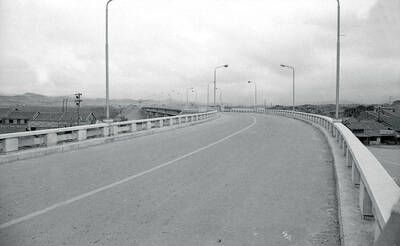
April 29 to May 5 One month before the Taipei-Keelung New Road (北基新路) was set to open, the news that US general Douglas MacArthur had died, reached Taiwan. The military leader saw Taiwan as an “unsinkable aircraft carrier” that was of huge strategic value to the US. He’d been a proponent of keeping it out of Chinese Communist Party (CCP) hands. Coupled with the fact that the US had funded more than 50 percent of the road’s construction costs, the authorities at the last minute renamed it the MacArthur Thruway (麥帥公路) for his “great contributions to the free world and deep

Years ago, I was thrilled when I came across a map online showing a fun weekend excursion: a long motorcycle ride into the mountains of Pingtung County (屏東) going almost up to the border with Taitung County (台東), followed by a short hike up to a mountain lake with the mysterious name of “Small Ghost Lake” (小鬼湖). I shared it with a more experienced hiking friend who then proceeded to laugh. Apparently, this road had been taken out by landslides long before and was never going to be fixed. Reaching the lake this way — or any way that would


 RSS
RSS