


Ganbei (
As in the West, alcohol in Taiwanese culture is a social lubricant, the imbibing of which is seen by many as a measure of fortitude and spunk -- particularly if drinkers knock down a shot of hard liquor like kaoliang in one gulp.
Such a macho approach to alcohol may be fueling widespread addiction.
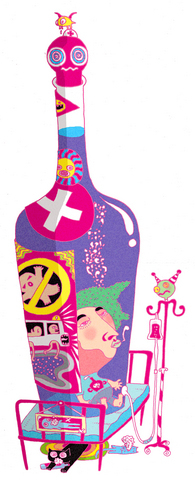
Lin Shih-ku (林式穀), director of the Taipei City Psychiatric Center (台北市立療養院), told the Taipei Times that 5 percent of Taiwan's population could be addicted to alcohol.
"Alcoholism" and "alcoholic" are still largely alien concepts in Taiwan, and the nation lacks adequate resources to treat people who are addicted to alcohol.
"Take a drunk driver hitting and killing a pedestrian, for example," an Alcoholics Anonymous (AA) member in Taiwan told the Taipei Times. "The problem is not that the driver is a drunk; the problem is that he was drunk driving and killed somebody."
According to the AA member, who spoke on condition of anonymity, being alcoholic in Taiwan is itself unimportant.
Instead, it is the consequences of that condition that typically frame the general problem.
"A lot of what we do at AA meetings? -- the culture and language -- don't translate well," the AA member said. "The whole concept of recovery and disease [in the context of alcoholism] is very Western, and not well received [in Taiwan]." When asked why such concepts are not readily accepted in Taiwan, the AA member said that alcoholism is perceived as a disability, and people with disabilities are "swept under the carpet."
"When people call the AA here, they're never calling for themselves; they're always calling on behalf of somebody else," the AA member said, suggesting that the shame associated with alcoholism prevents sufferers from seeking help.
A Taiwanese AA member, who spoke to the Taipei Times on the condition that he be identified only as "Jeff," agreed that shame makes it difficult for Taiwanese alcoholics to face their condition.
Jeff also said that a lack of understanding of alcoholism as a disease translates into too few options for alcoholics in need of specialized treatment.
"A decade ago, AA meetings were mostly attended by Westerners," said Jeff, a longtime a member who attends meetings almost everyday. "Now there are more Taiwanese members than foreign members."
He said that the number of alcoholics in Taiwan is rising, and the average age of those with drinking problems is falling.
Applying the Western paradigms of disease and recovery to alcoholism initially posed a problem for Jeff.
"Some of what the Western AA members told me about drinking was difficult for me to accept at first. However, my being Taiwanese and they Westerners didn't change the fact that our experiences with alcohol and [the nature of our addiction] were very similar," Jeff said.
Realizing that his experiences were similar to non-Taiwanese alcoholics' helped Jeff to transcend cultural barriers and accept Western concepts in trying to cope with his addiction.
In a country with a healthcare system that pays scant regard to alcoholics' special needs, temples have been known to double up as unofficial detox wards, providing alcoholics with a place to dry out.
"Detoxing at a Buddhist monastery is more along the lines of what alcoholics need," one AA member said, adding that hospital treatment focuses on the physical consequences of drinking, and skips over psychological issues such as addiction.
Winston Shen (沈武典), director of Wanfang Hospital's (台北市立萬芳醫院) psychiatry department in Taipei, said that Taiwan lacks rehabilitation clinics. "As far as I know, there is only one [inpatient] rehab for alcoholics in Taiwan -- Taipei City Psychiatric Center," Shen said. Wanfang Hospital, according to Shen, treats alcoholics as outpatients. "Most of my patients are celebrities -- movie stars or reporters," Shen said, adding that many alcoholic and drug-addicted Westerners seek him out as well due to his American training.
Shen's treatment program for alcoholics at Wanfang Hospital is pharmacologically-based -- meaning that powerful psychoactive drugs like sedatives and anti-depressants constitute his treatment plan. "Talking doesn't go anywhere," Shen said, referring to talk therapy. "If a person follows my treatment plan [and takes the pills I prescribe], trust me, they won't drink."
Alcoholics who come to Shen to kick their habit are first prescribed sedatives as a substitute for alcohol. Once patients cross over from booze to a drug like Valium, they are weaned off that drug, after which Shen treats his patients with medications which reduce cravings and treat depression.
"Alcoholism is caused by depression or anxiety. Every alcoholic needs to take anti-depression drugs [if they are to stop drinking]," Shen told the Taipei Times. "A chemical approach is the only [effective] approach."
A different AA member disputed the wisdom behind Shen's drug-based approach to recovery, saying that it underlines the lack of attention the Taiwanese medical community devotes to the psychological issues of addiction. "There can be a time for pills. However, I draw from my experience and hundreds of other AA members' experiences, who in turn have drawn from thousands of other members' testimonies, in telling you that there seems to be a common denominator among alcoholics -- a trait that most, if not all, alcoholics share. And that is: we all have a large ego with low self-esteem. And you wanna treat that [exclusively] with pills? ... I don't think so," the AA member said.
"We live in a society in which TV commercials show construction workers drinking alcoholic beverages on the job -- Whisbih [
As for depression or anxiety being the reasons for why drinking becomes a problem the AA member said: "From an early age, I was addicted to sensations -- I was a `sensation junkie' ... I would say that I began drinking due to a potpourri of reasons, and not due to depression or anxiety alone."
At a recent AA meeting, members recounted similar stories of being down and out and at their wit's end. One member revealed how -- after having landed himself in the hospital and maxed out his credit cards -- he played video games to replace alcohol. "It seemed like there wasn't much help for me beyond going to the hospital and getting medicine," the member said. "And the video games were just as addictive as the alcohol -- my wife was very unhappy."
The members described finding salvation in the AA's 12-step process of recovery, and in getting together and talking.
As director of the nation's only inpatient rehabilitation clinic for alcoholics, Taipei City Psychiatric Center's department of addictive science, Lin Shih-ku leads the lonely fight against the secret epidemic of alcoholism.
"A colleague of mine once warned the minister of health on the seriousness of alcoholism in Taiwan. The minister didn't think the problem was serious, and there was almost no government intervention," Lin said.
The tight-lipped corporate culture of Taiwan Tobacco and Liquor Corp (TLLC, 台灣煙酒公司), the keepers of vital domestic alcohol consumption statistics, and the lobbying power of the captains of the alcohol industry, Lin added, certainly do not help his cause.
"Look at the surging domestic abuse and suicide rates. Behind many of these cases is alcohol. Look at the problem with drunk driving these days. Alcoholism is very serious," Lin told the Taipei Times.
His recovery program combines both talk and drug therapies. Once patients are discharged, however, they must foot the bill for additional counseling with a mental health professional as national health insurance does not usually cover such treatment, Lin said. In any event, substance abuse counselors are few and far between in Taiwan.
Walking the halls of the Taipei City Psychiatric Center, I spoke with several alcohol detox patients, who are at times fully integrated with the center's mentally ill patients. The drinkers' stories are surprisingly similar -- they began drinking during their military service tours, losing control as family and job-related pressures crescendoed. One patient recounted his tragic love affair with booze -- how, over two decades of drinking, he went from dabbling with alcohol, to sipping nightcaps alone, to finally needing hard liquor just to function. "I want to be a father to my daughter. I want to be a husband to my wife. That's why I'm in detox," he said, his voice trembling from alcohol withdrawal symptoms or emotion, or both.

In late October of 1873 the government of Japan decided against sending a military expedition to Korea to force that nation to open trade relations. Across the government supporters of the expedition resigned immediately. The spectacle of revolt by disaffected samurai began to loom over Japanese politics. In January of 1874 disaffected samurai attacked a senior minister in Tokyo. A month later, a group of pro-Korea expedition and anti-foreign elements from Saga prefecture in Kyushu revolted, driven in part by high food prices stemming from poor harvests. Their leader, according to Edward Drea’s classic Japan’s Imperial Army, was a samurai

The following three paragraphs are just some of what the local Chinese-language press is reporting on breathlessly and following every twist and turn with the eagerness of a soap opera fan. For many English-language readers, it probably comes across as incomprehensibly opaque, so bear with me briefly dear reader: To the surprise of many, former pop singer and Democratic Progressive Party (DPP) ex-lawmaker Yu Tien (余天) of the Taiwan Normal Country Promotion Association (TNCPA) at the last minute dropped out of the running for committee chair of the DPP’s New Taipei City chapter, paving the way for DPP legislator Su

It’s hard to know where to begin with Mark Tovell’s Taiwan: Roads Above the Clouds. Having published a travelogue myself, as well as having contributed to several guidebooks, at first glance Tovell’s book appears to inhabit a middle ground — the kind of hard-to-sell nowheresville publishers detest. Leaf through the pages and you’ll find them suffuse with the purple prose best associated with travel literature: “When the sun is low on a warm, clear morning, and with the heat already rising, we stand at the riverside bike path leading south from Sanxia’s old cobble streets.” Hardly the stuff of your
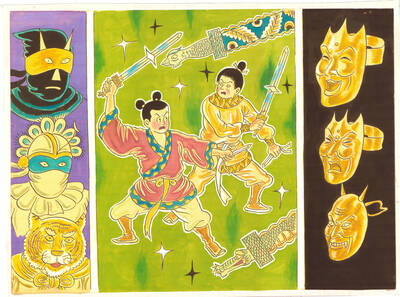
April 22 to April 28 The true identity of the mastermind behind the Demon Gang (魔鬼黨) was undoubtedly on the minds of countless schoolchildren in late 1958. In the days leading up to the big reveal, more than 10,000 guesses were sent to Ta Hwa Publishing Co (大華文化社) for a chance to win prizes. The smash success of the comic series Great Battle Against the Demon Gang (大戰魔鬼黨) came as a surprise to author Yeh Hung-chia (葉宏甲), who had long given up on his dream after being jailed for 10 months in 1947 over political cartoons. Protagonist


 RSS
RSS