


Exuberance is what most characterizes the bizarre but often intoxicating novels of Salman Rushdie. In them, words shoot out as if from a geyser. Exclamations, slang, acronyms, statistics, invective -- all jostle together, crowding the page. Extended dialogue or the slow build-up of character is rare (Rushdie is no Vikram Seth). Instead, fantastic images hurtle
towards you, and you're challenged to accept what you're being offered or write yourself off as a fool. You imagine the books being dictated at speed in a state of exultation, then keyed in by a team of probably uncomprehending scribes. Yet Rushie's self-presentation as a jester with a serious message easily persuades readers to take him for a master. And sometimes he is -- but only sometimes.
A new novel from Rushdie is nonetheless an important event. With the death threats that followed The Satanic Verses behind him, and Midnight's Children voted the best Booker winner in the prize's 25 years, he stands ready to assume the mantle of a modern writer of Tolstoyan stature.

Shalimar the Clown certainly has an Olympian feel about it. Rushdie surveys the world situation from a lofty viewpoint, shifting continents around his board like pawns in a titanic chess game. Kashmir, India, post-Sept. 11 America, continental Europe, the UK -- all are brought into play, put to one side, then recalled as Rushdie switches the direction of his god-like spotlight. With the world as his palette, he paints in confident strokes, effortlessly displaying extended exercises in contrasting writing styles.
This time Kashmir, home of two of Rushdie's grandparents, is the crucible. First, though, the novel's focus falls on Maximilian Ophuls, Strasbourg-born Jewish American, World War II Resistance hero, ace airman and writer on economics who, in the mid-1960s, is appointed US Ambassador to India. Once there, though married to a wartime love, he falls for a young Kashmiri dancer, Boonyi. She too is married, in her case to a Kashmiri, Shalimar, high-wire-artist and clown in a theater troupe.
The case leads to Ophuls' temporary downfall. But by 1991 he is reinstated in government service as a counter-terrorism supremo, with Shalimar as his driver. Back in Kashmir Shalimar has already killed his faithless wife, and at the end of the novel's opening section he stabs Ophuls to death as well, outside the house of India, Ophuls' and Boonyi's sophisticated, puzzled, and by now adult daughter.
This is a global, East-meets-West novel with a vengeance. Almost everything about it is symbolic. Strasbourg -- today a French city, but German from 1870 to 1918, and again during World War II -- can be paralleled with Kashmir, sacrificial pawn caught between Pakistan and India. That their off-spring should meet and collide in the US is symbolic again, this time of a globalized, post-Sept. 11 world. Shalimar, a Kashmiri and a Muslim, with his sense of past insults and injustices, is now poised to set this world aflame.
The novel is structured in five massive blocks, entitled India, Boonyi, Max, Shalimar the Clown, and Kashmira (India's new name for herself after she revisits her mother's homeland). The first section is packed with local detail of Los Angeles in 1991. The second, describing Boonyi and Shalimar's adolescence and set in the era of the creation of India and Pakistan, is entirely in the style of the traditional stories of the sub-continent, complete with gods and magical happenings. The third is Max's life story from wartime Strasbourg up to his departure from India in 1968. The fourth takes place after this date in a war-ravaged Kashmir. The fifth is set in the years after 1991, and wherever India/Kashmira happens to be, usually California.
Myth, too, is incorporated into the rich texture. Rushdie himself points out that Boonyi is the legendary Indian heroine Sita, kidnapped by Ravan (Max), while Shalimar is Ram, fighting to win her back, albeit under the guise of a modern warrior for Kashmiri liberation. But contemporary life, Rushdie sadly observes, can't mirror ancient myths except bitterly.
I became convinced of the this book's strength while reading its fourth section. It's an impassioned, horrified account-in-miniature of recent Kashmiri history, told via dramatic episodes that together illuminate the whole Afghani-Pakistani-Kashmiri-Indian agony. Here Rushdie's usual resourceful play-fulness breaks down -- notably in a rhetorical, frenzied diatribe against Indian inaction following the expulsion of Kashmiri Hindus, then in a lethally dead-pan account of the suffering of all Kashmiris under India's emergency regulations and extra-judicial "crackdowns."
As always with Rushdie, there are many styles in this book. The diplomatic sections about Ophuls sometimes read like John le Carre, the American ones like Philip Roth, the accounts of savage killings in Kashmir like Truman Capote's In Cold Blood. Even so, and despite all this stylistic versatility, what is unambiguously at this novel's heart is a plea for a desecrated, brutalized Kashmir.
The ending is excusably indulgent. With its jail-break and home-alone scariness, it seems to be written to satisfy an eventual Holly-wood treatment. This could be seen as putting into question Rushdie's essential seriousness, unambig-uously present elsewhere in the book, even though on a literary level it might be satiric of the media-manipulated perspectives of modern America. Nevertheless, a Hollywood film of this novel, with the publicity it would give to Kashmir's plight, could only be welcome.
This is a very memorable novel, full of literary grandeur, and as much a challenge to the world over the unresolved problem of Kashmir as sections of his earlier works were to other entrenched interests. The book's depiction of Islamic guerrilla training camps, incidentally, is just as intransigent as its condemnation elsewhere of India's military tactics. Salman Rushdie again proves himself both humane and stylistically resourceful (a true literary artist, in other words), and yet at the same time a voice for sanity that won't easily be silenced.
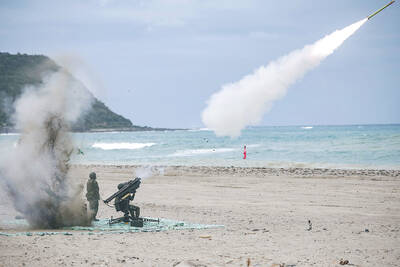
In late October of 1873 the government of Japan decided against sending a military expedition to Korea to force that nation to open trade relations. Across the government supporters of the expedition resigned immediately. The spectacle of revolt by disaffected samurai began to loom over Japanese politics. In January of 1874 disaffected samurai attacked a senior minister in Tokyo. A month later, a group of pro-Korea expedition and anti-foreign elements from Saga prefecture in Kyushu revolted, driven in part by high food prices stemming from poor harvests. Their leader, according to Edward Drea’s classic Japan’s Imperial Army, was a samurai

The following three paragraphs are just some of what the local Chinese-language press is reporting on breathlessly and following every twist and turn with the eagerness of a soap opera fan. For many English-language readers, it probably comes across as incomprehensibly opaque, so bear with me briefly dear reader: To the surprise of many, former pop singer and Democratic Progressive Party (DPP) ex-lawmaker Yu Tien (余天) of the Taiwan Normal Country Promotion Association (TNCPA) at the last minute dropped out of the running for committee chair of the DPP’s New Taipei City chapter, paving the way for DPP legislator Su
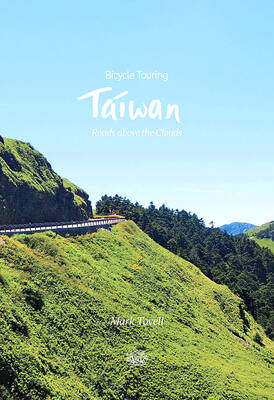
It’s hard to know where to begin with Mark Tovell’s Taiwan: Roads Above the Clouds. Having published a travelogue myself, as well as having contributed to several guidebooks, at first glance Tovell’s book appears to inhabit a middle ground — the kind of hard-to-sell nowheresville publishers detest. Leaf through the pages and you’ll find them suffuse with the purple prose best associated with travel literature: “When the sun is low on a warm, clear morning, and with the heat already rising, we stand at the riverside bike path leading south from Sanxia’s old cobble streets.” Hardly the stuff of your
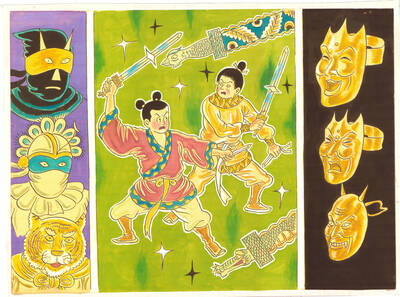
April 22 to April 28 The true identity of the mastermind behind the Demon Gang (魔鬼黨) was undoubtedly on the minds of countless schoolchildren in late 1958. In the days leading up to the big reveal, more than 10,000 guesses were sent to Ta Hwa Publishing Co (大華文化社) for a chance to win prizes. The smash success of the comic series Great Battle Against the Demon Gang (大戰魔鬼黨) came as a surprise to author Yeh Hung-chia (葉宏甲), who had long given up on his dream after being jailed for 10 months in 1947 over political cartoons. Protagonist


 RSS
RSS