


A local Internet crusader wants BeeTV to go to the back of the bus.
The blogger -- who goes by the nom de guerre "BusMan" -- is fed up with the proliferation of advertisements on the flat-panel screens installed in the back and front of many Taipei buses.
Bombarding helpless bus passengers with the repetitive programming is like "gang rape," he says.
BusMan is the virtual alter ego of a bored civil servant, a nine-to-fiver who has little choice but to rise at 6am on weekdays to catch the bus to work. He airs his grievances on the Internet, interacting with visitors to his anti-BeeTV blog (http://tw.myblog.yahoo.com/anti-beetv/guestbook). The weblog has registered nearly 11,000 hits in its first four months of existence, suggesting that BusMan has tapped a strong current of public resentment regarding the BeeTV phenomenon.
He has even gone so far as to compare himself to Rosa Parks, the African American woman who galvanized the US civil rights movement by refusing to sit in the back of a bus in 1955. BusMan says Taipei's buses are ground zero in the populist fight against the inhumanity of corporate Taiwan.
Despite the vitriol and hyperbole, BusMan's manifesto actually comes off as rather reasonable. He appeals to authorities to merely tone down BeeTV's content and volume; he doesn't advocate banning the screens altogether.
And he's not alone. The popularity of his vision, at least in cyberspace, hints at the possibility of a full-blown anti-BeeTV movement. A growing number of bloggers are airing their fight to win back peace and quiet on buses, so that commuters can reflect or nap a little before joining the daily rat race. And a recent informal survey of local straphangers found many who agreed that BeeTVs were obnoxious and too loud.
Is BeeTV really as invasive and annoying as BusMan would have us believe?
Scott Lee (李世揚), CEO of OmniAd Media, which owns BeeTV, told the Liberty Times that characterizing the service as "gang raping" passengers was going a bit too far.
"If there wasn't any BeeTV, there wouldn't be any money for the electronic announcement signs," Lee said.
He added that the TVs are quieter than the buses themselves and that BeeTV intends to clean up the content, adding more educational or cultural programs.
Responding to criticism that BeeTV is force feeding bus passengers commercial after commercial, Lee told the newspaper that the advertisements account for only one-tenth of overall BeeTV content.
But the company's website (http://beetv.omniad.com.tw) contradicts these numbers. It states that BeeTV shows 24 minutes of advertisements for every 36 minutes of programming. And a BeeTV spokeswoman told the Taipei Times that the content is actually split 50-50 between
advertisements and programming.
Whichever figure is accurate, BeeTVs do seem to have quieted down and become less racy these days. They've even attracted a loyal fan base.
According to a recent media survey by US-based market analysis company ACNielsen, the majority of Taiwanese public bus passengers are aged 12 to 39. Many of these are students. This explains why BeeTV gears much of its content towards a younger, trendier audience. Students tended to be enthusiastic about BeeTV because it helped them pass the time on the bus by entertaining them with cartoons and other content that appealed to their generation.
Many adult or elderly participants interviewed for the survey also said they didn't mind BeeTV -- as long as the volume was low.
In the end, Taipei is likely to follow the example set by cities such as London, Tokyo, and Singapore. They have banned audio media on public buses and trains, due in part to pressure from irate riders. A movement to stamp out noise pollution on Hong Kong buses is also afoot.
BusMan, it seems, is on to something.

Recently the Chinese Nationalist Party (KMT) and its Mini-Me partner in the legislature, the Taiwan People’s Party (TPP), have been arguing that construction of chip fabs in the US by Taiwan Semiconductor Manufacturing Co (TSMC, 台積電) is little more than stripping Taiwan of its assets. For example, KMT Legislative Caucus First Deputy Secretary-General Lin Pei-hsiang (林沛祥) in January said that “This is not ‘reciprocal cooperation’ ... but a substantial hollowing out of our country.” Similarly, former TPP Chair Ko Wen-je (柯文哲) contended it constitutes “selling Taiwan out to the United States.” The two pro-China parties are proposing a bill that
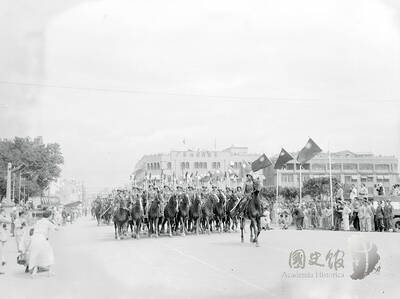
March 9 to March 15 “This land produced no horses,” Qing Dynasty envoy Yu Yung-ho (郁永河) observed when he visited Taiwan in 1697. He didn’t mean that there were no horses at all; it was just difficult to transport them across the sea and raise them in the hot and humid climate. “Although 10,000 soldiers were stationed here, the camps had fewer than 1,000 horses,” Yu added. Starting from the Dutch in the 1600s, each foreign regime brought horses to Taiwan. But they remained rare animals, typically only owned by the government or

Institutions signalling a fresh beginning and new spirit often adopt new slogans, symbols and marketing materials, and the Chinese Nationalist Party (KMT) is no exception. Cheng Li-wun (鄭麗文), soon after taking office as KMT chair, released a new slogan that plays on the party’s acronym: “Kind Mindfulness Team.” The party recently released a graphic prominently featuring the red, white and blue of the flag with a Chinese slogan “establishing peace, blessings and fortune marching forth” (締造和平,幸福前行). One part of the graphic also features two hands in blue and white grasping olive branches in a stylized shape of Taiwan. Bonus points for
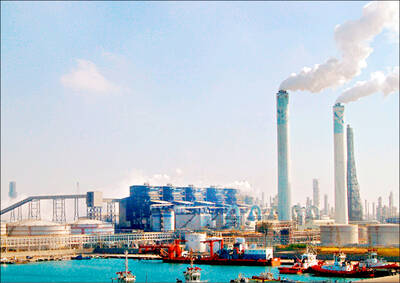
Last month, media outlets including the BBC World Service and Bloomberg reported that China’s greenhouse gas emissions are currently flat or falling, and that the economic giant appears to be on course to comfortably meet Beijing’s stated goal that total emissions will peak no later than 2030. China is by far and away the world’s biggest emitter of greenhouse gases, generating more carbon dioxide than the US and the EU combined. As the BBC pointed out in their Feb. 12 report, “what happens in China literally could change the world’s weather.” Any drop in total emissions is good news, of course. By


 RSS
RSS