


Some of the most dramatic digital photographs can be captured when temperatures are at their most extreme. When there's snow on the ground, the air is cool and crisp, or when the sun is blaring -- drama is built in to these scenes. And most of us would like to bring such memories home in dramatic fashion through digital photographs.
But capturing those moments as you'd like them to be remembered is much more difficult than it seems. That's because you have to become more acquainted with the limitations of your camera than some would like to be. Learn about those limitations, though, and how to get around them, and you'll be bringing home photographs of winter wonderlands and sunny scenes like never before.
First, you need to understand that temperature extremes can impair the operation of your digital camera. Extreme cold can reduce the battery life of your camera by as much as 80 percent. So be sure to bring extra batteries when shooting in the cold, and don't be concerned that your camera is malfunctioning when it eats through the batteries. It's functioning as it should. Keep spare batteries in a warm pocket.
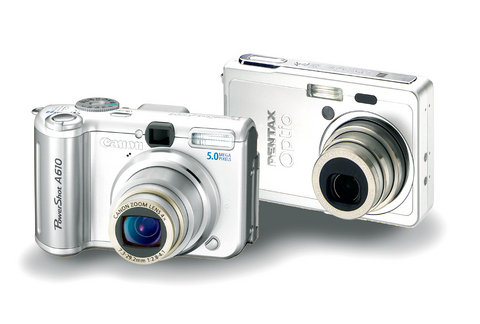
PHOTOS: NY TIMES NEWS SERVICE
When you swap batteries, put the battery that you've taken out of your camera back into a warm pocket. Doing so will "revive" the cold battery. You can keep switching batteries in this manner for some time. If your batteries are small, it doesn't hurt to have three.
Condensation on camera lenses is another concern when shooting in extreme temperatures, either hot or cold. Going from a warm room into cold temperatures is generally not a problem so far as condensation is concerned. But when you return to the warm room, your camera lens will fog up. That condensation should be removed with a lens cloth, which you should purchase from a camera store as a necessary camera accessory.
Shooting in steamy weather will frequently fog up camera lenses, especially if you've moved from a colder, air-conditioned room into the warm weather. Again, carry a lens cloth.

When shooting pictures in the snow, you face special challenges that your camera cannot handle properly without your help. Snow is one of the most reflective surfaces that you will ever attempt to photograph. That reflectivity will fool your camera's built-in light meter, which adjusts the exposure of your shots automatically at the time you take a picture.
The result can be shots that do not convey the vibrancy of snowy scenes as you remember them -- and as they actually are.
That's because your digital camera interprets all that light reflected off of the snow as a scene that is brighter than it actually is. Pictures of snow-filled scenes are therefore often dull and dark-looking, with the snow itself lacking the vibrancy and whiteness of reality.

There are a couple of ways around this problem. If your camera has special "shooting modes" for snow or beach shooting, try those. These modes will bump up the exposure of your pictures automatically. Remember not to leave your camera set on those shooting modes, however, as normal scenes will then come out too dark.
If your camera doesn't have a special shooting mode for snow or the beach, you can probably adjust the exposure yourself using an exposure compensation dial or button. Refer to your camera's manual about how to adjust exposure on-the-fly. Most mid-range digital cameras allow you to adjust exposure. Set the control to about +1 or +2, so that you're overexposing the scene by one or two stops, allowing more light to enter your camera's lens.
Shooting extremely sunny scenes -- especially those at the beach -- confronts you with a similar problem to shooting snow.

There's lots of reflectivity involved, and that will fool your camera's built-in meter into thinking that it should expose the shot darker than is desirable.
Handle the situation the same way that you do when shooting in snow. Additionally, though, you might consider using your camera's built-in flash or an add-on flash if you have one.
Using a flash to photograph people who are standing in front of a very bright background -- such as the ocean waves or on the beach -- will help to highlight the subjects and deemphasize the background.
No matter where you're shooting -- in the snow or in bright, sunny conditions -- remember that isolating your subject matter can often make for the most dramatic photographs of all.
Instead of trying to capture the big picture, move in close, perhaps activating and using your camera's macro feature.
Shooting up-close will often alleviate the problem of having too much reflectivity in your photograph altogether, and through isolating a scene that's representative, you may well end up with a picture that has the impact you desire.

Sept.16 to Sept. 22 The “anti-communist train” with then-president Chiang Kai-shek’s (蔣介石) face plastered on the engine puffed along the “sugar railway” (糖業鐵路) in May 1955, drawing enthusiastic crowds at 103 stops covering nearly 1,200km. An estimated 1.58 million spectators were treated to propaganda films, plays and received free sugar products. By this time, the state-run Taiwan Sugar Corporation (台糖, Taisugar) had managed to connect the previously separate east-west lines established by Japanese-era sugar factories, allowing the anti-communist train to travel easily from Taichung to Pingtung’s Donggang Township (東港). Last Sunday’s feature (Taiwan in Time: The sugar express) covered the inauguration of the

The corruption cases surrounding former Taipei Mayor and Taiwan People’s Party (TPP) head Ko Wen-je (柯文哲) are just one item in the endless cycle of noise and fuss obscuring Taiwan’s deep and urgent structural and social problems. Even the case itself, as James Baron observed in an excellent piece at the Diplomat last week, is only one manifestation of the greater problem of deep-rooted corruption in land development. Last week the government announced a program to permit 25,000 foreign university students, primarily from the Philippines, Indonesia and Malaysia, to work in Taiwan after graduation for 2-4 years. That number is a

In a stark demonstration of how award-winning breakthroughs can come from the most unlikely directions, researchers have won an Ig Nobel prize for discovering that mammals can breathe through their anuses. After a series of tests on mice, rats and pigs, Japanese scientists found the animals absorb oxygen delivered through the rectum, work that underpins a clinical trial to see whether the procedure can treat respiratory failure. The team is among 10 recognized in this year’s Ig Nobel awards (see below for more), the irreverent accolades given for achievements that “first make people laugh, and then make them think.” They are not

This Qing Dynasty trail takes hikers from renowned hot springs in the East Rift Valley, up to the top of the Coastal Mountain Range, and down to the Pacific Short vacations to eastern Taiwan often require choosing between the Rift Valley with its pineapple fields, rice paddies and broader range of amenities, or the less populated coastal route for its ocean scenery. For those who can’t decide, why not try both? The Antong Traversing Trail (安通越嶺道) provides just such an opportunity. Built 149 years ago, the trail linked up these two formerly isolated parts of the island by crossing over the Coastal Mountain Range. After decades of serving as a convenient path for local Amis, Han settlers, missionaries and smugglers, the trail fell into disuse once modern roadways were built


 RSS
RSS