


Brokeback Mountain isn't the first popular fiction featuring cowboys with more than roping and wrangling on their minds.
Our eros has always been cowboys, according to Chris Packard, author of Queer Cowboys, an analysis of 19th century frontier writings about erotic male relationships that may have been sexual in nature.
"I use those words `erotic' and `sexual' very carefully," Packard said. "Sexuality is different from eroticism. My book tries to point out these are homoerotic friendships, whether they're sexual is not part of the literature. Unless you have evidence, you really have to err on the side of eroticism."
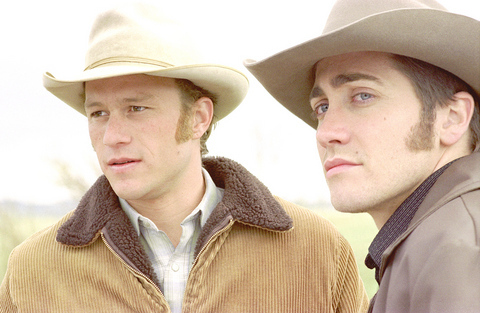
PHOTO: AP
Queer Cowboys uses excerpts from authors such as Mark Twain, Owen Wister and James Fenimore Cooper to make Packard's case that homoerotic bonds in the Old West were common and socially accepted. Vintage photographs depict men romantically touching or dancing together while women stand aside. Frederic Remington's sketches of cowboys sharing a haircut and exiting a tent are suggestively posed.
Reading between the lines is necessary in some cases, such as this portion of Badger Clark's 1917 poem, The Lost Pardner, which could pass as a plot outline of Brokeback Mountain:
"We loved each other in the way men do
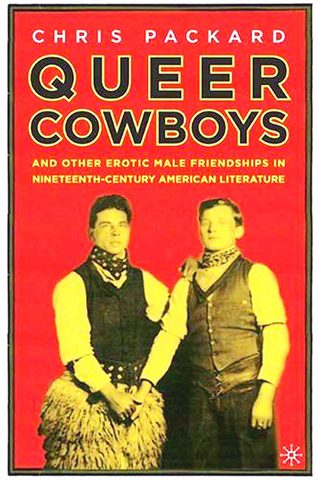
PHOTO COURTESY OF AMAZON
And never spoke about it, Al and me,
But we both knowed, and knowin' it so true
Was more than any woman's kiss could be.
We knowed -- and if the way was smooth or rough,
The weather shine or pour,
While I had him the rest seemed good enough
But he ain't here no more!"
Queer Cowboys joins Ang Lee's film as elements of a budding revision of Western archetypes, especially the ruggedly heterosexual American cowboy, the myth of self-reliant men with checkered pasts seeking fresh starts on the lawless range. Dime novels of the era romanticized gunfights and campfire confessions but seldom addressed frontier sexuality except in code phrases such as a cowboy's "sex hunger," crude nicknames for genitalia and "mastering passion" lessons passed down to greenhorns. Wister's The Virginian had two cowboys practicing a wedding ceremony. In these books, settling down with a traditional family is considered the end of the adventure.
Until Brokeback Mountain, Western movies also mostly coded homoerotic themes. Looking back we wonder about the closeness of Butch Cassidy and the Sundance Kid, and detect flirting among gunslingers in The Wild Bunch. Billy the Kid's murder in The Left Handed Gun plays like a crime of gay passion. Val Kilmer's Doc Holliday in Tombstone promising to be "your huckleberry" to an adversary was fey on first impression. Reading Packard's take on the homoerotic subtext of Twain's The Adventures of Huckleberry Finn turns Doc's "huckleberry" threat into a come-on.
The most notable example of Hollywood's subversion of straight cowboy images is Howard Hawks' 1948 classic Red River, featuring John Ireland as a tough guy with the effeminate name Cherry Valance.
Cherry makes a veiled pass at a cowboy played by Montgomery Clift, whose real-life homosexuality was barely concealed by the studio system, by admiring his gun and comparing women to Swiss watches. "You ever had a (suggestive pause) Swiss watch?" Cherry asks with a lascivious smile.
Clift's film debut also includes a mocking dance with the ultimate cowboy icon, John Wayne, that is slightly flirtatious in hindsight. Any suggestion the Duke would have anything to do with expressing homosexual themes makes some people gasp.
That's exactly the reaction Packard seeks.
"Everybody should appreciate shock," he said. "Basically, what happens after the shock, after the recoiling, I hope, is some reflection, some wonder, `Why am I shocked?' Inquiring minds don't linger on shock then leap to rejection. And those people who do leap to rejection after the shock? That's just their limitation."
Packard's analysis of frontier literature could be slanted by modern perspective. The word "homosexual" wasn't coined until the late 19th century and "queer" simply meant something odd. Perhaps the vaguely erotic prose and images cited in Queer Cowboys are products of a naive society that hadn't yet passed judgment on gay intimacy. Packard acknowledged that possibility.
"But what else can we do except use our culture and knowledge to look backward in time?" he said. "We can't escape the knowledge that has accumulated in the last 25 years regarding gay and lesbian rights and the emergence of gay culture. You can't do away with that. You can't `not know' that. You look back in time, take current knowledge and apply it. Culture continues to accumulate meaning.
"You wonder if people back then would even know what to call this, if there was even a word for it. But there was a different set of rules about sexuality, that's for sure."
Rules changed over the decades from anything goes to nothing revealed. Attempts by Sigmund Freud and Alfred Kinsey to illuminate homosexual urges repulsed some people, while homophobic undertones of the McCarthy hearings lumped gays with criminals and communists in terms of undermining the American way.
The subsequent rise of gay rights and a bolder sense of artistic freedom refreshed the issue. Packard senses a change in grudging acceptance of his ideas, recalling an exchange with a former rodeo bull rider at a panel discussion of the gay West topic.
"He hadn't seen any actual sexuality on the rodeo circuit," Packard said. "But he didn't deny that friendships in that very macho community were stronger than other bonds. He questioned the validity of my research but he couldn't deny that eroticism."
Which begs the question: What would someone like Twain think about Packard's take on his writings?
"I would love to talk to Twain and find out what he would say," Packard said. "I think he would have a real fun twinkle in his eye, then deny it forever."

In late October of 1873 the government of Japan decided against sending a military expedition to Korea to force that nation to open trade relations. Across the government supporters of the expedition resigned immediately. The spectacle of revolt by disaffected samurai began to loom over Japanese politics. In January of 1874 disaffected samurai attacked a senior minister in Tokyo. A month later, a group of pro-Korea expedition and anti-foreign elements from Saga prefecture in Kyushu revolted, driven in part by high food prices stemming from poor harvests. Their leader, according to Edward Drea’s classic Japan’s Imperial Army, was a samurai

The following three paragraphs are just some of what the local Chinese-language press is reporting on breathlessly and following every twist and turn with the eagerness of a soap opera fan. For many English-language readers, it probably comes across as incomprehensibly opaque, so bear with me briefly dear reader: To the surprise of many, former pop singer and Democratic Progressive Party (DPP) ex-lawmaker Yu Tien (余天) of the Taiwan Normal Country Promotion Association (TNCPA) at the last minute dropped out of the running for committee chair of the DPP’s New Taipei City chapter, paving the way for DPP legislator Su
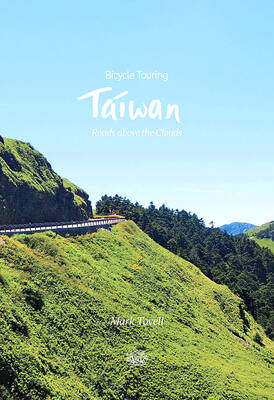
It’s hard to know where to begin with Mark Tovell’s Taiwan: Roads Above the Clouds. Having published a travelogue myself, as well as having contributed to several guidebooks, at first glance Tovell’s book appears to inhabit a middle ground — the kind of hard-to-sell nowheresville publishers detest. Leaf through the pages and you’ll find them suffuse with the purple prose best associated with travel literature: “When the sun is low on a warm, clear morning, and with the heat already rising, we stand at the riverside bike path leading south from Sanxia’s old cobble streets.” Hardly the stuff of your
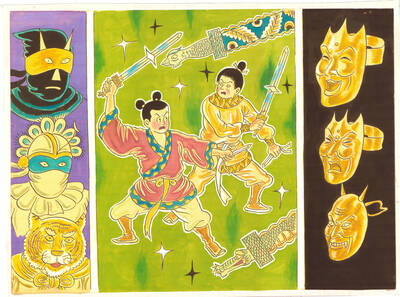
April 22 to April 28 The true identity of the mastermind behind the Demon Gang (魔鬼黨) was undoubtedly on the minds of countless schoolchildren in late 1958. In the days leading up to the big reveal, more than 10,000 guesses were sent to Ta Hwa Publishing Co (大華文化社) for a chance to win prizes. The smash success of the comic series Great Battle Against the Demon Gang (大戰魔鬼黨) came as a surprise to author Yeh Hung-chia (葉宏甲), who had long given up on his dream after being jailed for 10 months in 1947 over political cartoons. Protagonist


 RSS
RSS